REVIEW · PRAGUE
Private Prague Cold War Walking Tour
Book on Viator →Operated by Insight Cities · Bookable on Viator
Prague has a second history hiding in plain sight. This private Cold War walk puts you on the ground with a historian guide, so the Soviet-era story isn’t just facts—it’s places, stone, and street-level evidence. I like that you get undivided attention from your guide for about three hours, and I also like the mix of dramatic monuments with smaller, unsettling details like locked shelter corridors. One thing to consider: the route includes a steep climb up Vitkov Hill, so you’ll want to plan around your stamina (or ask to skip Vitkov if needed).
You’ll cover the main political beats—communist rule from 1948 to 1989—through stops that show both propaganda and everyday life. I especially value how the route connects big events to specific spots, like the tanks at Wenceslas Square in 1968 and the hope-splashed walls that came after. If you’re hoping for a relaxed, flat stroll with no “heavy” topics, this may feel intense; this is history with teeth.
In This Review
- Key things I’d zero in on
- A Cold War walk that actually helps you see Prague
- Price and group size: when a private tour is actually good value
- Meeting point and how the 3-hour pacing feels in real life
- Stop 1: The Karlin–Žižkov pedestrian tunnel and the Cold War’s quiet fear
- Vitkov Hill and the Hall of the Soviet Soldier: propaganda you can read in stone
- Klement Gottwald’s mausoleum: the controlled body behind the controlled state
- Prague TV Tower and the Brutalist angle on Soviet-era power
- Letná and the Stalin statue idea: how a city can broadcast fear
- John Lennon Wall: hope, graffiti, and the sound of dissent
- Wenceslas Square and the Velvet Revolution: where public space turns political
- What makes the guide matter (and why you should care about how it’s taught)
- Who this tour fits best
- Should you book Private Prague Cold War Walking Tour?
- FAQ
- How long is the Prague Cold War walking tour?
- Is this tour private, and what is the group size?
- What language is the tour offered in?
- Where do we meet the guide?
- Is hotel pickup included?
- What’s included in the price besides the guide?
- Are entrance fees included?
- Is the tour difficult to walk, and can it be adjusted?
- Is there free cancellation?
Key things I’d zero in on
- Private guide time: learn at your pace, ask questions, and stay on-message for the full 3 hours
- Vitkov Hill set pieces: the Hall of the Soviet Soldier and the views from National Monument
- Klement Gottwald’s mausoleum: a chilling stop tied to state power and controlled bodies
- Street dissent at the John Lennon Wall: graffiti as a language of freedom
- Wenceslas Square in context: from imperial parade ground to the Velvet Revolution’s turning point
- Optional climb support: if you have mobility limits, Vitkov can be left out
A Cold War walk that actually helps you see Prague
Cold War history can get abstract fast. What makes this tour work is that you walk through the physical settings where the story played out: Soviet memorial architecture, propaganda-adjacent monuments, and the corners where people signaled dissent anyway. You’re not just reading a timeline. You’re watching a city explain itself.
Because it’s private (up to 10 people), you don’t have to time-stretch around other groups. You can pause when something hits you—like the symbolism of a hall built to honor fallen Soviet soldiers, or the irony of a statue turned on its head. It also means your guide can tailor the pace, which matters when you’re looking at sites with heavy political meaning.
You can also read our reviews of more walking tours in Prague

Price and group size: when a private tour is actually good value
The price is $390.37 per group for up to 10 people. That’s the key math. If you travel as a couple, you’ll pay the full amount, so it’s a splurge. If you’re a small group (family, friends, study group), you can spread the cost and the per-person price drops quickly.
Here’s the practical takeaway: this tour is best when you can fill a few spots. A private Cold War specialist guide is worth paying for, because the route is specific and the interpretations matter. A shared tour can feel rushed through the same sites; this one gives you time to understand why these places were built the way they were.
Meeting point and how the 3-hour pacing feels in real life
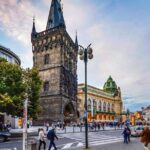
You’ll meet at Náměstí Republiky 1077/2 in Prague 1, with instructions to arrive 15 minutes early at the default meeting point near Kostel Svatý Josef (unless you arrange pickup). The tour starts in central Prague, close to public transportation, which makes life easier before you begin.
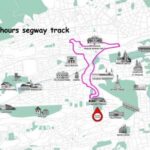
The walk lasts about 3 hours, and it’s not a marathon. You’ll do short transfers on foot and tram, with tram tickets included. The route is structured like a storyline: first, a look at Cold War infrastructure and memorial authority; then, a shift to everyday public spaces where people pushed back.
Your biggest pacing factor is Vitkov Hill. You’re told there’s a steep climb lasting about 20 minutes. If you know you’ll struggle on slopes, message the operator ahead of time. The tour can skip Vitkov Hill and focus on other Cold War-related sites, which is a smart option for anyone who wants the content without the punishment.
Stop 1: The Karlin–Žižkov pedestrian tunnel and the Cold War’s quiet fear
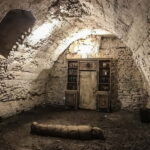
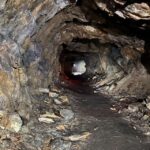
The tour opens with Pedestrian Tunnel Karlin–Žižkov, where you walk through the underpass and spot the locked doors that once led to nuclear bomb-shelter corridors. Even though these passages aren’t “open for adventure,” the fact that they still exist—and that doors are still there—lands hard.
This is the kind of stop that changes how you interpret the rest of the walk. Once you’ve seen how authorities planned for catastrophic fear, the memorial style and political messaging you’ll see later makes more sense. It’s also a helpful mental warm-up: short, local, and unsettling in a realistic way rather than cinematic.
Vitkov Hill and the Hall of the Soviet Soldier: propaganda you can read in stone
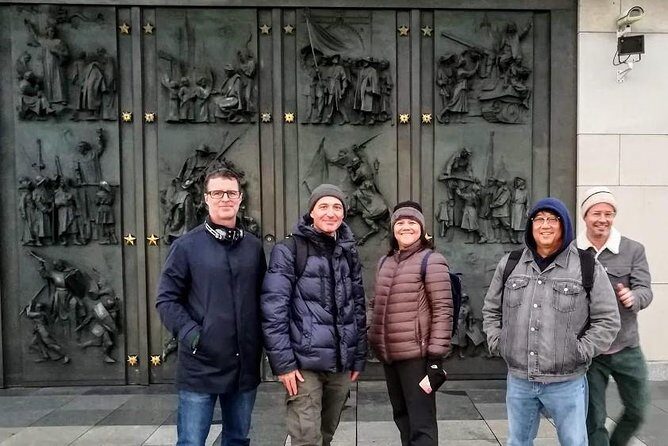
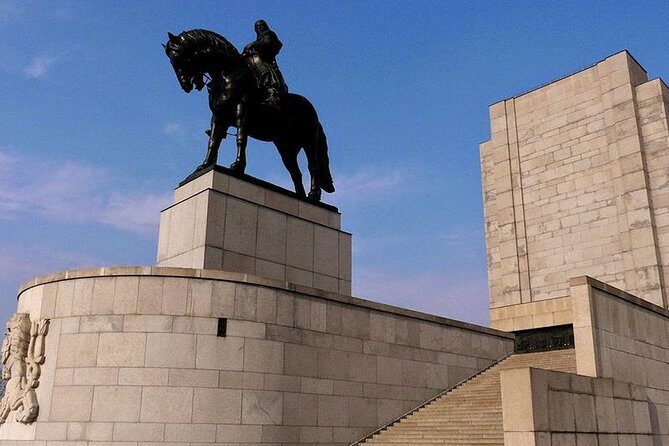
National Monument at Vitkov Hill is the big architecture stop. The site covers multiple layers at once: the National Monument itself, the Hall of the Soviet Soldier, and the larger memorial complex tied to Jan Žižka’s legacy.
The Hall of the Soviet Soldier is designed to honor Soviet soldiers killed during World War II across Eastern Europe. That design goal matters. It’s not just a place to visit; it’s a statement about who should be remembered—and what kind of gratitude the state wanted.
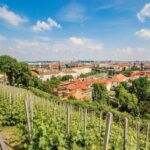
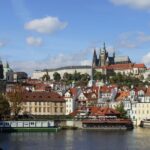
Also, don’t ignore the “background math” of this location: Vitkov gives you a dominant vantage over the city. You’re meant to feel that scale. If you’re there in the afternoon, the views can be a highlight on their own, including the skyline spread over Old Town areas. Even if you don’t care about memorials, the sightlines can recalibrate how you understand Prague’s layout.
A quick note on time here: you’ll spend around 30 minutes at the Vitkov area. The monument itself is not included, so plan on that cost if you want to step in where applicable.
You can also read our reviews of more private tours in Prague


Klement Gottwald’s mausoleum: the controlled body behind the controlled state
One of the most memorable stops is the former mausoleum connected to Klement Gottwald, Czechoslovakia’s president from 1948 to 1953. This is the place where the Cold War story isn’t only political—it becomes physical.
You’ll see the mausoleum that once displayed the mummified body of Gottwald. The atmosphere is part of why this stop works. It’s difficult to walk through a space like this and not think about the idea of power lasting beyond life—especially in a system obsessed with continuity and authority.
The tour also points out the laboratory and temperature-control center where staff tried to maintain the embalmed body. That detail is small on paper but heavy in meaning. It turns the Cold War from speeches and banners into systems: equipment, procedures, and surveillance-by-design. You start to understand that propaganda wasn’t just messaging. It was maintenance.
The monument and related sites can involve entrance considerations. The tour info here flags “not included” at Vitkov, so bring enough cash/card to cover entry if you want the full experience inside.
Prague TV Tower and the Brutalist angle on Soviet-era power
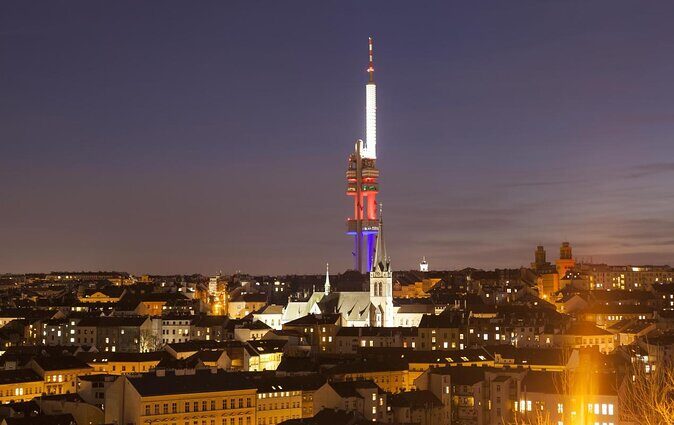
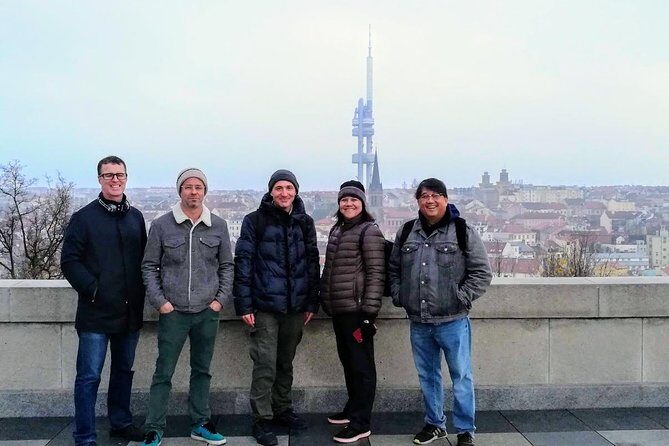
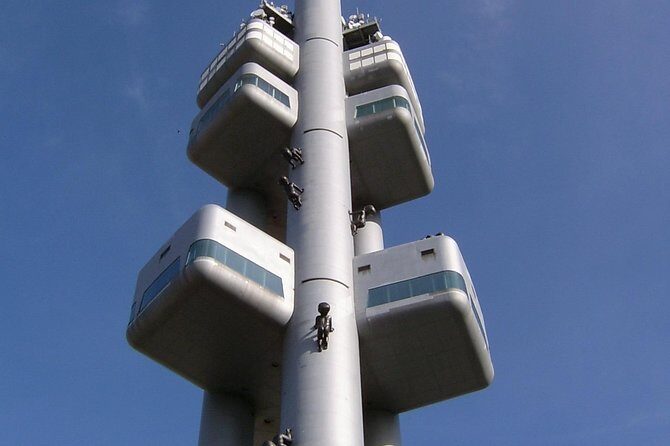
After Vitkov, the tour shifts to Žižkov Television Tower for a short look at the Brutalist silhouette. This stop isn’t about worship, and it’s not meant to be long. It’s about seeing Prague through a different design language—one that feels less like old stone authority and more like 20th-century concrete confidence.
You’ll get a quick chance for the best views of the tower itself. Even in a short window, it helps you connect eras: memorial culture, post-war ambition, and the changing face of “modernity” in the communist and post-communist landscape.
Expect only about 5 minutes here. If you’re a photo person, you’ll want to stand in a consistent spot and take a few shots, because you won’t have time for a wandering detour.
Letná and the Stalin statue idea: how a city can broadcast fear
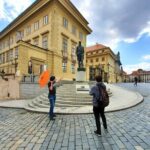
The tour also includes the Letná Hill area, where one of the world’s largest statues of Josef Stalin once stood. Even though you’re not always looking at a single intact object, this stop is about the force of visibility—how power tries to be seen from everywhere.
What I like about this kind of stop is that it explains a pattern. When regimes want to control narratives, they don’t only control newspapers. They control sightlines, monuments, and what dominates the skyline. Letná is a clean example of that.
If you enjoy political geography—the way the physical city shapes public mood—this is a stop you’ll remember.
John Lennon Wall: hope, graffiti, and the sound of dissent
Then you head toward the John Lennon Wall, famous for protest-style graffiti that emerged as people searched for Western-style freedom during the Cold War. This is where the tone can shift. You’re still in the same historical frame, but the message becomes human and immediate.
The wall is powerful because it’s not an abstract symbol. It’s writing—prayers for change, slogans for revolution, and messages of hope. In a city filled with monuments meant to command attention, the wall is a reminder that ordinary people used public space to argue back.
You’ll get time to stop and absorb it, without feeling like you’re racing through. If you’re traveling with teens or students, this is also one of the easiest stops to talk about, because it invites questions: Who wrote this? Why here? What did people hope would happen next?
Wenceslas Square and the Velvet Revolution: where public space turns political
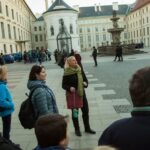
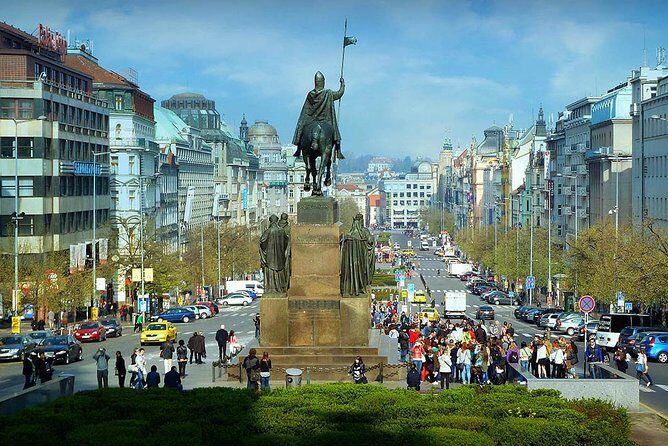
Wenceslas Square is a turning point. The tour walks you through the space with an emphasis on its layered past—founding in the 14th century, later cycles of parades and occupying power military displays, and the heavy events tied to the Prague Spring and 1989.
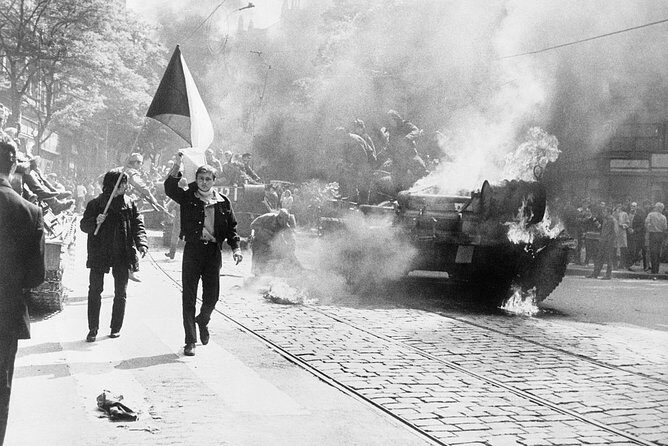
This is where the story gets sharply specific. In 1968, Warsaw Pact tanks converged here to crush the Prague Spring, ending an about eight-month period when freedom of speech and an independent press were allowed to breathe. That contrast—brief openness followed by force—explains why people later fought harder for the kind of freedom that can’t be revoked overnight.
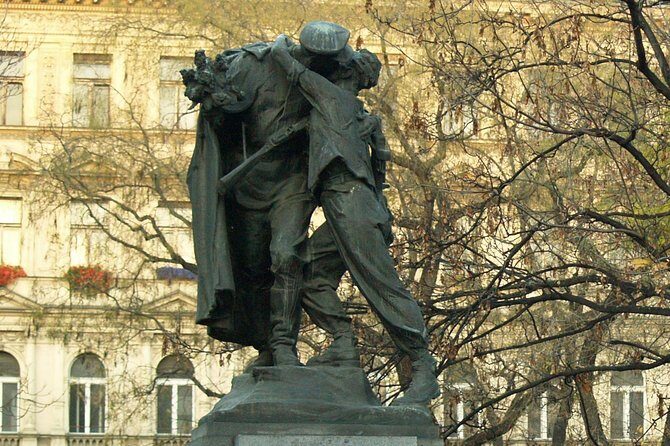
Then you shift to 1989’s Velvet Revolution, where demonstrations and public courage helped end communist rule. The tour also includes time to consider monuments to protestors, so you aren’t only learning dates. You’re seeing how remembrance itself was shaped.
Also look for the Upside-Down Statue of King Wenceslas riding a Dead Horse. It’s a strange, thought-provoking piece of public art—an ironic reminder that political “hero narratives” can be turned and questioned, depending on the moment.
Expect about 20 minutes at Wenceslas Square. It’s long enough to take in the buildings and monuments around you, but short enough that you won’t feel bored.
What makes the guide matter (and why you should care about how it’s taught)
This tour is led by a historian guide. The format matters because Cold War history needs interpretation to avoid turning into trivia.
Guides like Vadim and Alžbeta (names you might see associated with this route) are known for weaving locations and buildings into the larger political picture. It’s not just facts pasted onto landmarks; it’s a sense of how systems worked and why people acted the way they did.
You’ll also get discussion-style moments—questions, prompts, and connections to daily life under Soviet-controlled rule. That approach is especially useful if you don’t know much about Czechoslovakia yet. Instead of requiring background knowledge, the guide builds context on the move.
Who this tour fits best
This private Prague Cold War walking tour is a strong match for you if:
- You want a structured, time-efficient history walk (about 3 hours) with real stops
- You care about how politics shows up in architecture and public space
- You like guides who explain context and connect events to places you can still see
- You’re traveling with a small group and want privacy and flexibility
It might not be your best match if you’re seeking a casual photo stroll only. This walk spends time on oppressive history, propaganda, and the mechanisms behind control. It can be moving, but it isn’t light.
Should you book Private Prague Cold War Walking Tour?
Yes, if you want your Prague history with specifics—places that make Cold War ideas physical. The private guide, the focused route from shelters to memorials to street dissent, and the fact that you get help with context make this a smart use of limited time.
I’d book it sooner if you can travel in a group of up to 10, so the per-person value improves. And if stairs and steep hills are a challenge for you, plan around Vitkov Hill from the start—this tour can adjust the route so you still get the core Cold War story.
If you’re the type who enjoys a city that talks back through its monuments, this one is a solid choice.
FAQ
How long is the Prague Cold War walking tour?
It runs for about 3 hours.
Is this tour private, and what is the group size?
It’s a private tour. Your group will participate, with pricing based on up to 10 people or fewer.
What language is the tour offered in?
The tour is offered in English.
Where do we meet the guide?
You meet in central Prague at Náměstí Republiky 1077/2, Nové Město, Praha 1. If you are not arranging hotel pickup, you should meet 15 minutes early at the default meeting point near Kostel Svatý Josef.
Is hotel pickup included?
Hotel pickup and drop-off are not included. Pickup is offered unless you arrange otherwise.
What’s included in the price besides the guide?
You get a historian guide and tram tickets. You’ll also have a mobile ticket.
Are entrance fees included?
Not all stops include admissions. The Vitkov monument area is listed as admission not included, while some other segments note free admission.
Is the tour difficult to walk, and can it be adjusted?
The tour requires moderate physical fitness. There is a steep climb (about 20 minutes) up Vitkov Hill, but you can request to leave out Vitkov Hill and focus on other Cold War sites.
Is there free cancellation?
Yes. You can cancel up to 24 hours in advance for a full refund.