REVIEW · PRAGUE
Private Prague Introduction Walking Tour
Book on Viator →Operated by Insight Cities · Bookable on Viator
Prague makes sense in three guided hours. This private Prague introduction pairs a historian-style guide with a tight walking route through Old Town, New Town, and the Jewish Quarter story, with flexible stop-by-stop pacing so you can ask real questions as you go. It’s a great way to turn Prague’s landmarks into a readable timeline.
I especially like how the walk links big icons to the smaller details that explain why they matter. You’ll get Old Town Hall to Charles Bridge scale sights and end with photo-worthy Prague Castle views from the Vltava area, plus a guided focus on religious and political swings that shaped Czech history. One possible drawback: it’s still a 3-hour walk, so if you want lots of sitting time or very slow pacing, you’ll need to plan for standing and street-level touring.
In This Review
- Key things that make this private Prague walk worth it
- From MONDIEUM to Můstek: how the route really flows
- Old Town Hall and the Astronomical Clock: more than just a photo stop
- Týn Church and St. Nicholas: Gothic lines meet Baroque style
- Old Town Square and Charles Bridge: power, pilgrimage, and city identity
- Bethlehem Chapel and St. Giles: the Reformation story in Czech form
- New Town (Nove MEsto) and Wenceslas Square: Prague’s imperial mood
- Estates Theatre and Mozart’s Prague: Enlightenment-era culture in motion
- Jan Hus Monument and Parizska Street: public memory and Jewish history
- Kafka’s kinetic statue and the Vltava Castle finish
- Guides, group size, and why the private format changes everything
- Price and value: $367.61 per group is about what you buy in attention
- Timing tips for a morning or afternoon departure
- Who should book this private Prague introduction walk?
- Should you book? My honest take
- FAQ
- Is this a private tour?
- How long is the walking tour in Prague?
- What’s the price, and how big can my group be?
- Where does the tour start and end?
- Is there a morning or afternoon option?
- Is hotel pickup included?
- Do I need to buy tickets for the stops?
- Are food and drinks included?
- What if I need to cancel?
Key things that make this private Prague walk worth it
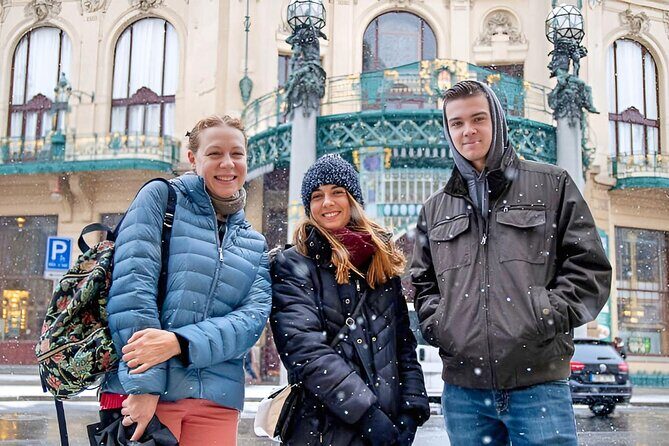
- A historian guide, not a scripted slideshow: Expect context you can actually use later while exploring on your own.
- Real flexibility: You can steer the pace and ask questions during the walk, not just at the end.
- Old Town + New Town in one thread: The route ties medieval market power to later empire politics.
- Jewish history woven into the route: Parizska Street is used to explain the Jewish Ghetto’s destruction.
- Churches in conversation: Gothic and Baroque architecture are compared in a way that helps you see the pattern.
- A private group vibe up to 10: Easier question-asking and smoother adjustments for different ages and interests.
From MONDIEUM to Můstek: how the route really flows
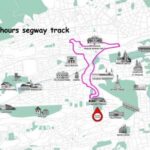
This tour is built as a guided walking story, starting in the Old Town area and finishing near Můstek, with a wrap-up by the Vltava for those classic Prague Castle views. You meet at MONDIEUM at Malé Strana, then head through Old Town landmarks that sit close enough to walk without feeling like you’re constantly transferring between neighborhoods.
The time on the ground is about 3 hours, and the route is dense: you cover major squares, towers, bridges, and churches plus a handful of smaller but telling stops. That density is the point. Prague can feel like a postcard collage—this route helps you understand how the pieces connect.
One practical note: pickup is listed as offered, but hotel pickup and drop-off is listed as not included. So if you’re hoping for a true door-to-door service, confirm where the meeting point will be for your specific booking. The tour does meet near public transit, which is handy if you’d rather arrive on your own.
You can also read our reviews of more walking tours in Prague
Old Town Hall and the Astronomical Clock: more than just a photo stop
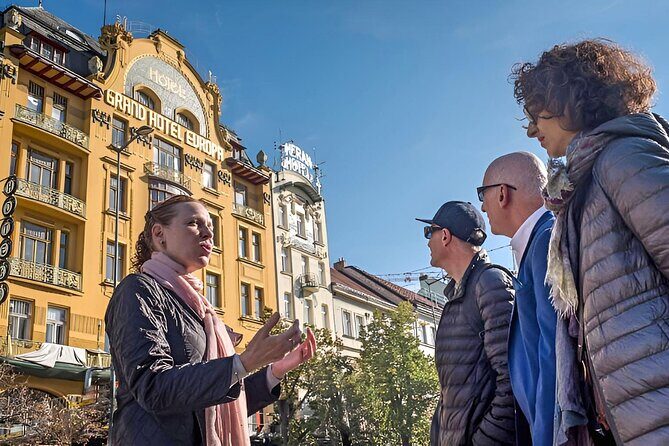
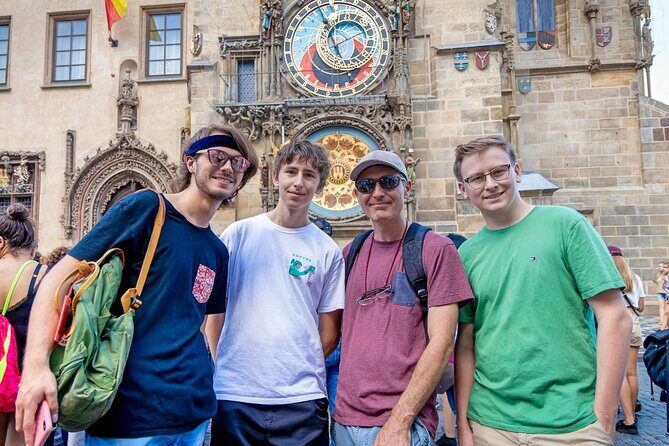
The walk’s first anchor is the Old Town Hall and Astronomical Clock area, where the guide explains what you’re actually looking at. Sure, the clock is famous for a reason—but the interesting part is the symbolism and what it represented in the city’s self-image. This is where Prague starts to feel political, not just pretty.
You’re likely to spend around 15 minutes here. That’s long enough to get the story without turning the stop into a time sink. The Old Town Hall and the clock complex sit right in the atmosphere of Old Town Square, so you also get that immediate sense of how the city’s civic power played out in public.
If you like architecture trivia, this is a strong start: your guide’s job is to connect the late Gothic character you see with the meaning behind the visuals.
Týn Church and St. Nicholas: Gothic lines meet Baroque style
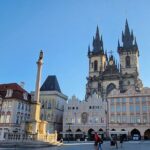
Next up is Church of Our Lady before Týn, famous for those dramatic twin Gothic towers. Your guide uses this stop to talk about Gothic traits—how they shape the look and mood—and then contrasts it with St. Nicholas Church across the square.
This pairing matters because it trains your eye. Prague has a habit of mixing styles in close quarters, and most first-time visitors miss that the styles reflect historical shifts in taste, power, and religious influence. With this guide-led comparison, you’re more likely to notice the differences later, even when you’re wandering without anyone holding your hand.
This stop is brief—around 10 minutes—so don’t expect a deep interior detour. Instead, think of it as a visual lesson: towers and façade details first, then the “why” behind them.
Old Town Square and Charles Bridge: power, pilgrimage, and city identity
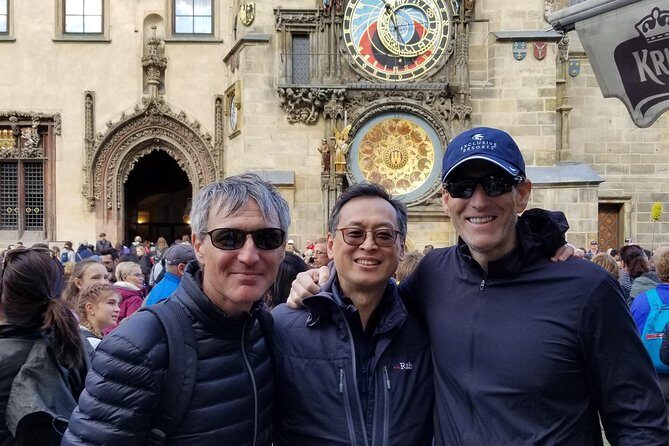
Old Town Square is the heart of the medieval marketplace, with centuries of political and architectural history layered into the space. You’ll spend about 15 minutes here with your guide framing what the square meant as a civic center: where people traded, argued, worshipped, and made decisions that affected everyday life.
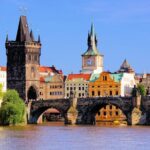
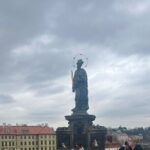
Then comes Charles Bridge. You’ll get a guided talk focused on how the bridge developed over 600+ years and how the Baroque statues of saints line the crossing. This is one of those places where most people take photos, then move on. With a guide, it becomes a corridor of symbolism: statues, angles, and the flow of people all point back to the city’s religious culture and public storytelling.
Charles Bridge is a 15-minute discussion stop, which is about right because the bridge is still a working crossing. You’ll get context without getting stuck in the crowd for too long.
Bethlehem Chapel and St. Giles: the Reformation story in Czech form
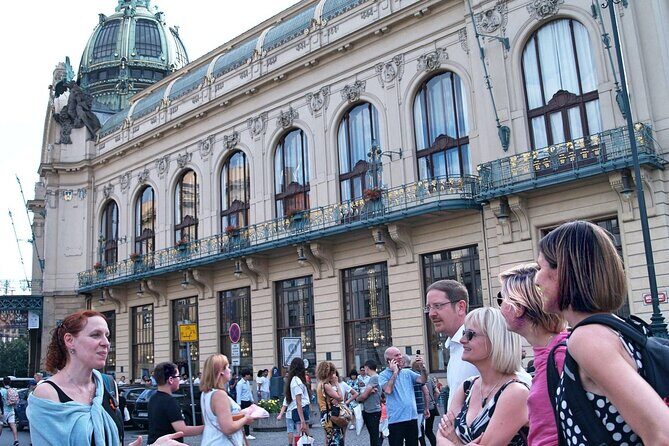
After the big civic and bridge landmarks, the tour shifts toward the religious turns that shaped Czech history. Bethlehem Chapel comes next, with a discussion that ties Jan Hus to the Reformation and to how protest ideas spread and changed political and religious life.
This is a fast stop—around 10 minutes—but it’s a key one. Jan Hus is one of those names you’ll see all over Prague. When your guide places him into the bigger timeline early, you’ll understand why his influence keeps showing up later in monuments and public memory.
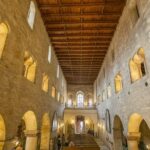
Then St. Giles Church, where the talk centers on Czech religious wars, the Reformation and the Counter-Reformation, and how those changes show up inside the Baroque decoration of a Gothic church. This is where Prague’s history stops being a list of dates and becomes visible in architecture.
If you’ve ever wished someone would explain why you keep seeing different “eras” at close range, this part of the walk answers that.
You can also read our reviews of more private tours in Prague


New Town (Nove MEsto) and Wenceslas Square: Prague’s imperial mood
Now you’re entering the New Town story, and the tone changes. At Nove Mesto, you’ll spend about 15 minutes framing the 600+ year history of the area and how it relates to Prague as the capital of the Holy Roman Empire.
That’s a big claim, but the guide’s job here is to make it feel concrete. You’ll connect the feeling of New Town grandness and planning to the political ambition behind the city’s growth. If you’re the kind of traveler who likes to understand why a city looks the way it does, this stop is a turning point.
After that, Wenceslas Square gets about 15 minutes as well, with history placed in the wider context of Prague and the Czech Republic. Wenceslas Square can be a lot of things depending on the day, but your guide will help you read its story as more than just a wide street with landmarks.
Estates Theatre and Mozart’s Prague: Enlightenment-era culture in motion
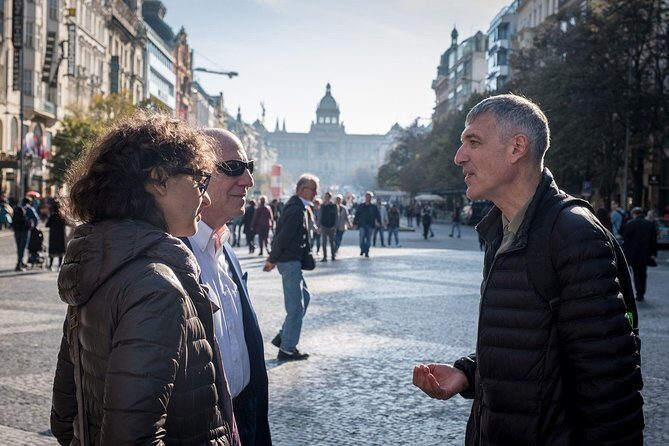
One of the more satisfying “wait, that matters” stops is Theatre Des Etats. You’ll spend about 10 minutes here with a discussion of Mozart’s relationship to Prague and the Age of Enlightenment.
This is not the kind of history that feels like homework. It’s the kind that makes later museum visits and concert programs feel less random. When Prague is explained through politics, religion, and culture together, the city stops being a set of separate attractions.
Even if you’re not a classical music fanatic, it’s a useful reminder that Prague wasn’t only defined by power struggles; it also had an intellectual and artistic current.
Jan Hus Monument and Parizska Street: public memory and Jewish history
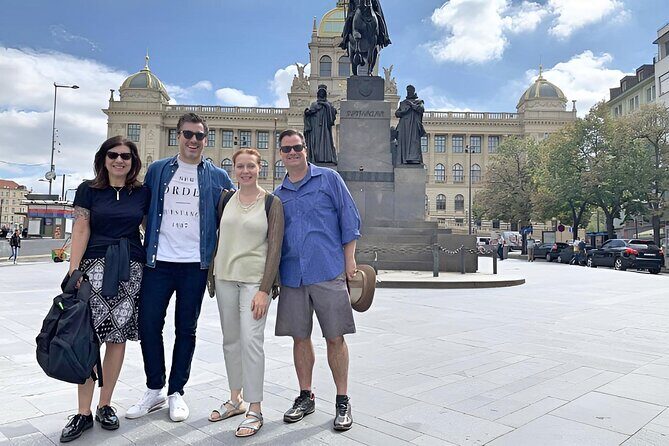
You’ll then move to the Jan Hus Monument, about 10 minutes, where the guide explains Hus’s revolutionary role within the development of European Christianity and ties it back to the Czech lands’ history.
This stop is valuable because it gives you a public marker you can recognize later. Monuments in Prague often feel like symbols you should know how to read—and a guide helps you do that fast.
Then comes Parizska Street, around 10 minutes, focused on the Jewish Quarter story and the destruction of the Jewish Ghetto of Prague. This is the stop that brings the Jewish history thread into the walking narrative in a direct way.
If you care about understanding the deeper layer of Prague—beyond architecture and scenic viewpoints—this is one of the most important sections of the entire walk. It also sets up better questions for the rest of your stay, because you’ll start linking streets and neighborhoods to what happened there.
Kafka’s kinetic statue and the Vltava Castle finish
The final landmark moment is the Franz Kafka Statue, about 5 minutes. It’s a revolving, kinetic statue resembling Kafka’s bust by Czech artist David Černý, and it’s included. It’s short, but it lands with a good “modern Prague” contrast after all the medieval and early-modern material.
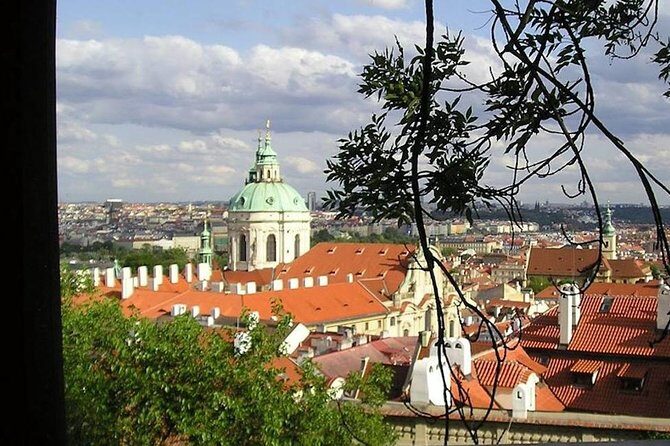
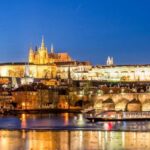
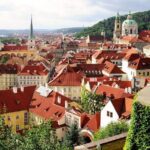
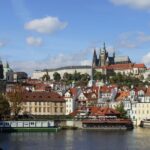
Then the tour wraps with that Vltava River finish and Prague Castle views. In practice, that’s where you slow down just enough to let the day sink in. You’ll have a sense of the city’s time scale: medieval market power, later imperial growth, religious conflict, and 20th-century cultural identity all in one morning or afternoon.
Because your tour ends near Můstek as well, you can usually transition smoothly into your next plan without feeling stranded.
Guides, group size, and why the private format changes everything
This is a private tour for your group only, with a maximum group size of up to 10. That sounds like a small detail, but it changes the whole experience. With a private setup, your guide can slow down when you ask something thoughtful—or speed up when you just want the main points and a direction for what to see next.
It also matters that the guides have a track record of adapting. People mention guides like Bonita and Vadim for turning facts into real conversations, and they also mention Pavla Zikova for energy and deep city love. The shared theme: the guide isn’t just listing dates. They connect buildings to the people and conflicts behind them, and they answer questions without making you feel rushed.
If you’re on a first trip to Prague, this tour works as an orientation. If you’re in Prague for a specific project or topic—especially Jewish history—it can be a fast way to get the right context quickly while you still have time to explore independently.
Price and value: $367.61 per group is about what you buy in attention
The price is $367.61 per group (up to 10) for about 3 hours. On its face, that’s higher than a standard group tour. The value equation is private attention and a historian-style guide covering a dense route with major landmarks plus the Jewish Quarter thread.
Here’s the practical way to judge it: if your group would split into two or three interests—architecture, religion/history, cultural context—you’re paying for a guide who can keep those threads tied together without you needing multiple tours. With this format, the cost per person drops quickly as group size rises.
Also, your guide-led route is built around stops where the experience is largely viewing and discussion. Many of the stops are listed as free admission for the time spent, so your money goes into interpretation rather than entry fees.
The included Kafka statue is a small bonus, but it also signals the tour’s intent: you’ll see not only the obvious postcard icons, but also a modern Prague element that fits the history you’ve been told.
Timing tips for a morning or afternoon departure
You can choose morning or afternoon departure. Either works, but I’d think about light and energy.
- If you go morning, you often get calmer street scenes for the early part of Old Town Square and the bridge area later in the route.
- If you go afternoon, you may get better late-day tones for Castle views by the river and a slightly more relaxed city pace.
Either way, the route is scheduled tightly enough that comfort planning matters. Wear shoes that can handle uneven old-street surfaces. Bring water if your body runs hot. And if you’re traveling with kids or mixed mobility, tell the guide early so the pacing can match your group.
Who should book this private Prague introduction walk?
This tour is a strong fit if you:
- Want a historian-guided first orientation that explains what you’re seeing.
- Prefer private questions and a guide who can shift pacing.
- Like architecture when it’s tied to real historical context.
- Care about how Czech history includes major religious turns and Jewish history on the city’s streets.
If you’re the type who only wants the five biggest photos and nothing else, you might find the packed route a bit intense. But if you enjoy learning the why behind the what, you’ll get a lot out of it.
Should you book? My honest take
Book it if you want Prague to feel like a story you can follow. A private historian guide, a tight Old Town to New Town route, and a guided Jewish history stop make this more than sightseeing.
Skip—or at least consider other options—if you dislike walking for hours or you strongly prefer museum-style, indoor pacing. This tour is made for people who like streets, squares, and churches as living history.
If you’re unsure, use this simple test: do you want answers while you’re still standing in front of the buildings? If yes, this is the kind of tour that pays off fast.
FAQ
Is this a private tour?
Yes. It’s listed as a private tour/activity, and only your group participates.
How long is the walking tour in Prague?
The tour runs about 3 hours (approx.).
What’s the price, and how big can my group be?
The price is $367.61 per group, up to 10 people.
Where does the tour start and end?
The start meeting point is MONDIEUM at Malé Strana (Malé Strana address listed). The tour ends at Václavské nám. 772/2, Můstek, Prague 1.
Is there a morning or afternoon option?
Yes. You can choose from morning or afternoon departure, and you should advise at the time of booking.
Is hotel pickup included?
Pickup is listed as offered, but hotel pickup and drop-off are listed as not included. It’s best to confirm the exact meeting arrangements for your booking.
Do I need to buy tickets for the stops?
Many stops are listed with admission ticket free, and you also get a mobile ticket. The Kafka statue stop is listed as included.
Are food and drinks included?
No. Food and drinks are not included unless specified.
What if I need to cancel?
Free cancellation is available. You can cancel up to 24 hours in advance for a full refund. If you cancel less than 24 hours before the start time, the amount paid will not be refunded.