Terezín is heavy, and the guide steers you. I like this tour because the focus stays on Holocaust historian Jiri Kluc and on specific places that explain how the camp system worked. You’ll spend time at the Small Fortress and Terezín memorial areas, with attention to details most passersby miss.
Another reason I’d choose it is the admission included price for the Terezín memorial, plus an air-conditioned ride and bottled water. One drawback to plan for: this is a Holocaust site, so the information and setting are confrontational, not casual sightseeing.
In This Review
- Quick highlights you’ll feel immediately
- Start at the Memorial: how to read Terezín in your head
- Small Fortress: the Gestapo prison for political prisoners
- Big Fortress and the museum areas: seeing the system, not just the suffering
- The Jewish ghetto: confronting the scale of loss
- Hidden Prayer Room, National Cemetery, and the railway remains
- Why Jiri Kluc’s semi-private format helps you actually process it
- 4 to 5 hours from Prague: what to expect in the field
- Price of $116.15: what you’re getting for your money
- Who this tour suits best (and who should think twice)
- Should you book this Terezín Holocaust historian tour?
- FAQ
- FAQ
- Where is the tour meeting point in Prague?
- How long is the Terezín Concentration Camp tour?
- What does the tour cost?
- How big is the group for this experience?
- Is the entrance ticket included in the price?
- What’s included besides the entrance ticket?
- Will I receive a mobile ticket?
- Who is the Holocaust historian guiding the visit?
- Can I cancel for a full refund?
Quick highlights you’ll feel immediately
- Semi-private size (max 6 travelers) means more time for questions and slower pacing.
- Jiri Kluc, Holocaust historian brings the story to life with a tone of respect.
- Small and Big Fortress areas help you understand how the Nazi prison and camp system functioned.
- Jewish ghetto context with over 35,000 perished gives the human scale behind the numbers.
- Hidden stops such as the Prayer Room, National Cemetery, and remains of the railway deepen the visit beyond the obvious.
Start at the Memorial: how to read Terezín in your head
Terezín, also called Theresienstadt, is in today’s Czech Republic and it played a major role in Nazi history. The experience works best when you treat it like more than a collection of buildings. The guide helps you connect the physical layout to the policies behind it.
I appreciate that the tour doesn’t rush you into a checklist. It’s structured around key parts of the memorial, including the Small and Big Fortresses and the museum areas, so you can build a mental map. That matters because otherwise it’s easy to look at walls and gates and still miss the logic of what you’re seeing.
Expect the emotional weight to land over time. You’ll likely come away with a clearer sense of how oppression, imprisonment, propaganda, and forced displacement intersected in one place. And yes, that clarity can be uncomfortable.
You can also read our reviews of more private tours in Prague



Small Fortress: the Gestapo prison for political prisoners
The Small Fortress is where the camp reality becomes sharply personal. The setting is described as a Gestapo prison for political prisoners, and that framing changes how you look at each space. You’re not just seeing an old facility; you’re seeing part of the machinery that targeted people considered enemies of the Nazi state.
What I like about touring this with a historian is that the explanation feels tied to what you can actually observe on site. You’ll get context that helps the building choices make sense—where detention happened, what kind of control was enforced, and why the place mattered within the larger system.
There’s also a value in the way this tour handles “hidden” elements. At Terezín, some key points are easy to miss without direction. The guide steers you toward significant locations, including less obvious spots tied to the story of imprisonment and survival.
Practical note: wear shoes you can walk in for several hours. Even when the tour is controlled and organized, you’ll still be spending real time on uneven memorial terrain.
Big Fortress and the museum areas: seeing the system, not just the suffering
Terezín includes more than one fortress, and that difference is essential. The tour includes the memorial areas tied to the Small and Big Fortresses and the museum context. That structure helps you understand that the Nazi camp operation was not one single thing—it was a network of spaces with different functions.
The museum component (included in your visit) helps you step back from individual buildings and see the bigger design. You’re trying to understand a system: how prisoners were classified, how confinement expanded, and how the camp functioned inside the wider Nazi war machine.
This is also where your guide’s role becomes especially valuable. A good on-the-ground historian doesn’t just recount events. He connects locations to themes so that when you move from one part of the site to another, you’re carrying forward what you learned rather than starting over.
If you’re new to Holocaust history, you’ll likely find the pacing helpful. If you already know the basics, you may still appreciate the extra detail in the “why” behind the camp layout and daily realities.
The Jewish ghetto: confronting the scale of loss
One of the tour’s central stops is the Jewish ghetto within the Terezín area. The tour description points to the fact that over 35,000 people perished there. That number is not presented as trivia. It’s placed in a context meant to help you understand what “perished” meant in lived experience, not just as an abstract statistic.
When you visit a ghetto site, you want the context to be precise. What this tour emphasizes is how the ghetto fits into the total Nazi strategy—confinement, exploitation, and destruction happening under a warped administrative logic. The guide’s job is to keep the focus on the people and the reality of how the ghetto operated.
I also like that the tour includes stops beyond what most people think of first. That matters because a ghetto visit that stops at a viewpoint can feel incomplete. Here, you’re led toward additional memorial elements that make the suffering harder to turn away from.
Be prepared for a steady emotional tone. The goal isn’t to make you feel good; it’s to help you understand what you’re standing on.
Hidden Prayer Room, National Cemetery, and the railway remains
Some parts of Terezín communicate history in a quieter way. That’s where the tour’s “hidden” stops become especially powerful.
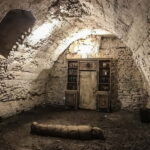
The tour includes the Prayer Room, described as hidden, which adds a different kind of perspective. It’s a reminder that spiritual life, community practice, and identity were not erased by confinement. In a place designed to strip people of dignity, the small signals of faith and belonging become meaningful.
You’ll also visit the National Cemetery. Cemeteries and burial grounds change the rhythm of a tour. Instead of focusing on dates and events, you feel the continuity of loss. It’s a place where you slow down naturally.
Finally, you’ll see the remains of the railway connected to the ghetto. That detail matters because rail lines are part of the logistics of deportation and transport. Seeing the physical remains helps you understand how movement—forced movement—was woven into the system.
These stops are a big part of why this tour is worth choosing over a more general visit. They give you multiple entry points into the story, so you don’t only understand Terezín as architecture.




Why Jiri Kluc’s semi-private format helps you actually process it
This is a small group experience, capped at 6 travelers. That small number isn’t just a comfort perk. It’s what allows the guide to answer questions as they come up, rather than pushing everything into a single lecture format.
In the reviews used to shape what I value about this tour, Jiri Kluc stands out for respect and passion in how he presents the material. People also point out that he’s good at answering questions and keeping the tone appropriate for survivors’ histories. One practical advantage mentioned is that he speaks excellent French, which can matter if you’re not fully comfortable in English.
I’d call this a tour designed for understanding, not just seeing. If your goal is to leave with a clearer grasp of how the camp site pieces connect—Small Fortress, Big Fortress, ghetto, and memorial elements—this format makes that more realistic.
And because it’s semi-private, you should expect a steadier pace. You’re less likely to feel like you’re sprinting behind someone else’s schedule.
4 to 5 hours from Prague: what to expect in the field
The total time is about 4 to 5 hours. That’s long enough to build context, but short enough that you can still handle the emotional intensity without turning it into an all-day ordeal.
The meeting point is at Ládví 182 00, Prague-Prague 8, Czechia, and the start/end is back at the meeting point. The tour also notes it’s near public transportation, which is useful if you don’t want to rely entirely on taxis.
You’ll travel in an air-conditioned vehicle. It also includes bottled water, which is practical when you’re doing an extended walk through a memorial site. Even if weather is mild, this kind of tour benefits from hydration and comfortable shoes.
One more reality check: the experience requires good weather. That doesn’t mean it’s canceled at the first cloud, but it does mean you should keep a little flexibility in your Prague plan.
Price of $116.15: what you’re getting for your money
At $116.15 per person, the value comes from several stacked pieces, not just the guide.
First, the entrance ticket to the Terezín memorial is included in the price. Admission fees alone can add up, and here they’re bundled in. Second, you get the driver/guide service and the air-conditioned vehicle, which saves you from stitching together public transport while also trying to manage a serious, time-sensitive visit.
Third, the group size matters. A maximum of 6 travelers makes this feel more like a guided education session than a mass tour. You’re paying partly for that slower, more human pacing.
Finally, you’re paying for the historian approach. The tour explicitly positions Jiri Kluc as a Holocaust historian and focuses on hidden locations, hidden stops, and details that help you understand the site rather than just tour it.
If you’re the kind of person who likes to ask questions and wants context as you walk, this price starts to make sense quickly. If you just want the broadest possible overview with no real interpretation, you might find cheaper options elsewhere—but they won’t help you connect the same dots.
Who this tour suits best (and who should think twice)
This tour fits best if you want a respectful, guided understanding of Terezín and its role in Nazi history. If you care about Holocaust history, WWII context, or you simply want to visit a major memorial without feeling lost, this is a strong choice.
It also makes sense for people who like a structured route with significant stops. The tour includes the Small and Big Fortresses, museum context, the Jewish ghetto story, and memorial elements like the National Cemetery and Prayer Room. You won’t be stuck guessing what matters.
On the other hand, because the focus is confrontational history, you should think twice if you’re looking for light entertainment. Even with a respectful guide, this kind of site can be emotionally heavy. You’ll want to be in the right mindset for it.
Should you book this Terezín Holocaust historian tour?
Yes, if your top priority is clarity and respectful context. The small group size, the inclusion of memorial admission, and the focus on hidden locations like the Prayer Room and railway remains all point to a visit designed to help you understand what you’re seeing.
You might skip it if you want a casual, quick stop or if you prefer to guide yourself with general materials. But if you want the camp to make sense as more than walls, this is the kind of guided experience that tends to leave people with better understanding and fewer unanswered questions.
FAQ
FAQ
Where is the tour meeting point in Prague?
The tour starts at Ládví 182 00, Prague-Prague 8, Czechia.
How long is the Terezín Concentration Camp tour?
The duration is about 4 to 5 hours.
What does the tour cost?
The price is $116.15 per person.
How big is the group for this experience?
It has a maximum of 6 travelers.
Is the entrance ticket included in the price?
Yes. Entrance ticket to the Terezín memorial is included.
What’s included besides the entrance ticket?
The tour includes bottled water, all fees and taxes, an air-conditioned vehicle, and a driver/guide.
Will I receive a mobile ticket?
Yes. This activity includes a mobile ticket.
Who is the Holocaust historian guiding the visit?
The tour is guided by Holocaust historian Jiri Kluc.
Can I cancel for a full refund?
Yes. Free cancellation is available, and you can cancel up to 24 hours before the experience’s start time for a full refund.