REVIEW · PRAGUE
The Plague Doctor of Prague
Book on Viator →Operated by Night Watchman of Prague · Bookable on Viator
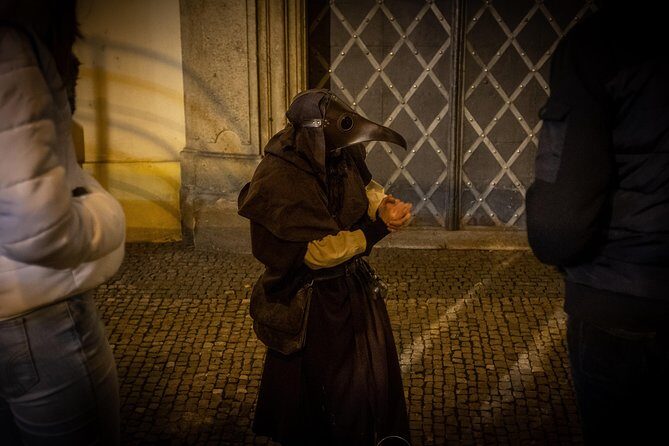
A plague doctor walks Prague with you. This 90-minute, English tour turns 1715 Prague into a story you can see and hear, with Alexander Schamsky as your guide through plague fears and medicine. I especially love the blend of street-theater energy and practical public-health context, and I like that it stays small (up to 10) with a group picture at the end.
The tour is also pleasantly dark in a fun way, but it leans more on daily life, quarantine, and medical ideas than on heavy architectural storytelling. One small wrinkle: if costumes are involved, you might notice an odd smell if the guide’s outfit needs refreshing.
In This Review
- Key highlights you’ll actually care about
- Why this plague doctor tour works in Prague (and isn’t just spooky)
- Stop 1: Aurus Hotel Prague, Alexander Schamsky, and the House of the Golden Well
- Stop 2: Klementinum area, the New Town Hall, and what quarantine did to daily life
- Stop 3: Old Town Square—markets, plague merchants, and a 30 Years’ War detour
- Stop 4: The Franz Kafka Statue, the Jewish Quarter, and why literature shows up
- Stop 5: Church of Saint Simon and Jude area and Na Frantisku old hospital
- Stop 6: National Gallery Prague and the convent of St. Agnes ending
- Price and value: $26.61 for 90 minutes with a small cast
- What to expect on the walk (and what might not be your style)
- Who should book The Plague Doctor of Prague?
- Should you book it? My call
- FAQ
- FAQ
- How long is the Plague Doctor of Prague tour?
- What language is the tour offered in?
- Where do you meet the group?
- Where does the tour end?
- How big is the group?
- Is it worth it if I only have one evening in Prague?
- Are there extra admission tickets at the stops?
- Is the tour good for kids or teens?
- Can I bring a service animal?
- What if the weather is bad?
- When should I book?
Key highlights you’ll actually care about
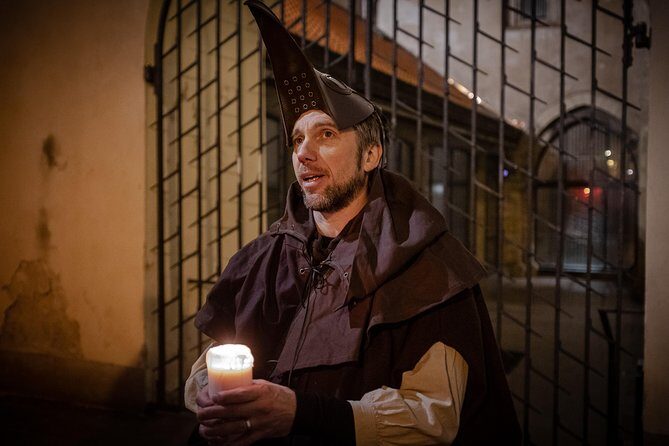
- Alexander Schamsky in character from 1715 Prague, plus the saints linked to plague fear
- Aurus Hotel Prague and the House of the Golden Well as your time-machine starting point
- Quarantine explained at the New Town Hall/Klementinum area, including how people lived under restrictions
- Black Death types and different root causes people believed explained the outbreak
- Jewish Quarter focus, including plague-era impacts on Jewish communities, with Kafka and Camus referenced
- Na Frantisku old hospital stop and period healing methods, tied to the massive global death toll
Why this plague doctor tour works in Prague (and isn’t just spooky)
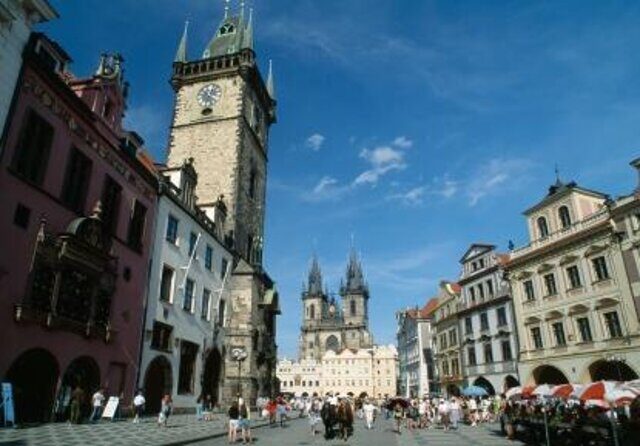
Prague has plenty of ghost tours. This one goes a step different direction: it asks what people thought caused the plague, what they did to survive it, and how medicine tried to respond with the tools it had back then. You’re not stuck in one theme. You’ll bounce between religion, public rules, quarantine life, and what doctors actually believed.
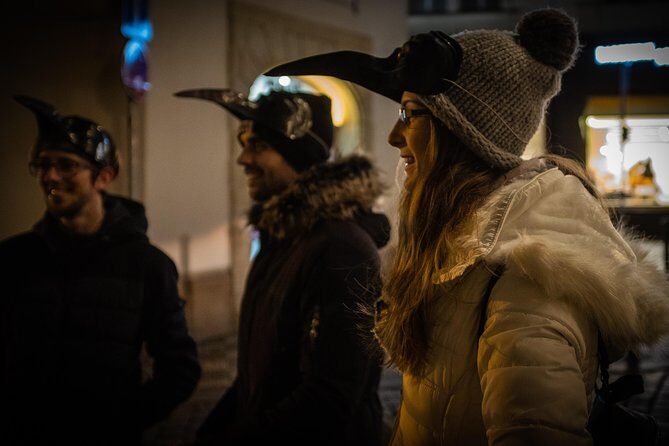
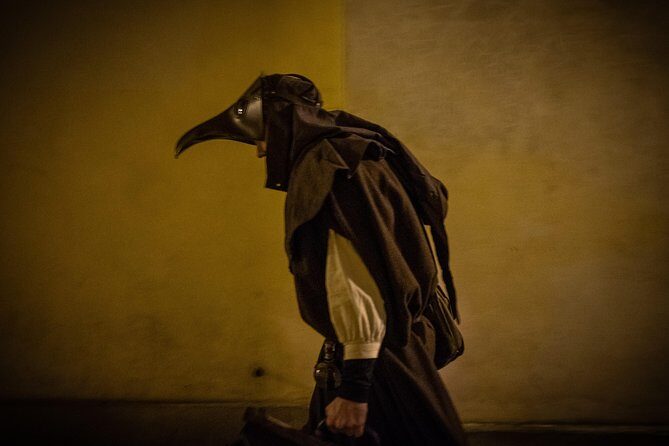
You’ll also get the kind of performance that makes the dark parts easier to handle. The guide (often in the plague doctor role, with performers such as Thomas, Oskar, David, and Maddie taking the character in the past) uses humor to keep the story moving. That matters because plague history can turn heavy fast. Here, the tone stays readable.
And the small group size is a real benefit. With up to 10 people, you’re more likely to hear clearly at street level and feel part of the action, not just a number in the background.
You can also read our reviews of more tours and experiences in Prague.

Stop 1: Aurus Hotel Prague, Alexander Schamsky, and the House of the Golden Well
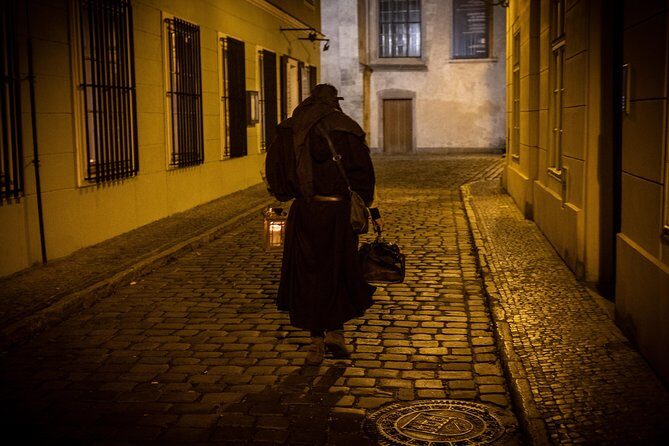
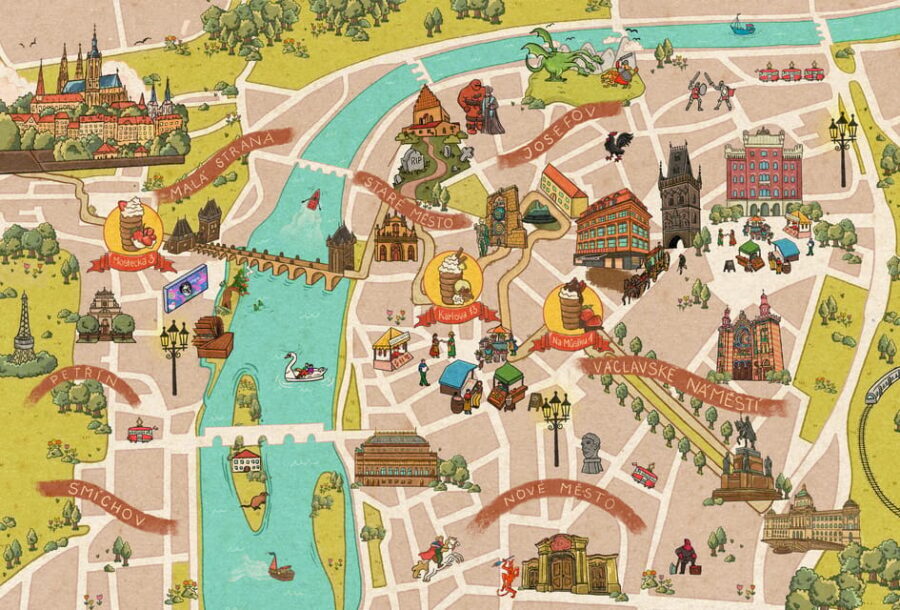
You start at Aurus Hotel Prague (Karlova 3). The moment you meet the plague doctor character—Alexander Schamsky—you’re pulled straight into 1715. That framing is the trick: it’s not only about the Black Death in the broad sense. It’s about how people in different centuries repeated patterns of fear and explanation when illness hit.
This first stop sets the stage in three useful ways:
- You learn what the tour calls the House of the Golden Well, and you connect that location to plague-era religious thinking.
- You’re introduced to the saints people associated with plague protection—St. Sebastian and St. Rochus.
- You get an overview of the different root causes people believed led to plague outbreaks.
That last part is surprisingly practical for you. It helps you understand why the solutions of the time made sense to ordinary people, even if modern medicine would call them wrong. You’re seeing the logic of the era, not just the grim outcomes.
One caution: because this is the setup stop, you’ll want to arrive on time. The story starts immediately, and the best moments come early.
Stop 2: Klementinum area, the New Town Hall, and what quarantine did to daily life
Next, the tour heads to the New Town Hall area, tying in the old monastery Klementinum and the libraries around it. This is where the experience shifts from fear and beliefs to systems and control.
The big themes here are:
- Different types of the Black Death as people understood them
- How social class shaped what happened during the outbreak
- Life in quarantine—what being restricted actually meant day to day
That quarantine portion is worth paying attention to. When you hear about quarantines in a textbook, it can feel abstract. On this walk, it becomes human. You get the sense of how movement, contact, and survival changed when public rules took over.
Also, the guide brings in the angle of wealthy vs. common people escaping or enduring differently. That’s not just an interesting historical fact; it’s a lens you can use while you’re in Prague. You start noticing how power and access shape responses to crisis.
If you’re hoping for a pure architecture tour, this stop might feel more story-driven than postcard-driven. If you like history that explains how people lived, it’s a strong match.
Stop 3: Old Town Square—markets, plague merchants, and a 30 Years’ War detour
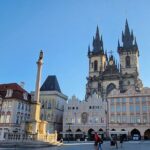
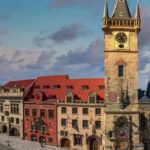
Staroměstské náměstí is your next stage, with the Hussite Church, Týn Church, and the Old Town Hall as part of the visual backdrop. This is a clever stop because markets are the opposite of quarantine. They represent contact, crowds, and trade routes—exactly the kind of ingredients plague fear tries to control.
Here, you’ll learn about:
- Life of merchants during plague times
- What daily commerce looked like when illness threatened everything
- An excursion into the 30 Years’ War
That 30 Years’ War thread matters because outbreaks never land in a vacuum. Conflict strains food supply, housing, movement, and trust. Even when you’re focusing on the plague, the guide uses the war context to explain why the period felt unstable and why people’s responses were shaped by multiple pressures.
Practical note: Staroměstské náměstí can be busy in the evening. You’ll still have a good walking pace, but plan for the usual crowd noise. The guide’s job is to keep you on the story rails despite the square’s energy.
Stop 4: The Franz Kafka Statue, the Jewish Quarter, and why literature shows up
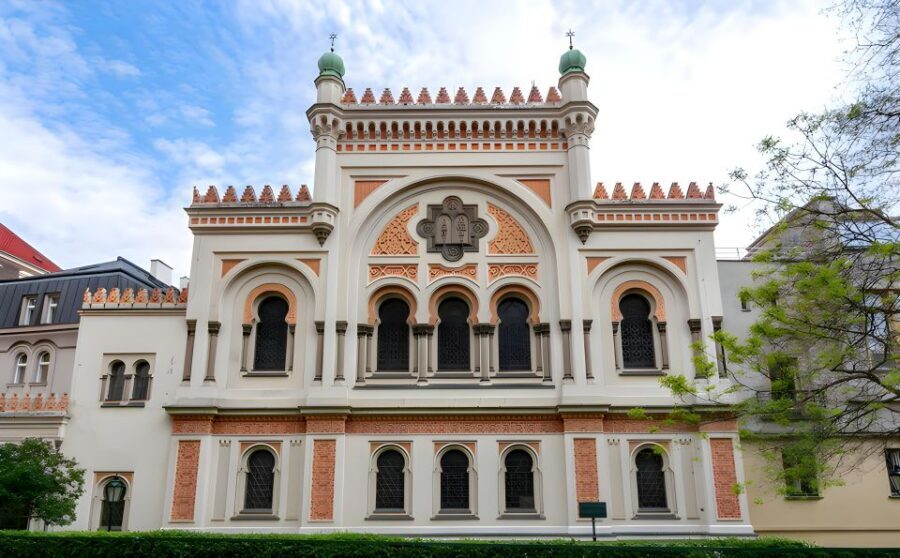
After a brief introduction to Franz Kafka, the tour turns toward Jewish history during plague times and continues into the Jewish Quarter. This is one of the most important and meaningful parts of the route.
You’ll connect the plague-era experience of Jewish communities with broader European plague history. It’s also where the tour uses pop culture and literature as a bridge to memory—Albert Camus’s novel La Peste is specifically mentioned.
This is a strong choice for you if you want more than medical facts. Plague history gets more real when you see how it affected specific communities, not only kings and doctors. It also helps you understand Prague as a layered city shaped by many kinds of life and loss.
If you’re a Kafka fan, you’ll probably appreciate the extra context. If you’re not, don’t worry. The guide gives the right amount of literary framing to keep it moving and relevant to the places you’re standing in.



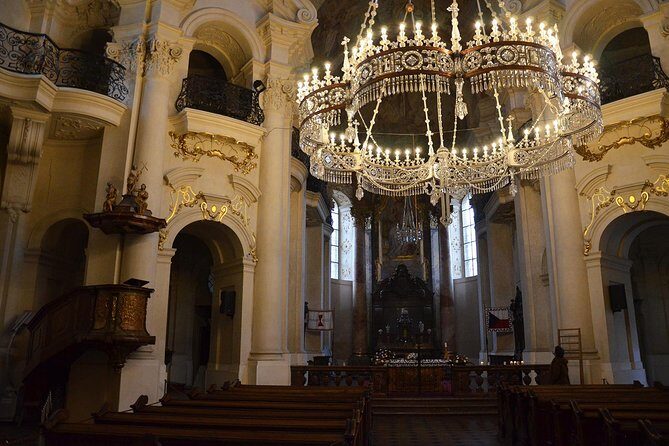
Stop 5: Church of Saint Simon and Jude area and Na Frantisku old hospital
At the Church of Saint Simon and Jude stop, the tour explores the old hospital Na Frantisku. This is where the tour becomes very medical, very human, and very practical.
You’ll hear about:
- Healing methods used in plague times
- Medical background of the plague and its global death toll, described as roughly 200 million people worldwide
- Unknown heroes of medicine who worked in this hospital
This is the part you’ll remember if you care about public health, ethics, or how health systems respond under pressure. The guide doesn’t just throw out scary images. It explains the mindset behind the treatments and how doctors tried to help with the knowledge they had.
One more point: walking to a hospital-related site at night gives the information extra weight. You’re not just reading about medicine. You’re standing near a place tied to care and survival.
You may also find the tour’s humor works particularly well here, because it keeps the tone from becoming all doom. Still, be ready for serious material. This stop is not designed to be light.
Stop 6: National Gallery Prague and the convent of St. Agnes ending
The tour wraps up at the National Gallery Prague, specifically the Convent of St. Agnes. That final location is a good “close the loop” choice, because it shifts from plague response to legacy.
You get:
- A look at the life and work of St. Agnes of Bohemia
- A summary of plague times in Prague and across Europe
- Interesting facts about the current status of the disease
- A group picture with the plague doctor
That last piece—the modern note—helps you leave with context. You don’t finish feeling like you only visited a dark period and then walked away. You finish with a sense of how far medicine and public health have come, and how long the themes of fear and response stay with us.
Also, ending at the convent area helps you decompress. It’s calmer than the central square, and it gives you a satisfying bookend to the street-theater vibe earlier in the evening.
Price and value: $26.61 for 90 minutes with a small cast
At about $26.61 per person for roughly 1 hour 30 minutes, this tour is positioned like a value pick—not a premium museum ticket experience. And it makes sense given what you get:
- A guided route that hits several major and not-so-major Prague sites tied to plague life
- English-language performance in a small group (max 10)
- Mobile ticket use
- No extra admission charges listed for the stops
What you’re really paying for is the combination of storytelling and access to a specific angle: plague beliefs, quarantine behavior, and Jewish community impacts. Many walking tours give you architecture or general history. This one gives you a crisis lens.
If you’re on a tight trip schedule, the 90-minute timing also works well. You can fit it around dinner and still get a meaningful evening experience.
One practical note: it’s commonly booked about 16 days in advance. That’s a good sign it sells out, especially on popular evenings. If you can, lock in your time slot early.
What to expect on the walk (and what might not be your style)
Based on how the tour is described and how it’s performed, expect a mix of:
- walking through the older streets of Prague after dark
- lots of character work from the plague doctor
- explanations of quarantine and social behavior
- stops that connect plague to specific places, not only general facts
The pace is often described as not too taxing, with an emphasis on an easy evening walk. Still, you’ll be on your feet for about 90 minutes, and cobblestones and evening crowds are real.
Now the balanced part: this tour doesn’t try to be a pure architecture lecture. It’s more about everyday life under plague pressure. If you come wanting a building-by-building deep dive, you may feel the historical narrative could be stronger in some spots. And if you’re sensitive to costume comfort, it’s worth knowing that at least one past comment mentioned the costume scent needing refresh.
Who should book The Plague Doctor of Prague?
This is a great match if you:
- like history that explains how people actually lived, not just dates
- enjoy a theatrical guide but still want real information
- care about public health themes, quarantine behavior, and medical history
- want Prague from the inside, through streets and institutions connected to the plague
It’s also a strong family option. One of the most repeated signals from past experiences is that kids and teens handle it well, with the performance doing some of the job that a lecture would normally do through sheer adult attention.
You might choose something else if you want:
- a strictly architectural route
- a fully academic, no-humor presentation
- a tour that focuses only on the Black Death and ignores the wider period context (like the 30 Years’ War thread)
Should you book it? My call
If your trip includes room for one experience that’s part history class and part street performance, I’d book it. The price is fair, the group size stays intimate, and the route ties plague belief, quarantine life, and Jewish community impacts to real Prague places you can point to after the tour ends.
The biggest reason to skip would be if you want a purely architectural, lecture-heavy evening. Otherwise, you’re likely to leave with two things that matter: a clearer understanding of how people made sense of plague—and a fun, memorable way to see Prague at night while doing it.
FAQ
FAQ
How long is the Plague Doctor of Prague tour?
It runs about 1 hour 30 minutes.
What language is the tour offered in?
The tour is offered in English.
Where do you meet the group?
You meet at Aurus Hotel Prague, Karlova 3, 110 00 Praha 1-Staré Město, Czechia.
Where does the tour end?
It ends in a different location (the National Gallery Prague – Convent of St. Agnes is part of the ending stop).
How big is the group?
The tour has a maximum of 10 travelers.
Is it worth it if I only have one evening in Prague?
Yes. The timing is short enough to fit around dinner while still visiting multiple plague-related sites.
Are there extra admission tickets at the stops?
Admission tickets are listed as free for the stops included in the experience.
Is the tour good for kids or teens?
Most travelers can participate, and the tour’s tone has been described as fun and enjoyable for mixed ages, including teens and kids.
Can I bring a service animal?
Yes, service animals are allowed.
What if the weather is bad?
The experience requires good weather. If it’s canceled due to poor weather, you’ll be offered a different date or a full refund.
When should I book?
It’s often booked about 16 days in advance, so booking ahead is a smart move.