REVIEW · PRAGUE
IAM Illusion Art Museum Entry Ticket
Book on GetYourGuide →Operated by Illusion Art Museum Prague · Bookable on GetYourGuide
Illusions in art are fun, but this one is practical. IAM Illusion Art Museum Prague is a tight, high-impact stop in the center of town, built around anamorphoses, optical effects, and technology that makes your camera part of the artwork. Expect to bounce between eye tricks, interactive scenes, and Czech-themed stories that explain why people fell for these illusions in the first place.
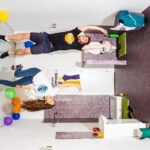
What I like most is how hands-on it feels: you’re not just looking, you’re positioning yourself, photographing the change, and using QR codes and an app to trigger effects. I also appreciate the variety, from classic reverse perspective to modern 3D and motion-based images by named artists like Patrick Hughes and David Strauzz.
One thing to consider: the museum is smaller than you might guess, and some areas can get crowded when everyone lines up for the best photo spots. Add in the fact that it’s not a long, slow museum day, and you’ll want to plan how you’ll move through the rooms.
In This Review
- Key highlights you’ll notice right away
- Why Prague’s IAM Illusion Museum Feels So Different
- Tickets, timing, and how long you’ll actually need
- Your photo-first route: a simple way to move through the museum
- Patrick Hughes and the reverse-perspective trick that starts the fun
- Anamorphoses and metallurgical color by Proško and Vlna
- Optical reliefs and distorted 3D paintings that reward patience
- Lenticular morphing and stereoscopic photos that feel alive
- AR, QR codes, and the mini cinema: when the tech actually helps
- Czech history hidden inside the illusion art
- Staff support, crowd control, and comfort details to plan for
- Value for $16: what you’re really paying for
- Who should book IAM Illusion Art Museum Prague
- Should you book this illusion museum?
- FAQ
- How much does an IAM Illusion Art Museum Prague ticket cost?
- How long should I plan to spend at the museum?
- Is an audio guide included, and what languages are available?
- Do I need a smartphone or camera to enjoy the museum?
- Is food or drink included with the ticket?
- Is the museum accessible for wheelchair users?
- Are pets allowed inside?
- What should I do if I want flexibility with booking?
Key highlights you’ll notice right away
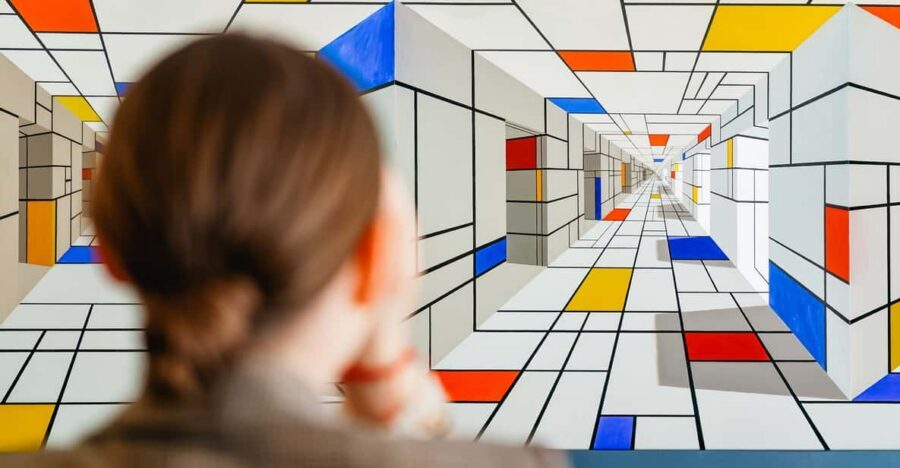
- Photo-first interactive exhibits that work with your smartphone camera
- Named illusion artists like Patrick Hughes, Patrik Proško, and Ladislav Vlna
- Optical effects you can repeat, so you get more than one good shot
- AR and mini cinema sections that keep the visit from feeling purely static
- Czech history connections shown through illusion artwork
- Staff who help with QR code setups and picture positions
Why Prague’s IAM Illusion Museum Feels So Different
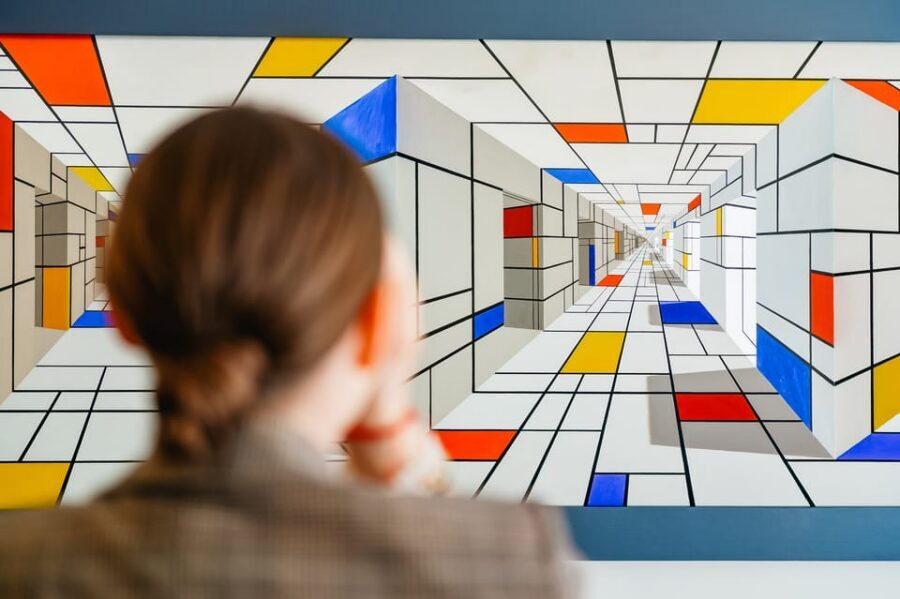
This isn’t a quiet museum where you drift aisle to aisle. IAM is built for the way you actually travel: you want a break, you want laughs, and you want something that makes your camera roll look better.
The core idea is simple and smart. Illusion art isn’t just about being weird. It shows you how perception works, then lets you test it in real time. You’ll see effects that only make sense from a specific angle, plus images that change as you shift your position or your viewpoint.
What makes the experience especially good in Prague is that it fits the city’s rhythm. It’s easy to slot in between sightseeing, and it’s also a very solid rainy-day plan since you’re mostly indoors.
A few more Prague tours and experiences worth a look

Tickets, timing, and how long you’ll actually need
Your visit is set up as a one-day museum ticket experience, so you’re not locked into a full-day schedule. Plan on about 60 to 90 minutes if you want time for photos and a comfortable pace through the main interactive areas.
The big timing issue isn’t length, it’s flow. When it gets busy, the most popular setups can bottleneck, especially where you need to stand in a specific place for the effect. If you care about getting clean shots, you’ll enjoy going when foot traffic is lighter, and you’ll want to keep your turn moving.
Also note the museum is small. That’s not a deal-break; it just means you should go in with intention. Pick the exhibits you care about most, and let the rest be a bonus.
Your photo-first route: a simple way to move through the museum
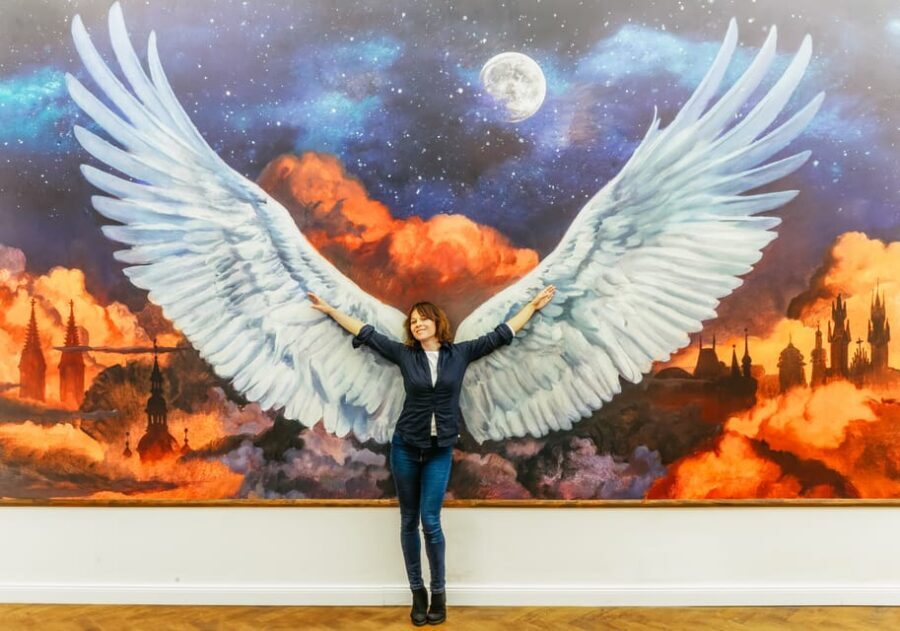
When a museum is interactive, the layout matters. IAM runs best if you treat it like a loop, not a one-way march. Start early with the effects that require precise positioning, then circle back for anything you missed or any shots you want to redo.
Here’s a practical approach:
- Begin with the angle-sensitive exhibits, where the illusion depends on where you stand.
- Then work through the 3D and morphing pieces, where the camera sees what your eyes can’t.
- Finish with the tech bits like AR and the mini cinema, since those tend to be easier once you’ve warmed up to the style of the museum.
If you’re with a friend, you can also split tasks. One person takes photos while the other tests angles or QR code prompts, then swap.
Patrick Hughes and the reverse-perspective trick that starts the fun
One of the museum’s best “wait, that can’t be right” moments comes from Patrick Hughes, known for reverse perspectives. These works play with depth cues so your brain does the wrong math and you suddenly feel like the image is bending toward you.
This is a great early stop because it trains you. After you see one reverse-perspective effect, the rest of the museum makes more sense. You start noticing how the illusion is built, not just that it happens.
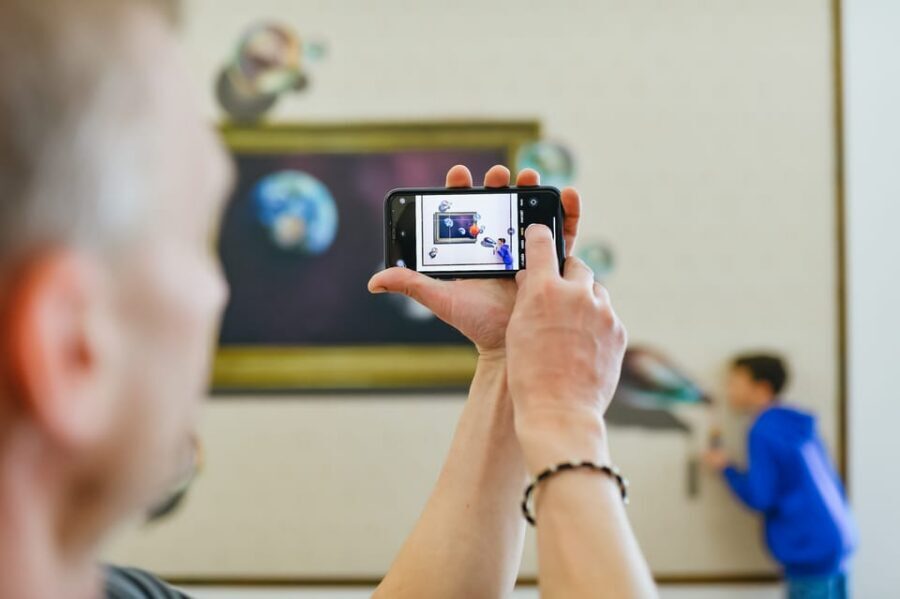
For photos, focus on stability. Use your camera to frame the key lines first, then adjust your position. The staff are on hand to help people get the right stance for picture-taking, so don’t be shy if you’re not getting the effect right away.
Anamorphoses and metallurgical color by Proško and Vlna
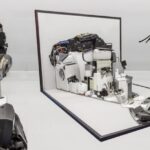
IAM takes the idea of illusion and gives it texture and craft. You’ll run into Patrik Proško’s anamorphic 3D creations, where the image looks normal until you stand in the correct spot, then it “snaps” into a form that feels almost physical.
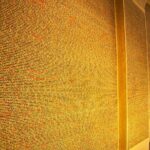
Next, don’t miss Ladislav Vlna’s metallurgical paintings. This is where the museum goes beyond optical tricks and into materials. The visual impact isn’t just optical; it’s also about finish and surface. It’s a reminder that illusion art isn’t only about geometry—it’s also about how light and pigments behave.
If you’re the type who likes art that makes you slow down, this section does it. If you’re only here for photos, it still delivers, because the 3D and material effects photograph well from multiple angles.
You can also read our reviews of more museum experiences in Prague

Optical reliefs and distorted 3D paintings that reward patience
Some exhibits are meant to be instantaneous. Others are meant to reward a little patience. In IAM, the optical relief work by Ivana Štenclová is the kind of piece where your eye keeps trying to decide what’s flat and what’s raised.
You’ll also see distorted 3D paintings by Zdeněk Daňek and Jan Jírovec. These pieces can feel like they’re doing small visual flips, especially when you move around them with your phone camera at the ready.
The key tip: don’t treat it like one photo and done. Take one shot to establish framing, then take a second shot after you shift your angle slightly. This is where the museum feels most “worth it” because the results improve fast with small adjustments.
Lenticular morphing and stereoscopic photos that feel alive
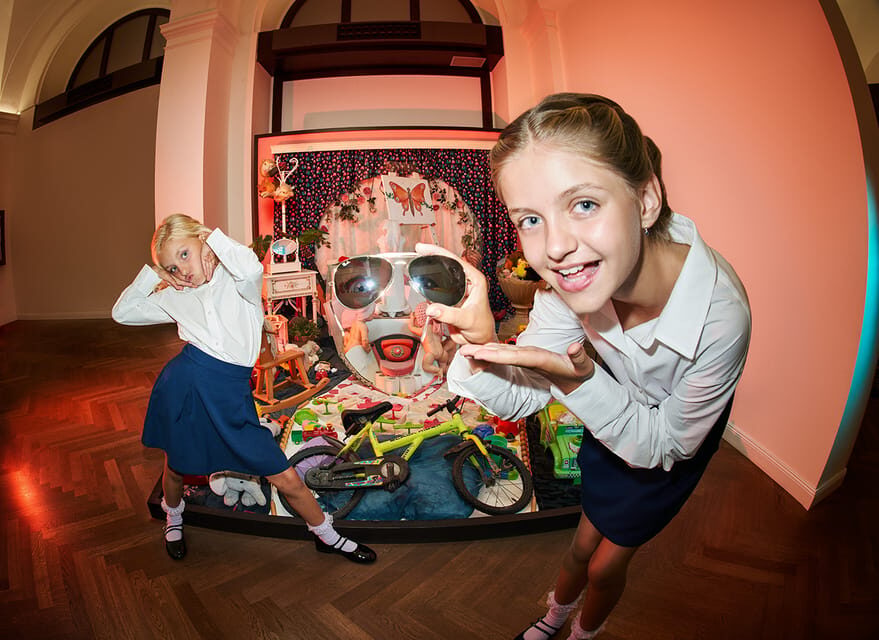
A big hit in the museum is David Strauzz’s morphing lenticular images. Lenticular art is designed to look different depending on viewing angle, so it creates that pleasant “the picture is moving” effect without requiring actual motion.
Another memorable section includes stereoscopic photographs of adventurers Zikmund and Hanzelka. Stereoscopy is older-school than AR, but it has a similar payoff: you get a more dimensional sense of depth than you expected from a photo.
If you’re traveling with kids, this is often where attention stays locked in. If you’re traveling solo, it’s still great because you can take your time setting up shots without needing a group to coordinate.
AR, QR codes, and the mini cinema: when the tech actually helps
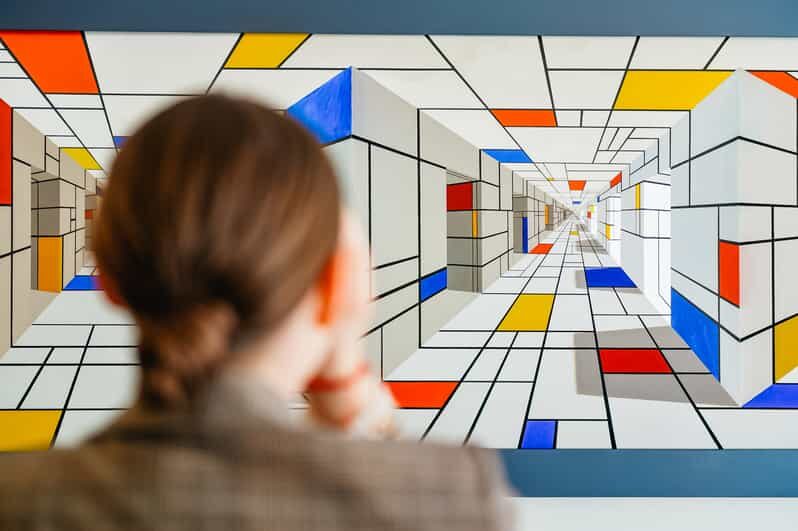
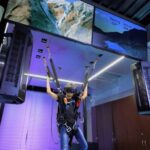
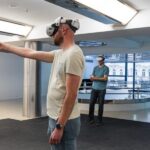
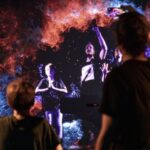
IAM doesn’t rely only on old-school illusions. You’ll also find interactive tech elements, including an app for augmented reality and a mini cinema experience.
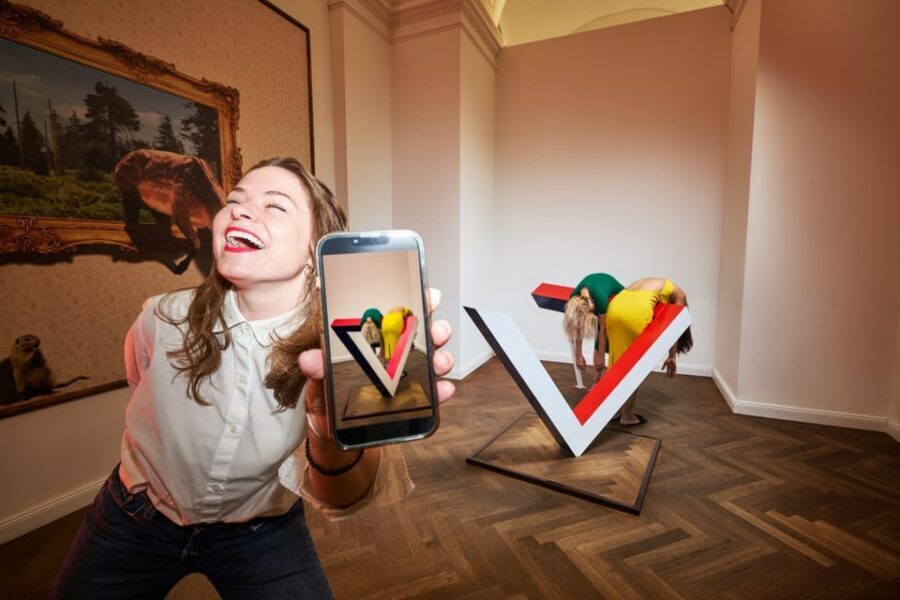
The museum uses QR code interactions tied to specific artworks. Practically, this means your smartphone isn’t just for taking photos—it can help trigger effects, provide context, and guide you to the right way to interact with the displays.
Two practical tips that save time:
- Have your smartphone charged before you enter.
- Expect to spend a little time getting comfortable with QR code prompts. If you’re not sure what to do, staff support is available, and they’ll help you set up the shots for the best results.
If your phone is picky about the app, you’re not totally stuck. You can still enjoy the physical and QR-triggered illusion pieces, and you can do another pass if needed.
Czech history hidden inside the illusion art
IAM adds substance by connecting illusions to stories tied to Czech history. Instead of treating illusion art like a purely modern gimmick, the museum frames it as a long-running creative tool people used to persuade, dramatize, and communicate ideas.
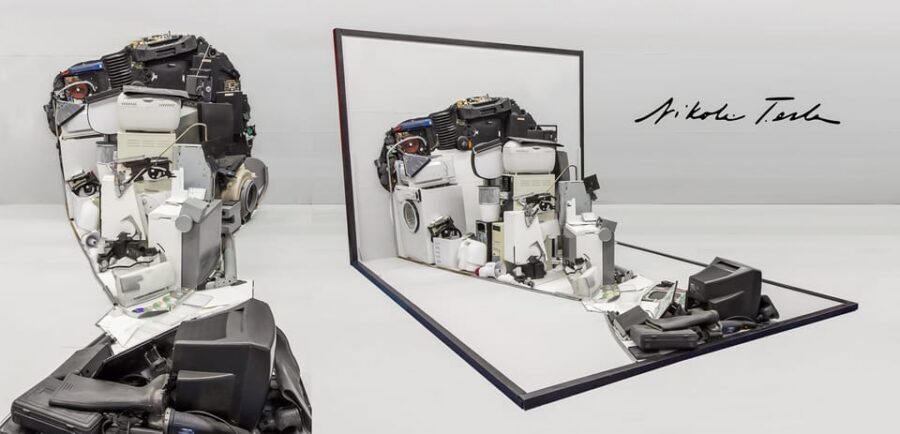
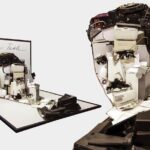
You’ll see illusion portrayals connected to events like the Swedish siege of Prague and the fall of the Bohemian monarchy. There are also artworks linked to well-known Czech figures such as St. Agnes of Bohemia, Bedřich Smetana, and Nikola Tesla.
What I like about this approach is that it turns the museum from a short photo stop into a meaningful one. Even if you’re mainly here for fun, the context helps you see the theme: illusion has always had a job.
Staff support, crowd control, and comfort details to plan for
IAM’s staff can be a big part of your experience. People often appreciate help with QR codes and picture setup, and you can run into staff like Adam who assists with photo angles, plus Tomasz who’s been noted for being helpful.
When it comes to crowds, manage expectations. The museum can get busy enough that you may feel in the way during popular photo setups. If you want clean compositions, pick a slower route inside and be ready to wait briefly.
Comfort also matters. Some people report that the museum lacks air conditioning, so if you’re sensitive to heat, choose a cooler time of day in Prague or bring a bit of patience.
And one more note: you’ll be on your feet and walking through the rooms. It’s not described as a slow, seated experience.
Value for $16: what you’re really paying for
At around $16 per person, the museum is priced like a “pay for impact” attraction rather than a classic long museum. And that makes sense, because the value comes from three things you can feel quickly:
- Interactive execution (you do something, not just observe)
- Repeatable photo opportunities (angles matter, so you can try again)
- High recognition artists and techniques (reverse perspective, anamorphosis, lenticular motion, stereoscopy)
It also helps that the experience is packed with named illusion methods instead of generic “look at this picture” displays. You’re learning perception tricks while having fun, and the Czech-history tie-in gives it a reason to stick in your memory.
If you hate crowds, hate standing, or hate tech prompts on your phone, you may not feel the value. If you’re a photo person or you like optical puzzles, it’s a strong buy.
Who should book IAM Illusion Art Museum Prague
This is a good fit if you want a short, engaging break from Prague’s big-ticket sights. It also works well if you’re traveling with family, since there are interactive pieces that tend to land with kids—along with enough variety to keep adults interested.
You’ll enjoy it most if:
- You like photography that requires small changes in position
- You’re curious about how images trick your eyes
- You want a rainy-day indoor activity that doesn’t feel dull
It might be less ideal if you use a wheelchair, since it’s not suitable for wheelchair users. Also, if you’re expecting a large museum with lots of room to wander slowly, the compact size may feel limiting.
Should you book this illusion museum?
If you want a smart, fun detour in Prague’s center, I’d book it. The museum delivers on the things that matter in real travel: it’s quick, it’s interactive, and it gives you plenty of reasons to stop and reframe your photos. The fact that it also explains Czech stories through illusion art makes it more than a novelty.
I’d skip it only if you strongly dislike crowds, struggle with smartphone-based QR/app interactions, or need a fully accessible route. Otherwise, IAM is one of those rare museum experiences where the entertainment and the art craft are both doing real work.
FAQ
How much does an IAM Illusion Art Museum Prague ticket cost?
The entry ticket is listed at $16 per person.
How long should I plan to spend at the museum?
The experience is designed as a 1-day visit, and many people find it takes about 60 to 90 minutes depending on how much time you spend on photos and interactive parts.
Is an audio guide included, and what languages are available?
Yes. An audio guide is included with languages listed as English, Czech, Croatian, French, Chinese, German, Italian, Polish, Portuguese, Russian, Spanish, Ukrainian, and Vietnamese.
Do I need a smartphone or camera to enjoy the museum?
Bring a camera and a charged smartphone. The exhibits rely on smartphone use for interactions like QR codes and augmented reality.
Is food or drink included with the ticket?
No. Food and drinks are not included.
Is the museum accessible for wheelchair users?
No. It is not suitable for wheelchair users.
Are pets allowed inside?
Pets are not allowed. Assistance dogs are allowed.
What should I do if I want flexibility with booking?
You can reserve now and pay later, and you can cancel up to 24 hours in advance for a full refund. You’ll also want to check starting times based on availability.