Prague holds WWII scars in plain sight. This semi-private English walk with local historian Hana strings together the story from early Nazi occupation to the aftermath, with stops tied to people you’ve likely heard of in books and film. I especially liked Hana’s human, story-driven approach and the way the route includes both the heavy resistance material and the relief-and-rescue thread through Nicholas Winton’s work. One thing to consider: this is serious content, and it’s outdoors for long stretches, so you’ll want good weather and a calm mindset.
If you like your history specific—names, places, and cause-and-effect—this tour makes that happen in about 2 hours 30 minutes with a small group capped at 6 travelers. That small size matters: you get time for questions instead of rushing through like a checkpoint line. My only caution is practical: you’ll be walking between sites in central Prague, so plan to wear shoes you trust for uneven stone and long city blocks.
In This Review
- Key Things I’d Not Skip on This WWII Prague Tour
- A Small Semi-Private WWII Walk That Feels Carefully Timed
- Wenceslas Square to the National Theater: How Occupation and Liberation Are Framed
- Praha hlavní nádraží and Nicholas Winton: The Rescue Story That Hits Different
- Operation Anthropoid at the Heydrich Memorial: Where the Story Has Scars
- Dancing House and Petschkův palác: Bombing, Then the Gestapo Headquarters
- Price and Value: What You’re Really Paying For at $62.47
- Who Should Book This WWII Prague Tour (and Who Might Want Something Else)
- Planning Tips to Get the Most From Each Stop
- Should You Book This WWII Prague Tour?
- FAQ
- What is the duration of the WWII Prague tour?
- How many people are in the group?
- Is the tour offered in English?
- Are admission tickets included?
- Where does the tour start and end?
- Do I need public transportation?
Key Things I’d Not Skip on This WWII Prague Tour
- A max of 6 people keeps the pace human, not herded.
- Hana’s storytelling style turns well-known WWII events into something you can picture on the streets.
- Wenceslas Square and its occupation-era stories are treated as the start of a bigger pattern, not just a landmark stop.
- Operation Anthropoid at the Heydrich memorial is the tour’s most intense section, built around physical traces like bullet holes and a hiding church.
- Nicholas Winton’s train rescue (669 children) adds a powerful counterpoint to the terror.
- Free admission at most stops helps you control costs while still seeing major sites.
A Small Semi-Private WWII Walk That Feels Carefully Timed
This is a mobile-ticket tour in English, and it runs for about 2 hours 30 minutes. The group size is kept small (up to 6 travelers), which is a big deal with WWII content: you don’t just want facts, you want space to ask how and why things happened. Reviews highlight how strongly people respond to Hana’s warmth and openness, but the practical takeaway is this: the tour doesn’t feel like a lecture you can’t interrupt.
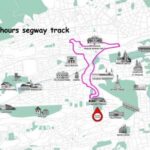
The pacing is also thoughtfully broken into short site visits. You’ll spend about 25 minutes at Wenceslas Square, 20 minutes at the Prague National Theater area, 30 minutes at Praha hlavní nádraží, then a longer 45 minutes at the Heydrich memorial section. After that it’s two shorter stops—15 minutes at the Dancing House and 15 minutes at Petschkův palác. That timing structure helps the story build instead of flattening into one long walk.
And because you’re covering multiple central landmarks, it’s the kind of tour where good footwear and a simple hydration plan go a long way. There’s also a straightforward reality check: this tour requires good weather, so if Prague is wet that day, you’ll want backup time in your schedule.
You can also read our reviews of more private tours in Prague


Wenceslas Square to the National Theater: How Occupation and Liberation Are Framed
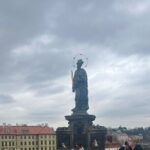
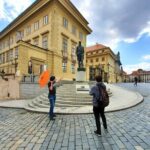
You begin at the Statue of Saint Wenceslas on Václavské náměstí. From there, the tour uses Wenceslas Square as a starting point for stories about the beginning of Nazi occupation. This isn’t treated as vague “WWII happened here” trivia. You’ll hear accounts connected to the square and the historic area around it, including references to Czech historian Jiří Klůc.
Why this works for me: Wenceslas Square is one of those places you can see in photos and still miss the meaning behind. Turning it into a narrative anchor gives you a mental map for the rest of the walk. Even if you only remember a few names and dates, you’ll remember the feeling of understanding where the story starts.
Next is the Prague National Theater Opera area. Here, the tour shifts to liberation of Czechoslovakia in 1945 and includes the advance of the U.S. Army in western Bohemia led by General George S. Patton. You also hear about dramatic events tied to the Prague Uprising in 1945.
This stop matters because it reframes Prague from “occupied city” to “site of resistance and change.” It’s still part of the same WWII arc, but the focus pivots toward what came after—how the city experiences turning points, not just the occupation years.
Tip for this section: keep an eye out for details in the square and theater area as you move. Even on a short stop, the guide connects physical space to the story, so you’ll get more from looking than from scanning your phone.
Praha hlavní nádraží and Nicholas Winton: The Rescue Story That Hits Different
The tour then heads to Praha hlavní nádraží (Prague’s main station), with a stop time of about 30 minutes. This is where the tour adds one of its most distinctive threads: the story of Sir Nicholas Winton, who saved 669, mainly Jewish, children through train transports. That story is also known through the film One Life.
What I like here is the contrast. After the terror-heavy sites, the station stop gives you a different kind of bravery—rescue done through planning, risk, and decisions that mattered. The tour also emphasizes that you’ll visit locations connected to Winton, and it’s delivered using the guide’s own research and personal interviews tied to the story. The result is a tone shift that doesn’t soften the past, but balances it with outcomes you can remember clearly.
This is also the point where the tour becomes more than sightseeing. You’re standing in a place tied to movement and survival, not just commemoration. If you’re the kind of traveler who likes history that has a human scale, this stop is a highlight you’ll keep thinking about after you’ve left the station.
Operation Anthropoid at the Heydrich Memorial: Where the Story Has Scars
The most intense portion of the route is the National Memorial To The Heroes Of The Heydrich Terror, with about 45 minutes here and admission included. This stop centers on Operation Anthropoid and the assassination of Reinhard Heydrich, described as the founder of the Holocaust and the third-highest-ranking Nazi.
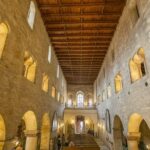
You’ll see bullet holes, and you’ll visit the church where resistance hid after the assassination. That combination—physical traces plus the specific place of hiding—turns the story into something you can’t reduce to a headline. It’s not just what happened. It’s what the aftermath looked like, in the buildings people still stand inside today.
If you’re worried about this being too heavy, plan around it instead of powering through it. This is the moment in the tour when emotions run highest, and the tone stays respectful and direct. Reviews consistently praise how Hana and the overall approach keep the human cost in focus.
Practical note: wear clothing you’re comfortable staying in for the full memorial segment. It’s longer than the earlier stops, and you’ll want to be able to stand and look without feeling rushed.
Dancing House and Petschkův palác: Bombing, Then the Gestapo Headquarters
After the memorial, the tour takes you to two shorter stops that still pack big meaning.
First is the Dancing House, where the stop is about 15 minutes. Here the story turns to the American bombing of Prague in 1945. This is a quick hit, but it helps connect the resistance narrative to the wider wartime reality—Prague wasn’t only involved in uprisings and plots. It was also a target of devastating military action.
Then you move to Petschkův palác, also about 15 minutes, described as Gestapo headquarters. This final site makes the structure of the whole tour feel complete: occupation, uprising and liberation, the resistance operation, bombing, and the machinery of terror—all represented in places you can point to.
If you take only one lesson from the last two stops, I think it’s this: Prague’s WWII story isn’t one mood. It’s many pressures at once, all hitting the city through different channels.
Price and Value: What You’re Really Paying For at $62.47
The price is $62.47 per person for about 2.5 hours, and it’s billed as all fees and taxes included. That’s a decent rate for a small-group, guided walk focused on WWII-specific locations instead of general Old Town sightseeing.
Here’s the value math that matters:
- Most stops have free admission, so you’re mostly paying for the guide and the story framework, not entry costs.
- One major admission is included at the Heydrich memorial.
- The group is capped at 6, which usually pushes quality up compared with larger tours where you can’t ask questions.
- It’s English, and it runs on a mobile ticket setup, which usually keeps things smoother than paper-chasing.
What isn’t included is simple but important: public transportation costs €1.30 per person. The tour also ends at Dancing House, so if you’re planning a tight day, I’d map your next stop around that endpoint.
As for whether it feels worth it: if you care about the “why” behind the sites—not just the names—this tour earns its price. The emotional weight of the Heydrich memorial and the distinctive Nicholas Winton story are the kind of content that’s hard to recreate on your own walking route without a guide stitching the facts together.
Who Should Book This WWII Prague Tour (and Who Might Want Something Else)
This is a great match if you:
- Like WWII history tied to real places, not only museum reading
- Want a guide who treats the subject as human stories, not a timeline quiz
- Are comfortable with serious themes like occupation, terror, resistance, and genocide-related context
- Appreciate a small-group pace so you can ask questions
It may be less ideal if you want light, casual sightseeing or if you dislike spending most of your time in a heavy emotional tone. Also, since the tour depends on good weather, you should think about how flexible your day is.
Planning Tips to Get the Most From Each Stop
- Bring water and wear comfortable shoes. The total route covers multiple central points with short segments at each.
- If you’re a film-and-books person, consider refreshing your memory on One Life before the station stop. It won’t be required, but it can make the Winton segment click faster.
- Use the memorial portion as a real pause. Don’t plan another major activity right after; let the tour land.
- Keep your route expectations realistic: it’s a walking tour with multiple landmarks, not a “sit-and-watch” experience.
Should You Book This WWII Prague Tour?
I’d book it if you want Prague’s WWII story told on the ground, with real sites tied to major names: Hana’s guidance, Jiří Klůc’s historical framing at Wenceslas Square, Nicholas Winton at the station, and the focus on Operation Anthropoid and Reinhard Heydrich at the memorial. The route also doesn’t just stay in darkness—it balances terror with the rescue story of 669 children, which gives the tour a fuller emotional arc.
Skip it only if you’re looking for a casual, low-intensity history walk or if your schedule can’t handle weather-dependent outdoor time. If you can meet it halfway, this is one of those tours that turns Prague from a pretty city into a place that tells you exactly what happened—and what it cost.
FAQ
What is the duration of the WWII Prague tour?
The tour runs for about 2 hours 30 minutes.
How many people are in the group?
The tour has a maximum of 6 travelers, so it’s kept small.
Is the tour offered in English?
Yes, it’s offered in English.
Are admission tickets included?
Most stops have free admission, and admission is included for the National Memorial To The Heroes Of The Heydrich Terror stop.
Where does the tour start and end?
It starts at the Statue of Saint Wenceslas on Václavské náměstí (Praha 1-Nové Město) and ends at the Dancing House area on Jiráskovo náměstí (Praha 2-Nové Město).
Do I need public transportation?
Public transportation is not included, and the listing notes €1.30 per person. The tour is also described as near public transportation.