REVIEW · PRAGUE
3-hour Private Prague Castle Walking Tour
Book on Viator →Operated by Lucytours · Bookable on Viator
If you like your history with good shoes, this fits. A private Prague Castle walking tour packs the key sights—cathedral, palaces, Golden Lane-style streets—into a tight 3 hours with a guide steering the pace.
The biggest draw is the human one: many guides (like Teresa, Tereza, Natalia, Pavel, and Eva) are praised for adapting the route to your interests, your questions, and even your timing. The second big win is efficiency—this is built to minimize time wasted in queues and get you into the right places at the right moments.
One possible drawback is simple: the Castle complex is huge, and a 3-hour private tour can’t cover every palace room in the way a half-day ticket can. If you’re hoping for maximum “every room, every palace” coverage, go in with a focused must-see list—and expect that one site can be temporarily affected by real-life operations like services or special events.
In This Review
- Key things to know before you go
- Entering Prague Castle on a private 3-hour schedule
- Meeting at Archbishop Palace 16 and ending near Klárov
- The pace strategy: how private guides beat the crowds
- Stop 1: Prague Castle grounds and the seat of power
- St. Vitus Cathedral: coronations, burials, and stained-glass drama
- Old Royal Palace interiors: the rooms where kings lived
- Golden Lane: fairy-tale street, working-life history
- St. George’s Basilica and Daliborka: religion and hard edges
- Lobkowicz collections and Rosenberg Palace: art and palace context
- Price and what you really get for $169.38
- Who this tour suits best (and who might want a different approach)
- Should you book this private Prague Castle walking tour?
Key things to know before you go
- Private means you only share the route with your group, so questions don’t get swallowed by crowds
- A timed 3-hour plan that hits major interiors without turning your day into a maze
- Most stops include admission tickets, so you spend less time juggling entry plans
- Golden Lane + Daliborka + St. George’s Basilica adds variety beyond the cathedral
- Your guide can adjust the schedule when a planned stop is limited or closed
- You start at Hradčany and often end near Klárov, which helps you keep momentum after the tour
Entering Prague Castle on a private 3-hour schedule
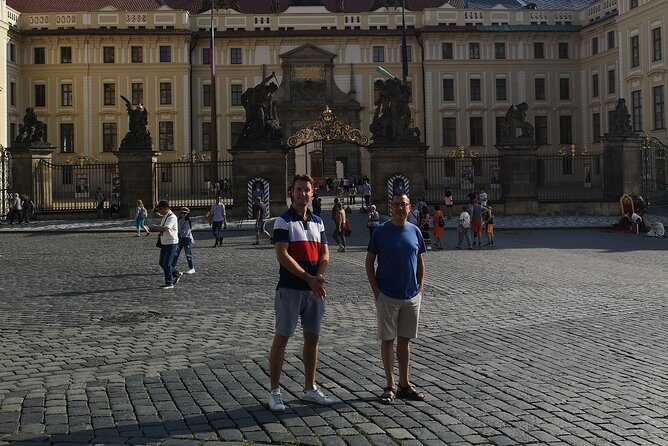
Prague Castle is the kind of place that makes you do that slow look around like, wait… how big is this? The good news is that you don’t need a whole day to get the meaning. This tour is designed as a focused walking circuit that bundles the Castle’s “why it mattered” with the “what you’re actually looking at.”
You’ll get a private guide for about 3 hours, in English, and you’ll keep moving. The route is built around the Castle’s central story: Czech rulers living, ruling, and being remembered in stone, stained glass, and royal halls.
If you’re a first-timer—or you’re just tight on time—this is a smart choice. It’s also a strong fit if you’re traveling with kids, since guides are reported as patient and good at answering questions without steamrolling the day.
You can also read our reviews of more walking tours in Prague



Meeting at Archbishop Palace 16 and ending near Klárov
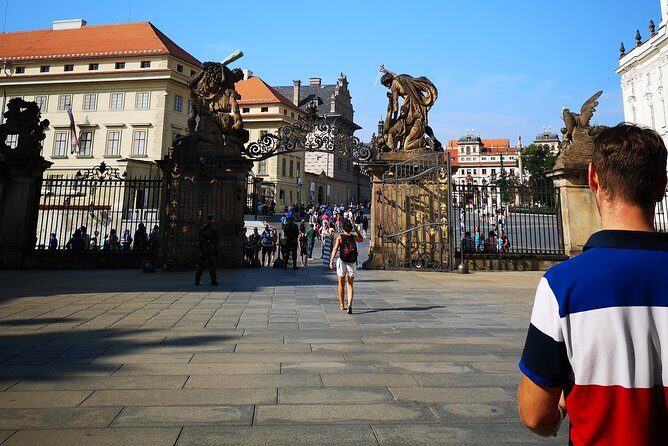
The tour starts at Archbishop Palace 16, Hradčanské nám. 56, Prague 1-Hradčany. It’s a good area to begin because you’re already in the Castle district energy before you start walking the complex.
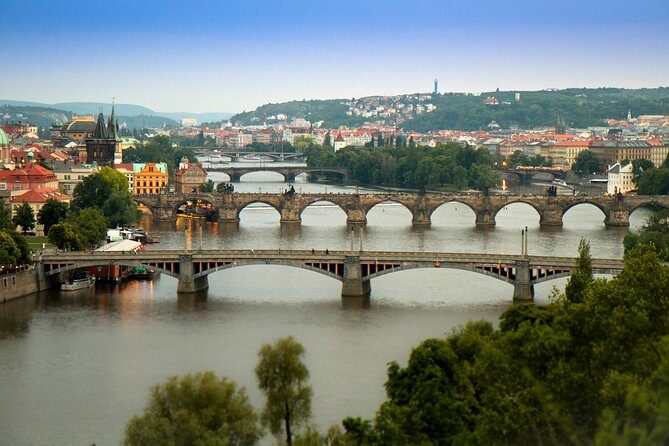
Most tours end in Klárov (near Malá Strana) unless you’re told otherwise. That matters more than it sounds. Finishing on the other side helps you keep sightseeing without immediately backtracking across the river loop.
You’ll also receive a confirmation at booking, and you’ll likely use a mobile ticket. If you like to plan tightly, this reduces the last-minute guesswork.
Quick practical tip: bring layers. Even when the tour is fast and organized, you’re still standing and walking on a hill. Winter can be especially chilly, and one guide even planned around heat and shade on warmer days.
The pace strategy: how private guides beat the crowds
Here’s the real value in doing this privately: you’re not just seeing sights. You’re getting someone who knows how to steer you between bottlenecks.
In multiple experiences, guides were praised for timing the tour to avoid crowded hot spots and to keep waiting time low. One example: a guide helped make the complex maze feel manageable and guided people to the best viewpoints, while also keeping the day moving.
That efficiency is especially useful if you care about the “big moments,” like the cathedral interiors and royal rooms. If you arrive when crowds surge, the Castle can turn into a slow shuffle. With a good guide, you spend more minutes looking up—and fewer minutes trapped in lines.
If you’re planning your own timing: starting earlier can help a lot. In summer, one traveler recommended a 9 a.m. start to cut the heat and crowd pressure.
Stop 1: Prague Castle grounds and the seat of power
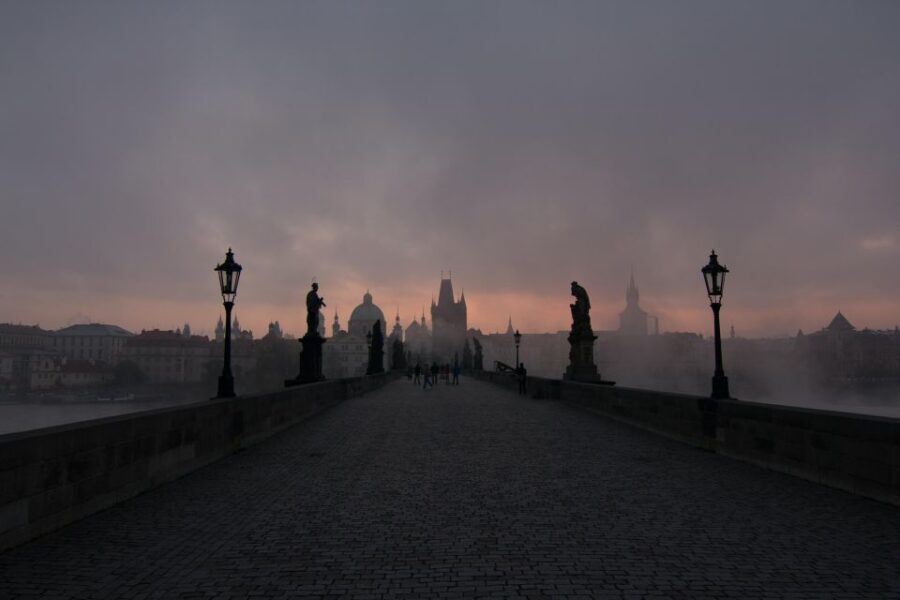
Your first major focus is Prague Castle, described as the largest castle complex in the world. That phrase can sound like marketing fluff, but the scale is real: you’re stepping into a system of courtyards, gates, and power buildings that grew over centuries.
For most of its history, this site served as the seat of Czech rulers. That’s why nearly everything you see here has layers—politics, architecture, religion, and national identity all packed into one hill.
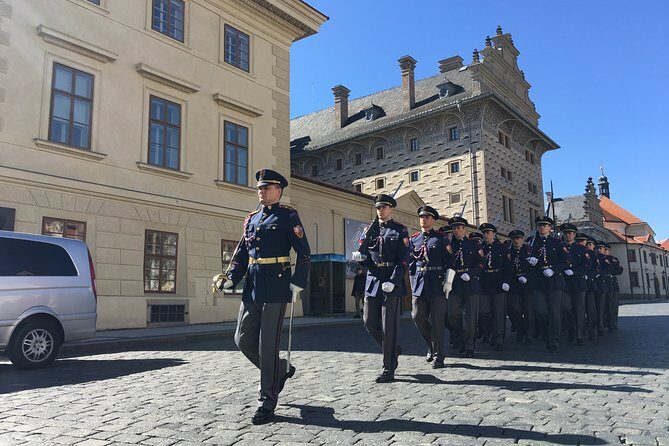
You’ll also pass by key Castle sections, including the main entrance area and the Rosenberg Palace (listed as part of the tour’s coverage). Even when you only get limited interior time in certain places, the exterior context helps you “read” the complex instead of just wandering through it.
One consideration: the Castle is active. Depending on day and timing, some interiors can be affected by ceremonies or temporary closures. A well-run private tour usually handles this by shifting the flow without breaking the overall story.
St. Vitus Cathedral: coronations, burials, and stained-glass drama
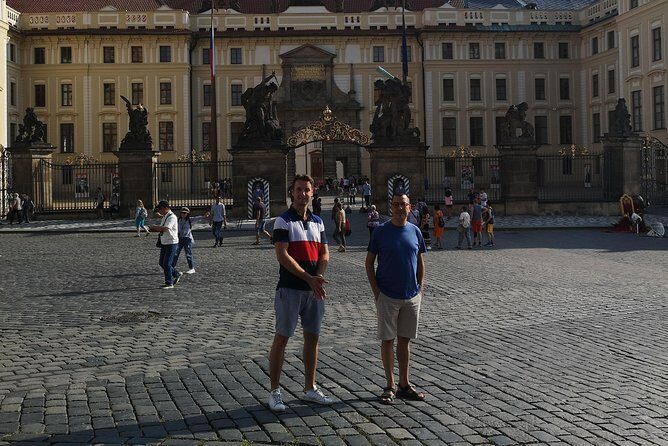
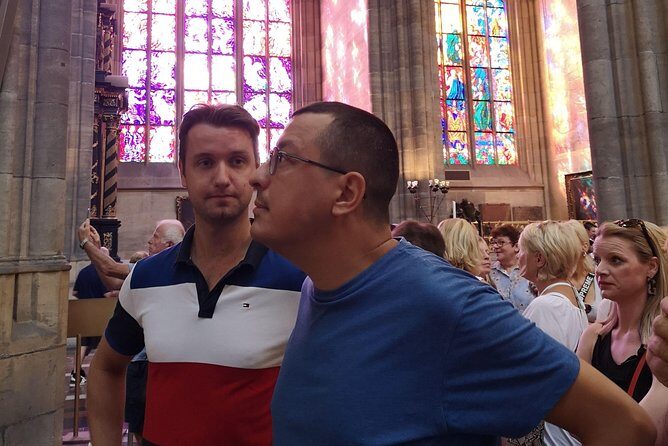
St. Vitus Cathedral is often the highlight for people who thought they knew what Prague Castle was. This is the Czech history church—the place tied to coronations, weddings, and the burials of many Czech kings.
You’ll spend about 40 minutes here. That time is useful because the cathedral isn’t just a single view. It’s a sequence of spaces where details matter: tomb symbolism, sacred layout, and the way light plays across the interior.
A real-life note: functioning churches may have services. One guide mentioned the cathedral was temporarily closed due to a mass and the tour had to revisit later. That’s not a dealbreaker, but it’s a reason a private guide matters—they can adjust your pacing rather than leaving you stuck.
If you want a quick mental checklist before you go in, focus on: what the cathedral represents in Czech identity, how it connects to royal power, and what visual cues you’re seeing that signal status and tradition.
You can also read our reviews of more private tours in Prague






Old Royal Palace interiors: the rooms where kings lived
Next up is the Old Royal Palace, with about 40 minutes allocated for interiors. This is where the story shifts from monuments to daily royal life: the complex served as home to generations of Czech kings.
Even if you’ve seen grand palaces in other European capitals, the Old Royal Palace works differently because of the layers. You’re walking through a place shaped by power and change—architecture that reflects changing rulers, eras, and priorities.
One practical benefit of a private guide here: they can explain what you’re looking at without drowning you in a lecture. The best guiding style you’ll experience is the one that turns architecture into a timeline you can actually hold in your head.
And yes, sometimes interiors are not fully available due to events. In at least one case, a guide handled a closed palace by substituting a nearby experience with gardens and a viewpoint overlooking the areas you’d already covered. That kind of flexibility can be the difference between a great day and a frustrating one.
Golden Lane: fairy-tale street, working-life history
Then you hit Golden Lane, that picture-perfect, fairy-tale vibe street inside the Castle complex. It’s typically short—about 20 minutes—but it’s memorable because it gives you a different angle on the Castle.
Instead of royal pomp, Golden Lane helps you picture how people lived in different eras. You’re seeing the texture of life tucked right next to the center of power.
The best way to enjoy this stop is to slow down for a few moments and pick a single detail to connect to daily life: building style, the narrowness of the street, and how it fits the Castle environment. A guide who’s good at answering questions can make this more than just a photo stop.
If the street is busy, expect it to be tight. This is one reason earlier pacing helps. Narrow streets + crowds = slow movement.
St. George’s Basilica and Daliborka: religion and hard edges
The tour continues with two very different kinds of stops.
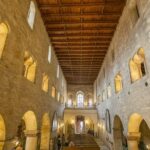
First is St. George’s Basilica (about 20 minutes). It dates back to the 10th century, which gives it a deep time feel. This is one of those places where age matters. Even a quick visit benefits from having a guide explain what roles the Castle and associated churches played over time.
Then comes Daliborka, a prison tower known for being one of the harshest medieval Bohemia prisons. You’ll spend about 20 minutes exploring the secrets of that darker side of Castle history.
That contrast is part of what makes the tour work. You go from coronations to daily life (Golden Lane) to religious continuity (St. George’s) to the reality of power used with force (Daliborka). It’s not just pretty buildings; it’s a full spectrum.
If you tend to get bored with purely architectural tours, this is where the tour often wins you back. You’ll leave with the Castle feeling less like a postcard and more like a real place with real stakes.
Lobkowicz collections and Rosenberg Palace: art and palace context
The Castle complex also includes a private palace of the Lobkowicz family with significant art collections, and it includes Rosenberg Palace coverage in the tour plan.
Even if you don’t spend long in every collection space, you’re getting the bigger point: this site isn’t only politics and religion. It’s also art patronage and cultural identity.
If you’re the kind of traveler who loves when guides point out what you might otherwise miss, this is a strong match. Several guides were praised for noticing details visitors typically walk past and explaining how they connect to Czech history.
Think of this as “context time.” It helps you feel you understand what the Castle is, not just what it looks like.
Price and what you really get for $169.38
At $169.38 per person for roughly 3 hours, you’re paying for three things at once: private guiding, a structured route, and included entry time for the Castle experience.
The math can work out well if you’re comparing against self-guided chaos. Prague Castle isn’t the easiest place to move through efficiently, especially when you’re trying to cover major interiors in one visit window. A private guide reduces the friction: you’re not guessing routes, waiting unpredictably at entrances, or losing time to confusion.
Also, the tour includes entrance fee to the Prague Castle in the listed inclusions, and the stop-by-stop plan indicates admission tickets included for major interiors such as the cathedral and royal palace. Even if you don’t price it line-by-line, having those entries covered usually saves time and stress.
Is it expensive? Compared to an audio guide, yes. But the value here is personal pacing and an explanation style that can follow your interests. If you like “stand here and tell me what matters” guidance, a private tour often feels worth it fast.
Who this tour suits best (and who might want a different approach)
This tour makes the most sense if you:
- are on your first trip to Prague and want high-impact Castle highlights
- want a time-efficient visit that still feels human
- prefer asking questions and getting answers in real time
- are traveling with kids and want patience and flexibility
It may be less ideal if you:
- want to see every palace room in full depth
- plan to spend lots of standalone time wandering without structure
- get frustrated by the fact that functioning sites can have temporary closures
That last point doesn’t mean the tour is unreliable. It just means you’re visiting a living, used complex, not a theme park.
Should you book this private Prague Castle walking tour?
If you want a smart, efficient Castle overview with a guide who can tailor the day, I’d book it. The consistent praise pattern is about guide quality—adapting to your interests, adjusting schedules when conditions change, and keeping the tour moving so you see more of what you came for.
If you’re unsure, make your decision by asking yourself one question: Do you want a smooth guided route, or do you want to DIY your own pace with audio and maps? If you’re leaning guided, this private 3-hour plan is a strong way to get the meaning behind Prague Castle without turning the day into a long grind.