REVIEW · PRAGUE
Best of Prague Architecture – private tour with PERSONAL PRAGUE GUIDE
Book on Viator →Operated by Personal Prague Guide · Bookable on Viator
Prague’s buildings speak in styles. This private architecture walking tour links the city’s big Gothic, baroque, and Art Nouveau landmarks into one easy route. I especially like the personal guide angle—guides such as Jana and Betty clearly tailor the walk to what you care about—and you also get time to spot quieter corners most people miss. One watch-out: several sites have tickets not included, and a couple stops offer optional paid entry (like Loreta interiors), so plan for a small extra spend if you want inside access.
You also move smartly for a 3-hour tour: the pace is walking-heavy, but it’s timed so you hit major “wow” architecture without trying to do everything in one exhausting day. Pickup is offered at your hotel reception or your apartment entrance, which helps if you’re juggling jet lag, mobility limits, or just don’t want to think about transit. Still, because it’s a walking route, sturdy shoes matter—especially around the older streets and bridges.
Everything runs in English with a mobile ticket, and because it’s private, only your group participates. If you like asking questions and getting real context (not just a photo stop script), this format tends to work well. Just note that some optional activities—like climbing the Old Town Hall tower—are ticketed and not included.
In This Review
- Key things I’d plan for on this tour
- A private architecture route that feels personal, not scripted
- What you get in 3 hours: the flow from Castle to Old Town
- Prague Castle and St. Vitus: why the first stop matters
- Loreta Praha: baroque Marian pilgrimage with optional inside treasures
- Wallenstein Palace Gardens: what to expect if you’re there in summer
- Charles Bridge plus the Lennon Wall and Klementinum area
- Old Town Square: where styles collide and the Astronomical Clock puts on a show
- Church of Our Lady before Týn: the twin spires you can’t mistake
- Wenceslas Monument and the transition to 20th-century architecture
- Obecní dům (Municipal House): Art Nouveau at full face value
- Old Town Hall tower and the Astronomical Clock: when the ticket is worth it
- Price and value: why $112.46 can make sense for Prague architecture
- Who should book this Prague architecture tour (and who might skip it)
- Quick practical tips before you go
- Should you book the Best of Prague Architecture private tour?
- FAQ
- How long is the Prague architecture private tour?
- Is the tour private?
- Do you offer pickup?
- What language is the tour offered in?
- Do I need to buy tickets for the stops?
- Which parts are free during the tour?
- Can I climb or ride to the top at Old Town Hall?
- Are there options if I visit in summer?
- What’s the cancellation policy?
- Is it suitable for families or kids?
Key things I’d plan for on this tour
- A truly private guide who can steer you toward less-touristy alleys near Prague Castle and beyond
- Architectural variety in one route, from Gothic St. Vitus to baroque Loreta to Art Nouveau at Obecní dům
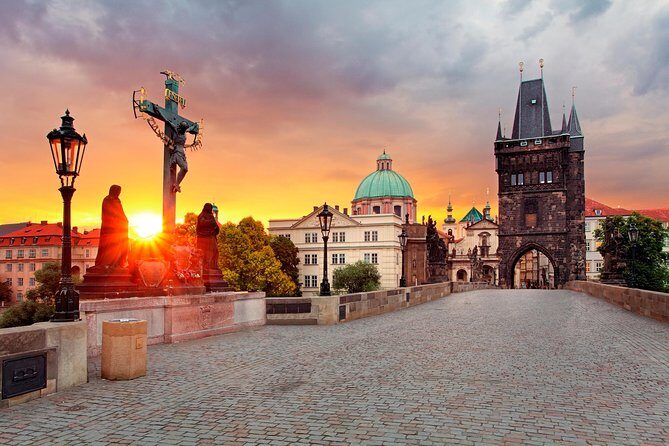
- Charles Bridge plus the surrounding landmarks—including the Lennon Wall and Klementinum area—without turning it into a rushed checklist
- Optional paid interiors at Loreta Praha and other ticketed highlights if you want more than viewpoints
- Summer advantage at Wallenstein Palace Gardens, which can be free and open to the public during that season
- Old Town Square’s hour show timing, with the Astronomical Clock performance as a central moment
A private architecture route that feels personal, not scripted
Prague architecture can feel like a word soup—Gothic here, baroque there, Art Nouveau on a whole different street. What makes this tour practical is that it doesn’t treat those terms like trivia. Instead, the route builds a clear “style-to-place” story as you walk: you see buildings, then you learn how they’re shaped by the eras that produced them.
The other big win is the guide’s flexibility. Jana and Betty both came through in the real-world feedback as kind, smart, and prepared with answers, and that matters because architecture stops often raise questions. Why does a façade look the way it does? What did that building mean to power or religion? Where should you look upward, and where can you relax and just enjoy?
Because it’s private, you’re not stuck following a group rhythm that doesn’t match your interests. If you like churches, you can linger. If you prefer city planning and civic buildings, you can spend more time on the “why” behind the structures.
The only real downside is that it’s not a museum marathon. It’s a walking experience that gives context and key visuals fast. If you want lots of deep indoor time at every single site, you’ll likely need to add separate visits with extra tickets.
You can also read our reviews of more guided tours in Prague


What you get in 3 hours: the flow from Castle to Old Town
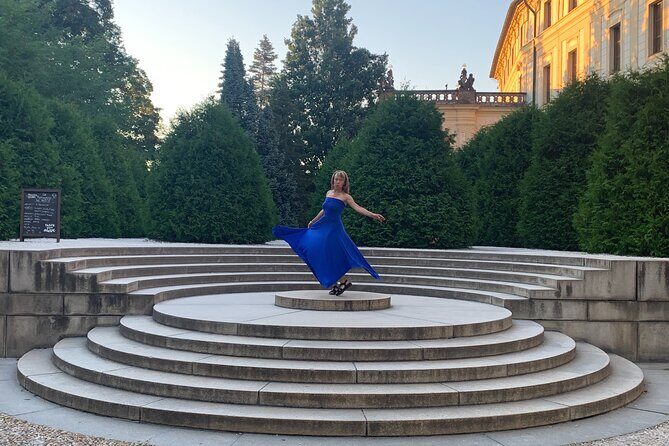
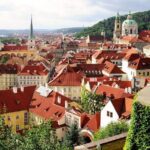
This is roughly a 3-hour walk with about nine main stops, and the route makes sense geographically. You start at the Prague Castle area, then you work your way toward Charles Bridge, and finally you finish in the Old Town zone where the architecture styles stack up in a tight radius.
Here’s the practical way to think about it:
- You get fast orientation at the Castle (major Gothic reference point).
- You hit baroque and scenic transition (Loreta Praha, then Wallenstein Palace Gardens in summer).
- You cross the city’s iconic visual axis at Charles Bridge and move into nearby landmarks.
- You end in the densest “architecture display” zone: Old Town Square plus the surrounding Gothic landmark and Old Town Hall.
That sequence helps you connect the city’s look. You’re not seeing random famous spots; you’re seeing how Prague’s architecture changes as you travel through different historical centers.
Prague Castle and St. Vitus: why the first stop matters
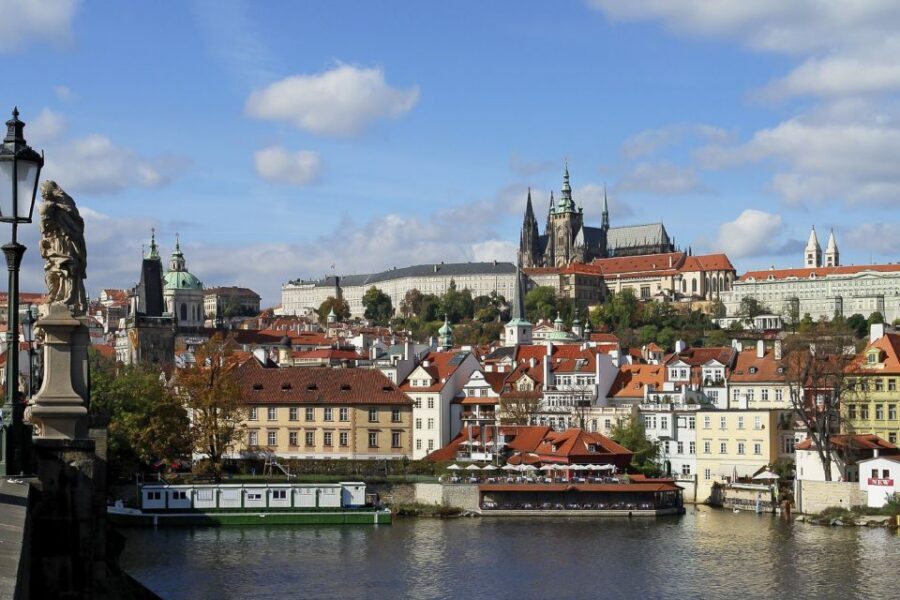
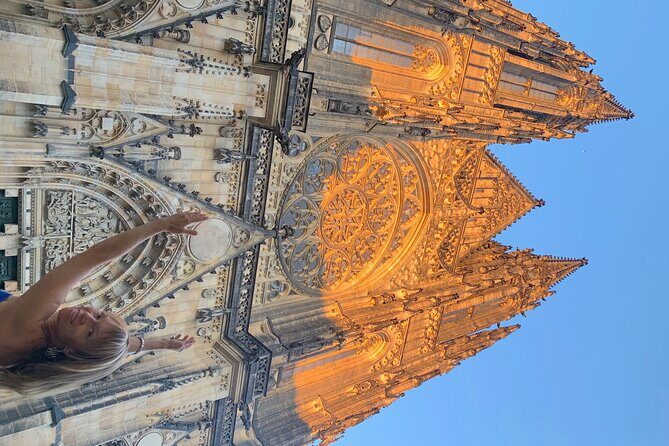
The tour begins at Prague Castle, with a focus on the Gothic Cathedral of Saint Vitus. Even if you don’t go inside, the exterior sets the tone. Gothic architecture has a particular “reach”—vertical lines and high drama—and St. Vitus is one of the clearest places to understand that style quickly.
Your timing is short—about 30 minutes at this stop—so I’d go in with a simple game plan:
- Look for the cathedral’s Gothic character first (the vertical emphasis).
- Then shift to details your guide points out—like how the surrounding castle complex shapes the skyline.
Admission is not included for this stop, so you may decide whether you want to pay to enter based on your time and interest level.
A nice feature of this tour concept is that guides have room to point out “in-between” places at the edges of the Castle zone—those alleys and less-obvious views where you can take photos without feeling like you’re trapped in the loudest crowd.
Loreta Praha: baroque Marian pilgrimage with optional inside treasures
Next up is Loreta Praha, a baroque Marian pilgrimage site known for the Baroque Church of the Nativity and a replica of the Holy House. This stop is built for people who like architecture with storytelling baked in—religious sites often mix symbolism, art, and structure in one place.
You’ll spend about 10 minutes here. By default, the plan is usually not to enter, but you can choose to pay an entry fee (around 10 USD) to see interior treasures. That’s a key detail for your budgeting and expectations.
If you’re the kind of traveler who enjoys church interiors—altars, chapels, and decorative design—this optional inside time can be worth it. If you’re more of an exterior-and-structure person, you can still enjoy the cloisters and surrounding chapels from outside and keep moving.
Either way, Loreta is a strong mid-tour “style reset.” After the Castle’s Gothic focus, the baroque feel can hit like a change of music.
Wallenstein Palace Gardens: what to expect if you’re there in summer
Then comes Wallenstein Palace Gardens. This area ties architecture to civic power: the palace and gardens were built for Albrecht von Wallenstein, and today the complex connects to the Czech Senate.
The gardens are open to the public during the summer, and the tour notes they can be free of charge then. Even though your scheduled stop is only about 10 minutes, it’s a nice pause before Charles Bridge—part scenery, part architecture, part a “Prague slows down here” moment.
If you visit outside summer, don’t assume the same garden access. The tour data specifically ties open hours and free public access to the summer season.
Also note: admission is not included, but if the gardens are open for public access during your dates, you may enjoy this stop with minimal additional cost.
You can also read our reviews of more private tours in Prague



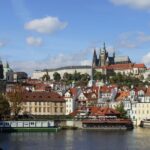
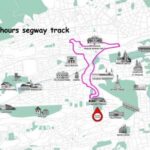
Charles Bridge plus the Lennon Wall and Klementinum area
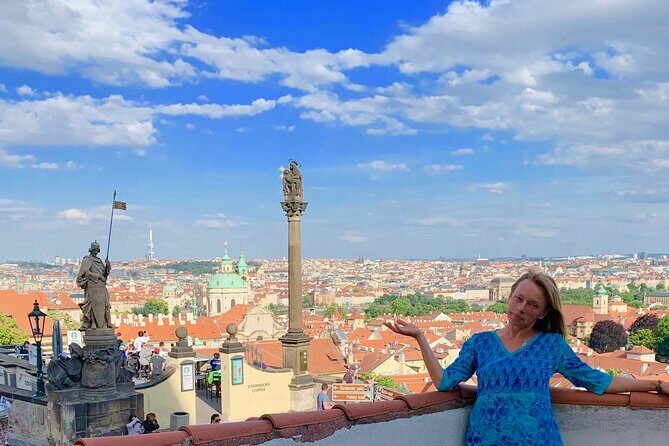
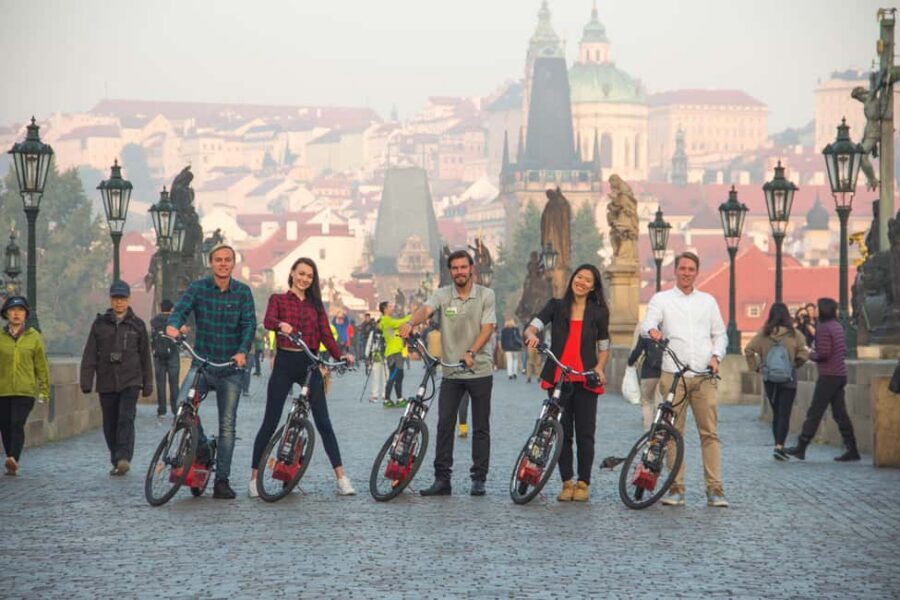
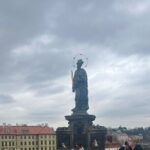
Crossing Charles Bridge is the classic move for good reason. It’s Prague’s oldest bridge and covered in drama: statues, historic bridge towers, and legends. The tour leans into those stories—like the construction legend about eggs in mortar—and even the playful ritual of touching a star marker to make a wish. You’ll also be reminded that this is the heart of the city’s golden past.
Your time here is about 15 minutes, which means you should plan like this:
- Don’t try to “see everything.” Instead, get one or two great angles and let your guide point out the architectural features worth noticing.
- Expect crowds. The point is the architecture and the atmosphere, not solitude.
There’s also an extra layer of “Prague beyond the postcard” built into this portion. Near the bridge, you’ll find the Prague Venice area and Devil’s Stream side channel, plus the John Lennon Wall, known as a symbol of anti-communist protest. You may also recognize this bridge setting from film (the tour specifically calls out Mission: Impossible).
At the end of the bridge, your route brings you toward Klementinum, a former Jesuit college now serving as the National Library. This is another “look up” moment: large historic complexes like this help you connect the city’s spiritual and educational power in stone.
Old Town Square: where styles collide and the Astronomical Clock puts on a show
Now you enter the zone that feels like a walking architecture textbook—Staroměstské náměstí (Old Town Square). Here you’ll see a dense mix of styles in a small space, including:
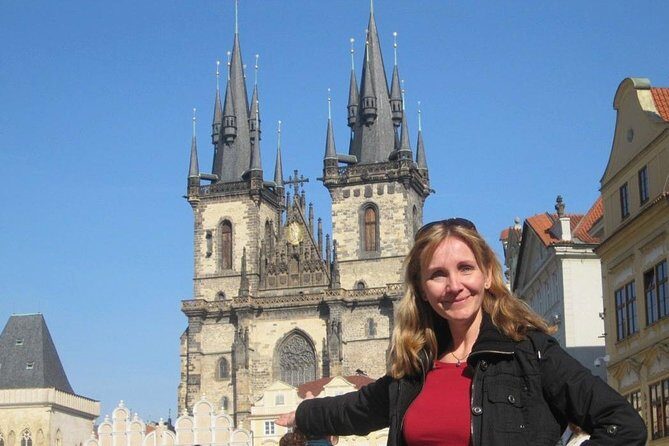
- Gothic elements like the Church of Týn with its distinctive twin spires
- Baroque-feeling shapes around the square
- Rococo flourishes like the Kinský Palace façade
- And a whole range of historic façades around the Old Town Hall area
Your time at this stop is about 15 minutes, and the tour emphasizes the real-world “architecture highlight” here: the Astronomical Clock and its hourly show, with the Twelve Apostles appearing in windows. If you want to catch the full moment, you’ll feel the timing importance. Your guide is the one who helps you land near the action at the right time.
The tour also points out specific ground-level markers, like the execution place area marked by crosses. That’s not a comfort-stop detail, but it’s part of how the square functions as a historical stage.
There’s even an optional add-on feel: you can reach the tower of the Town Hall by lift to get panoramic views. It’s ticketed and not included, so if that view matters to you, treat it as a possible upgrade—not an automatic part of your basic tour.
Church of Our Lady before Týn: the twin spires you can’t mistake
After Old Town Square, the route continues to Church of Our Lady before Týn, a major Gothic landmark. The point here is simple: those twin spires make it unmistakable from much of the Old Town area.
You’ll spend about 15 minutes. There are a couple architecture-and-context reasons this stop is valuable:
- The church gives your Gothic “anchor” after you’ve already seen Gothic at the Castle
- It ties famous history to structure, including the burial of Tycho Brahe
The tour notes admission for this stop is free, which is a nice bonus if you want a Gothic landmark without paying another ticket right away.
Wenceslas Monument and the transition to 20th-century architecture
Next is Wenceslas Monument, described as 20th-century architecture. This stop is brief—about 15 minutes—and it matters because it stops the story from staying trapped in medieval and Renaissance Prague.
Even if you don’t think of architecture as political or cultural at first, a 20th-century monument in the route forces you to see the city as layered, not frozen in time. It’s a reminder that Prague’s built environment keeps evolving.
Admission is free for this stop, so it doesn’t add to costs.
Obecní dům (Municipal House): Art Nouveau at full face value
You then reach Obecní dům, also called the Municipal House, and it’s one of Prague’s big Art Nouveau plays. The tour frames it as the most beautiful Art Noveau building in Prague, with a monumental façade, allegorical figures, and floral and classical decorative elements.
This is a good stop for you if you like façade details. Art Nouveau is often better seen close-up than from across a square. With about 10 minutes here and admission not included, you’ll likely focus on exterior impressions and the façade design rather than deep interior time unless you choose to pay later.
It’s also described as a civic building that houses Smetana Hall, connected to the Prague Spring festival. That’s helpful context: it’s not just an attractive building; it’s tied to public life and culture.
Old Town Hall tower and the Astronomical Clock: when the ticket is worth it
The tour circles back to the Old Town Hall with the Astronomical Clock for about 10 minutes. Even if you’ve already seen the show at the square, the tower area is one of the best ways to understand how the clock and the building’s presence shape the whole scene.
Inside the tower, the route notes an elevator and a staircase, and you can climb or ride up for views. Admission is not included here, so this is your optional decision point.
If you like viewpoints, I think the tower upgrade can make your photos and memories feel more complete. If you’re not into climbing or ticketed interiors, you can still enjoy the clock area without committing.
Price and value: why $112.46 can make sense for Prague architecture
At $112.46 per person for about 3 hours, this tour isn’t bargain-bin sightseeing. But in Prague—where architecture is spread out and ticketed entry can add up—private guidance can be good value when it saves you time and turns random landmarks into a coherent story.
Here’s how I’d judge value fairly:
- You’re paying for a personal guide who can adjust the walk and answer questions
- You’re getting a compact route that hits multiple major architectural periods in one go
- Some stops are free (like Charles Bridge area portions, Old Town Square, Church of Týn, Wenceslas Monument), so you’re not buying everything at once
What could affect your final cost is optional or ticketed access. The tour specifically says admission tickets are not included for several highlights, with Loreta interiors as an optional extra (about 10 USD). If you want the most “inside time” possible, you should budget for those additions.
Booking can also be worth it early. The tour notes it’s often booked about 43 days in advance on average, which suggests it’s popular enough that timing matters if you’re traveling at peak season.
Who should book this Prague architecture tour (and who might skip it)
This fits best if you:
- Want architecture explained as you walk, not as a one-off photo stop
- Prefer a private experience so your pace and interests drive the route
- Like mixing big landmarks with quieter streets near the Castle area
It may be less ideal if you:
- Want only indoor museum-style time every stop
- Don’t like walking routes at all, since this is a 3-hour walk with multiple sites
- Have strict budget limits and want zero optional fees, because some entries are ticketed and Loreta offers optional interior access
Quick practical tips before you go
- Wear shoes that handle old stones and standing time. You’ll spend a lot of the 3 hours on your feet.
- If you want the Old Town Hall tower or Loreta interiors, decide ahead of time so you don’t feel rushed.
- Charles Bridge is iconic, so expect crowds and plan for a “pause and look” approach rather than trying to move fast through it.
- Bring a phone camera—but also take a moment to look up. Many of the details that matter are vertical.
Should you book the Best of Prague Architecture private tour?
If you want Prague architecture to feel connected—Gothic into baroque into Art Nouveau—this is a strong choice. The private guide format keeps the experience flexible, and you get a route that makes geographic sense without cramming you into a full day.
I’d book it if you’re the type who likes context and wants to understand what you’re looking at as you go. I’d pass or adjust expectations if you only want free sights with no ticket decisions, because some highlights are explicitly ticketed and a couple stops have optional paid interior access.
FAQ
How long is the Prague architecture private tour?
It runs for about 3 hours.
Is the tour private?
Yes. It is a private tour/activity, so only your group participates.
Do you offer pickup?
Pickup is offered. The meeting point is at your hotel reception or at the street door area of your Prague apartment.
What language is the tour offered in?
The tour is offered in English.
Do I need to buy tickets for the stops?
Admission tickets are not included for some stops mentioned on the route, including Prague Castle and several others. Loreta Praha also offers an optional paid interior visit (about 10 USD).
Which parts are free during the tour?
The tour notes free admission for several areas and sights, including the Charles Bridge area, Old Town Square, Church of Our Lady before Týn, Wenceslas Monument, and Obecní dům is listed as not included (so that one is a mixed point). Always confirm based on your planned inside time.
Can I climb or ride to the top at Old Town Hall?
The Old Town Hall tower is described as having both a staircase and an elevator, and visitors can climb or ride to the top. Admission for the tower is not included.
Are there options if I visit in summer?
Wallenstein Palace Gardens are described as open to the public during the summer and free of charge then.
What’s the cancellation policy?
Free cancellation is available up to 24 hours in advance for a full refund.
Is it suitable for families or kids?
A child rate applies only when sharing with 2 paying adults.