REVIEW · PRAGUE
Communism and its fall Prague private tour
Book on Viator →Operated by Jana Neubergova Private Tour Guide · Bookable on Viator
Communism didn’t vanish here. It left footprints. This Prague private tour follows the story from the cultural institutions that shaped Czech life to the streets and monuments tied to the Velvet Revolution.
What I like most is the pairing of major landmarks with clear political meaning—so you’re not just looking at pretty facades. I also like that your guide, Jana Neubergova, adds lived perspective: she worked in Vaclav Havel’s office afterward and took part in the November 1989 demonstrations that helped end the old regime.
One thing to consider: it’s a short, focused route (about 2 hours) with limited time at each stop, and most admissions are not included. If you want long museum-style visits, you may need extra time before or after.
In This Review
- Key things that make this tour worth your time
- Turning points you can actually see in Prague
- Meeting point and how the tour kicks off
- National Theater: culture as political force
- Narodni Street: where the Velvet Revolution’s energy turned visible
- Lucerna Arcade and Vaclav Havel’s family connection
- Wenceslas Monument and the heart of demonstration culture
- Memorial to the Victims of Communism: ending with reality
- Price and what $85 buys you in real life
- Pickup, walking route, and keeping it easy
- Why Jana’s perspective changes the way you read Prague
- Who should book this Communism and its Fall private tour
- Quick practical FAQ for your planning
- FAQ
- How long is the Communism and its fall Prague private tour?
- Is the tour private?
- What’s the price per person?
- Is pickup available, and from where?
- Are admission tickets included for the stops?
- What language is the tour offered in?
- What’s the cancellation policy?
- Should you book this tour?
Key things that make this tour worth your time
- Jana Neubergova is more than a storyteller; she brings personal, on-the-ground experience from the Velvet Revolution era.
- Wenceslas Square + the monument frame the tour in the city’s main demonstration space, not a random “history walk.”
- Vaclav Havel’s family link at Lucerna Arcade connects politics to everyday Czech culture and public life.
- Narodni Street as a turning point helps you understand how change moved from squares to streets.
- Memorial to the Victims of Communism is free and gives the tour a grounded ending.
- Private format means you’re not stuck listening to a group that moves at a different pace than yours.
Turning points you can actually see in Prague
Prague makes it easy to learn history the old-fashioned way: by walking from one meaningful place to the next. This private tour is built around that idea. You move through parts of the city where the Czech public pushed back—first through culture and public debate, then through open confrontation—and you finish with a memorial that brings the human cost of the communist era into view.
What makes this experience feel practical is the way the route is arranged. It doesn’t treat “communism” like a single event. Instead, it tracks a chain: national identity, public space, street-level action, and finally remembrance. If you’re the kind of traveler who likes knowing why a place matters beyond the postcard version, you’ll appreciate how the stops build one argument.
And because it’s private, Jana can pace it to your questions. If your group wants more context on Czech political history, she can slow down. If you want straight answers and quick stops, you can keep things moving.
You can also read our reviews of more private tours in Prague


Meeting point and how the tour kicks off
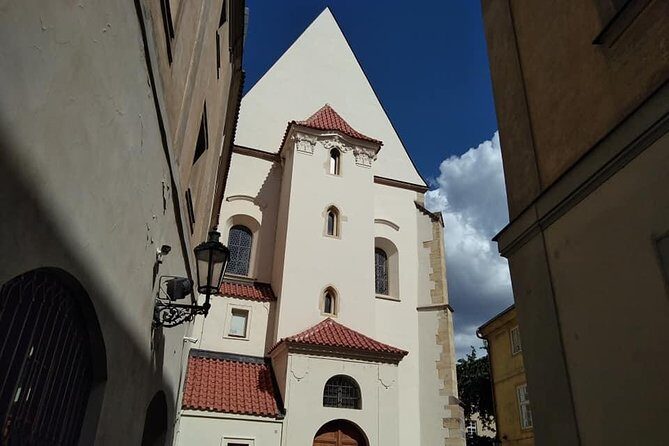
You start at the meeting point of Czech intellectuals, then head into the main landmarks. Even before the first named stop, the setup signals the theme: this story isn’t only about party politics. It’s about the Czech public sphere—who shaped opinion, where people gathered, and how ideas turned into action.
There’s also a practical upside. You get a guided route through central Prague without needing to figure out everything yourself. The tour runs about 2 hours, and the stops are short enough that you shouldn’t feel like you’re locked into a marathon.
National Theater: culture as political force
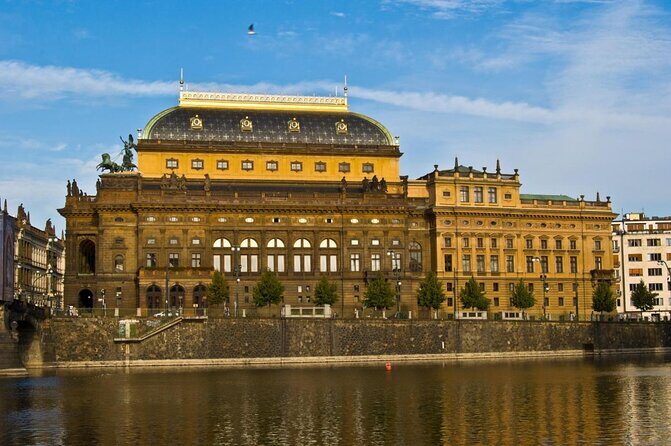
The first major stop is the National Theater, a building that played an important role in Czech history. You get about 10 minutes here, and an admission ticket is not included.
For you, the key value of this stop is the symbolism. In many countries under heavy political pressure, cultural institutions became more than entertainment. They became signals of identity—what people believed they were, and what they refused to lose. Even if you’re only taking in the exterior and immediate surroundings during a short visit, you’re setting the stage for everything that follows.
A drawback to expect: with only 10 minutes and no included ticket, you won’t get a deep museum experience. If you love architecture and want more time, you can circle back later on your own.
Narodni Street: where the Velvet Revolution’s energy turned visible
Next comes Narodni Street, where the Velvet Revolution started. You’ll have about 15 minutes here, again with no included admission ticket.
This is one of the stops where the tour’s storytelling really matters. “Velvet Revolution” can sound like a neat slogan until you stand in a place tied to the start of the movement. Narodni Street is treated as a hinge point: a place where Czech citizens shifted from dissatisfaction toward public action.
In practical terms, this stop helps you understand the timing and the momentum. It also gives you a way to connect your memories of modern Czech history to a walkable section of central Prague. If you’ve visited other cities, you might know how rare it is to find street-level locations that link directly to political events.
Time consideration: 15 minutes is enough for orientation and context, but not enough to linger. If the area sparks questions, ask Jana right away so you don’t lose time to the next landmark.
Lucerna Arcade and Vaclav Havel’s family connection
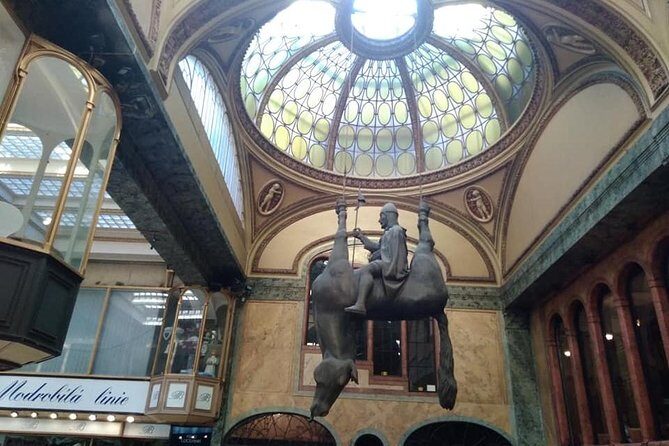
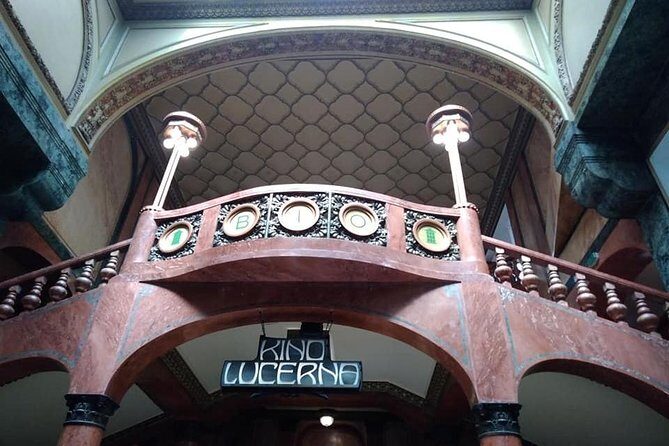
Then you move to Lucerna Arcade, where you’ll spend about 10 minutes. This is described as an important culture and social centre, founded by Vaclav Havel’s family.
This stop is a smart counterweight to monuments and memorials. It brings the story closer to daily Czech social life. Instead of treating history as only protests and political speeches, Lucerna Arcade reminds you that public culture and social spaces matter too. People meet. Ideas spread. Communities form. Over time, those ordinary patterns can support extraordinary change.
You also get another layer of meaning because Havel’s name is tied here not just as a distant leader, but through a family connection. That’s the kind of detail that helps you feel how deep the movement’s roots ran in Czech society.
As with other stops, admission isn’t included, so you’ll likely focus on what you can see and absorb quickly within the allotted time. If you want to go inside a particular part of the arcade, you’ll need to do that on your own after the tour.


Wenceslas Monument and the heart of demonstration culture
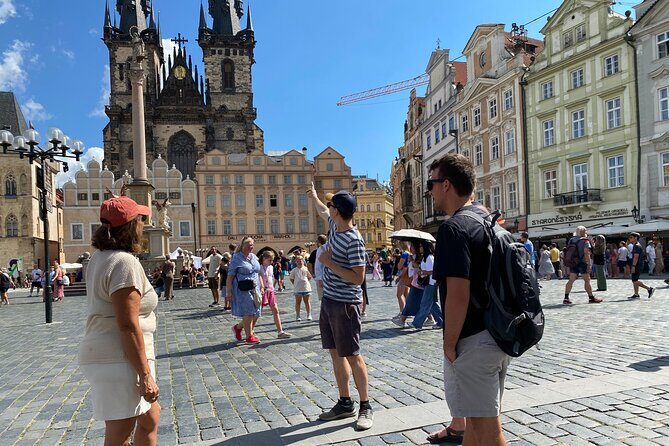
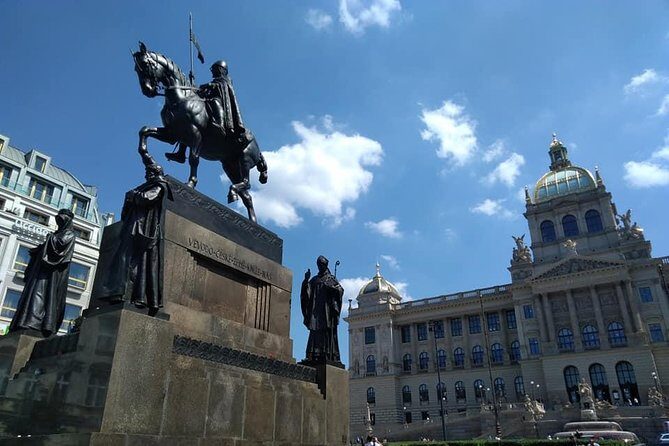
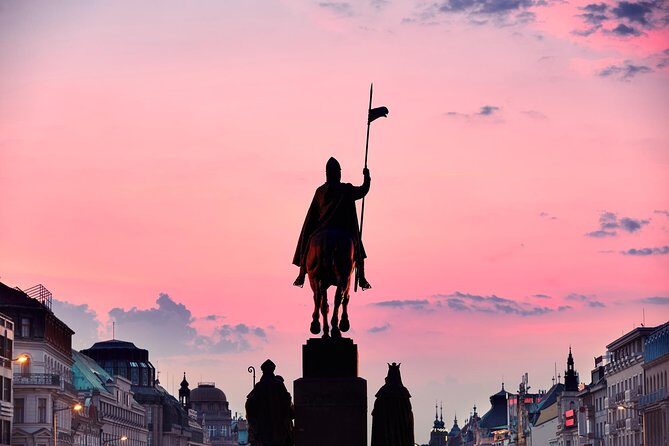
Your biggest time block is the Wenceslas Monument, with about 20 minutes at the site. It sits on Wenceslas Square, described as the heart of Prague and the place where demonstrations are held.
This is the stop that makes the tour’s theme feel physical. Wenceslas Square isn’t just a location—it’s a stage. When you’re standing there, the idea of mass gatherings makes sense in your bones. You don’t have to imagine crowd energy from a textbook.
For you, this is also a great photo stop and orientation tool. If you’re trying to understand Prague geography, this square anchors a lot. It helps you connect the rest of the city to what happened here, not just when you’re reading about it.
Possible drawback: 20 minutes sounds good, but it’s still a short window for a wide square. If your group wants long viewing time, you may need to plan for a bit of extra personal time before or after the scheduled stop.
Memorial to the Victims of Communism: ending with reality
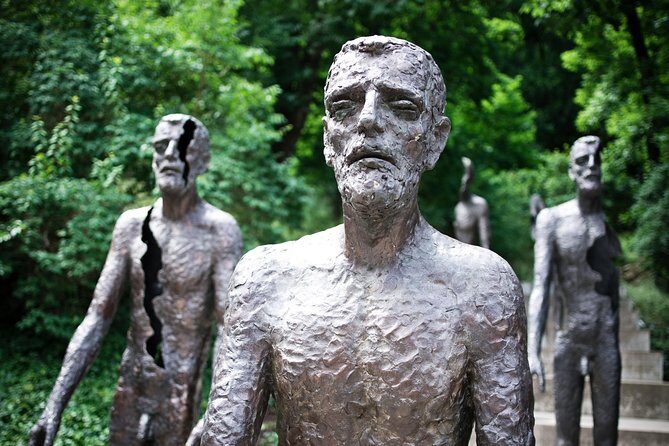
The final stop is the Memorial to the Victims of Communism, about 15 minutes. Admission is free. The memorial was created by sculptor Olbram Zoubek, one of the most notable Czech artists.
This is the emotional and ethical ending of the route. Earlier stops show momentum—cultural foundations, street beginnings, public squares. The memorial brings you back to the cost: the people who suffered under the system, and the need to remember that the story isn’t only about political change at the top.
I like that the tour ends here with a free stop. That makes it easier to absorb without worrying about tickets or add-on fees. It also gives you a chance to slow down mentally. This is a “read with your eyes” moment: you look longer than you planned, because you’ll want to understand what the memorial is asking you to acknowledge.
Time note: 15 minutes works well for a thoughtful walk-through, but if your group is quiet and reflective, you may feel you could use more. In that case, you can always linger after Jana finishes.
Price and what $85 buys you in real life
The tour costs $85.00 per person for approximately 2 hours. That price can sound modest or steep depending on what you’re comparing it to, but here’s how I’d judge value for this specific experience.
You’re paying for three things that matter more than the physical sights alone:
- A fully licensed professional guide
- Personal context from Jana Neubergova, including her work connected to Vaclav Havel and her participation in November 1989 demonstrations
- A tight route that connects multiple politically meaningful locations without you spending time building the puzzle yourself
Also, the tour offers group discounts and a mobile ticket option, which can help if you’re traveling with friends. And since it’s private, you’re not stuck with a large group that’s moving away from your pace.
What’s not included is private transportation. In central Prague, that can be a plus. It keeps the experience grounded and walk-focused. But it does mean you’ll rely on the provided meeting arrangement and on-street walking between stops.
If you want a history tour that feels like a conversation and not a slideshow, this is priced in a way that fits that expectation.
Pickup, walking route, and keeping it easy
You can get on-foot pickup from all Prague hotels. The tour notes it’s near public transportation, and it’s designed for travelers with moderate physical fitness.
Here’s how to think about that practically: the stops are spread across central areas, and the time allocations suggest mostly walking plus short viewing moments. You’re not signing up for a long hike. But you should still be ready for the kind of walking that comes with sightseeing in a busy historic center.
No private transportation is included, so if you’re hoping for a car or van, you’ll need to manage that separately. The good news is that the route is built around central Prague landmarks, so the lack of private transport usually won’t derail your day.
Why Jana’s perspective changes the way you read Prague
In most history tours, you get facts and dates. Here, you also get a human thread. Jana is described as extremely friendly, approachable, and deeply personal about the communist era and the Velvet Revolution. She’s also presented as fluent in English, which matters if you want to ask follow-up questions without translating in your head.
The biggest value for you is that her background turns the stops into a timeline you can feel. When someone who participated in the demonstrations connects a street to what it felt like in November 1989, the place stops being a label. It becomes a sequence: tension, gathering, decision, and consequences.
If your group loves details, this is where the tour earns top marks. The personal connection to Havel’s office and the demonstration experience give the narrative texture. You’re not only learning what happened. You’re learning how it was lived.
And because the tour is private, you can ask for emphasis. Want more about the “fall” side of the story? Ask. Want more about culture and public life as groundwork? Ask. That kind of flexibility is hard to get on big-group tours.
Who should book this Communism and its Fall private tour
This tour fits best if you:
- Want a Prague communism and Velvet Revolution overview that stays tied to real locations
- Like history that connects to everyday public spaces—squares, streets, cultural centers
- Prefer a private guide conversation rather than a headset tour
- Travel with friends who care about politics and want the same shared framework
It might be less ideal if you:
- Want a longer, ticket-heavy museum itinerary
- Need step-by-step accessibility guarantees beyond moderate physical fitness (the data only states moderate fitness)
- Expect private transportation included in the price
In other words, this is a focused, meaning-heavy walk. It’s not trying to do everything in one go.
Quick practical FAQ for your planning
FAQ
How long is the Communism and its fall Prague private tour?
It’s about 2 hours.
Is the tour private?
Yes. It’s a private tour/activity, and only your group will participate.
What’s the price per person?
The price is $85.00 per person.
Is pickup available, and from where?
On-foot pickup from all Prague hotels is offered. It also notes that the tour is near public transportation.
Are admission tickets included for the stops?
Admission tickets are not included for the National Theater, Narodni Street stop (as listed), Lucerna Arcade, and Wenceslas Monument. The Memorial to the Victims of Communism is listed as free.
What language is the tour offered in?
The tour is offered in English.
What’s the cancellation policy?
You can cancel for a full refund up to 24 hours in advance of the experience start time, and free cancellation is available.
Should you book this tour?
If you want Prague history that feels connected to place—streets, squares, and a memorial you can stand in—this is an easy yes. The route is tight, the guide is the main draw, and Jana’s personal connection to the Velvet Revolution era gives the tour a depth you won’t get from generic explanations.
Book it if your group is asking questions and wants context, not just photos. Skip it (or plan add-ons) if your goal is long indoor museum time or if you need a tour with private transportation built in.