REVIEW · PRAGUE
From Prague: Kutna Hora UNESCO Site Tour with Bone Chapel
Book on GetYourGuide →Operated by Sandemans Tours - Prague · Bookable on GetYourGuide
Skulls, stained glass, and silver trade collide. This 6-hour day trip from Prague takes you to UNESCO-listed Kutná Hora, including the Sedlec Ossuary (the Bone Chapel) and the mighty Gothic St. Barbara’s Church, plus the town’s Hussite-era landmarks.
I especially love how the tour links the spooky Sedlec Ossuary to real power and money in Bohemia. I also like the pace: you get guided context at the big sights, and you still have time to wander and look closely at the details you’d miss on your own.
One thing to plan for: you can’t take photos inside the Bone Chapel, so don’t count on “proof” pics—go in ready to remember it with your eyes.
In This Review
- Key things I’d mark on your map
- Kutná Hora: A UNESCO Day Trip That Beats a Prague-Only Loop
- Meeting at Český dráhy (and Finding Your Red Umbrella)
- Rails, Local Buses, and a Schedule Built for Real Timing
- Sedlec Ossuary Bone Chapel: What to Expect (and What Not to Do)
- St. Barbara’s Church: Gothic Splendor With a Silver-Mining Backstory
- Italian Court, Sankturin House, and the Power Base Behind the Hussite Wars
- Town-Walk Stops: Ruthardka Street, Stone House, and Plague Column
- How the 6 Hours Actually Feel in Motion
- Guides Matter: Brandon, Karel, Pavel, Oliver, Jan, and Gaby
- Price and Value: What You’re Paying For at $81
- Lunch Options: Helpful Guidance, Still Your Call
- Who Should Book This Tour (and Who Might Prefer Something Else)
- Should You Book It?
- FAQ
- How long is the Kutná Hora day trip from Prague?
- How much does the tour cost per person?
- What’s included in the ticket price?
- Are food and drinks included?
- Where do I meet the guide in Prague?
- What language is the tour guide?
- Can I cancel for a full refund?
- Is pay later available?
- Is photography allowed inside the Bone Church in Sedlec?
- Is the tour suitable for people with mobility impairments?
- How do I know the departure times?
Key things I’d mark on your map
- Sedlec Ossuary rules: photography is forbidden inside the Bone Chapel area
- St. Barbara’s Church admission: included, saving you time on the spot
- Hussite Wars context: you’ll connect the buildings to 15th-century power struggles
- Town highlights with walking breaks: Ruthardka Street, Stone House, and the Plague Column
- Small-group feel in off-season: some days run with very few people, making the visit calmer
- Guides who run tight logistics: named guides like Brandon, Karel, Pavel, and Oliver are repeatedly praised for organization
Kutná Hora: A UNESCO Day Trip That Beats a Prague-Only Loop
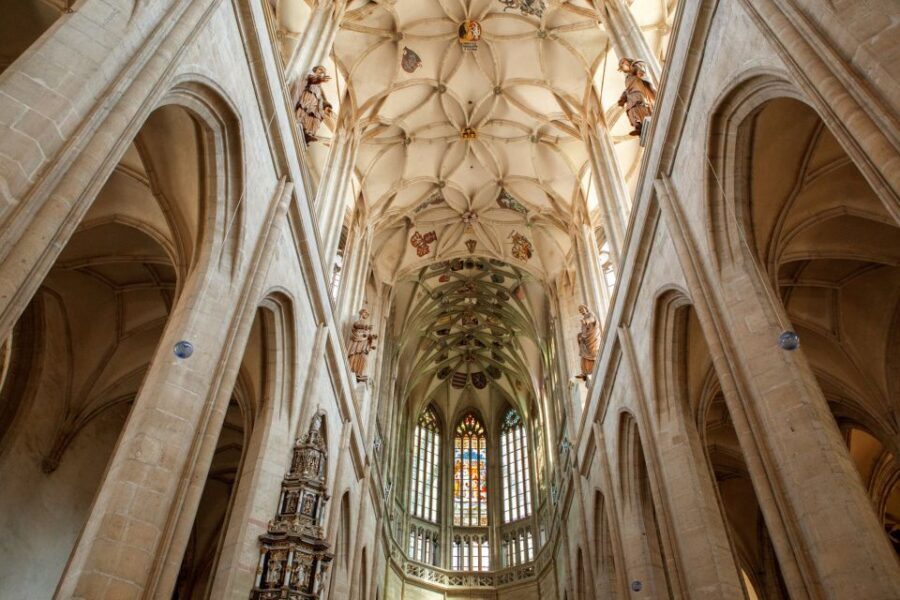
Kutná Hora doesn’t feel like a tack-on. It feels like a whole other Czech world. Once a major economic rival to Prague thanks to silver, the town carries wealth in its stonework and big religious buildings, even when you’re just walking a small circuit.
The tour is interesting because it doesn’t treat Sedlec Ossuary as a one-joke stop. You also learn how money from silver mining helped fund church projects and royal prestige, including the local culture clash that fed the Hussite Wars of the 1400s. That context changes how you see everything: the bones feel less random, and the architecture feels more “why now?” instead of just “wow, old.”
You can also read our reviews of more tours and experiences in Prague.
Meeting at Český dráhy (and Finding Your Red Umbrella)
You meet at the Czech Railway Main Ticket Office, České dráhy, at the Prague train station. The meeting point is specifically on the minus 3 floor, right in the station center area.
If you’re arriving a few minutes early, use the station landmarks to orient yourself before you hunt for your group. Several participants note that a guide can be easier to spot by looking for a red umbrella—so keep your eyes up when you reach the correct level.
Why this matters: train-based day trips live or die on timing. With a meeting spot inside the station, you avoid the classic “where are you” stress right before boarding.
Rails, Local Buses, and a Schedule Built for Real Timing
This tour runs on public transportation rather than a private van. You take the train from Prague to Kutná Hora, then your guide uses local buses and trains inside town to keep you moving efficiently.
I like this approach for two reasons. First, it’s cheaper and more flexible than a charter vehicle. Second, the guide handles the switch points—so you’re not doing mental math about platforms and connections while trying to enjoy the day.
In the reviews, you also see the same pattern: guides ensure people don’t get left behind and they manage the transport changes even when weather or traffic gets in the way. One traveler specifically praised how the guide saved time by using local connections instead of forcing long walks through the less interesting parts of Kutná Hora.
Sedlec Ossuary Bone Chapel: What to Expect (and What Not to Do)
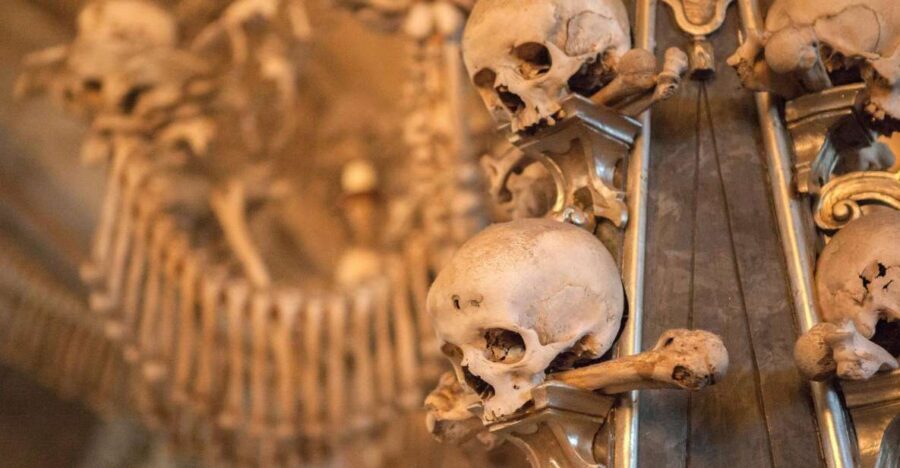
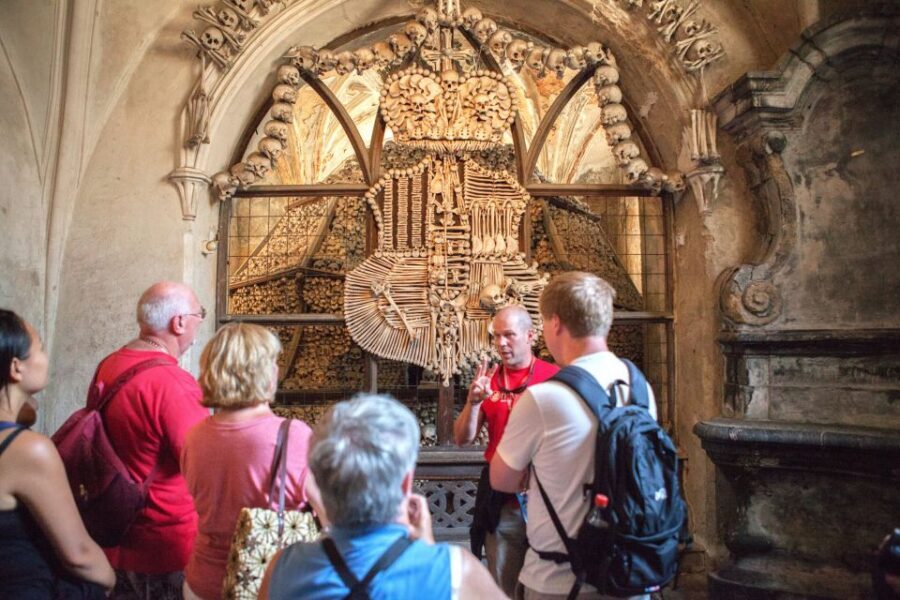
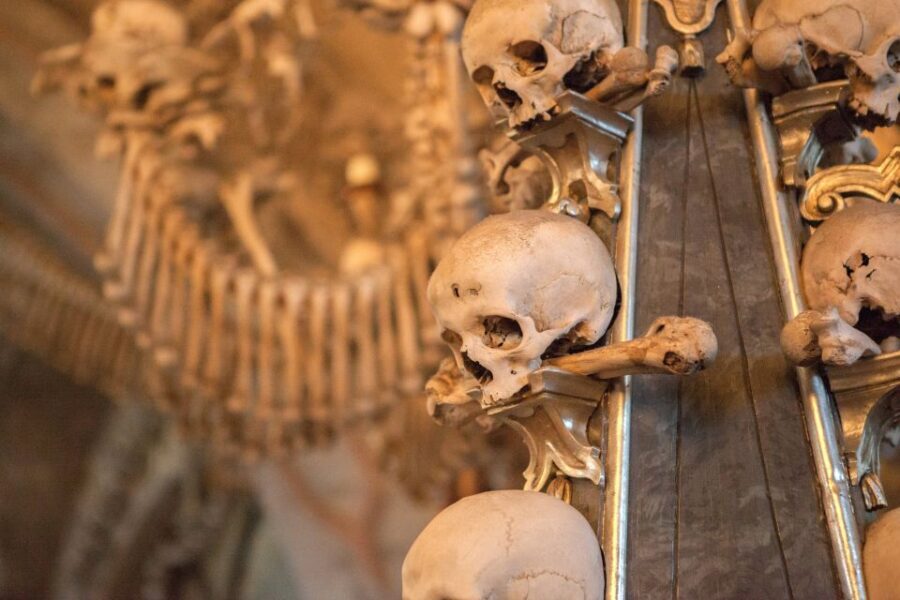
Sedlec Ossuary is the headline for a reason. You’re walking into a church-like space where bones and bone decorations create striking patterns and shapes. It’s macabre, yes, but it’s also carefully arranged and visually controlled—more craft and symbolism than chaos.
Two practical notes before you go:
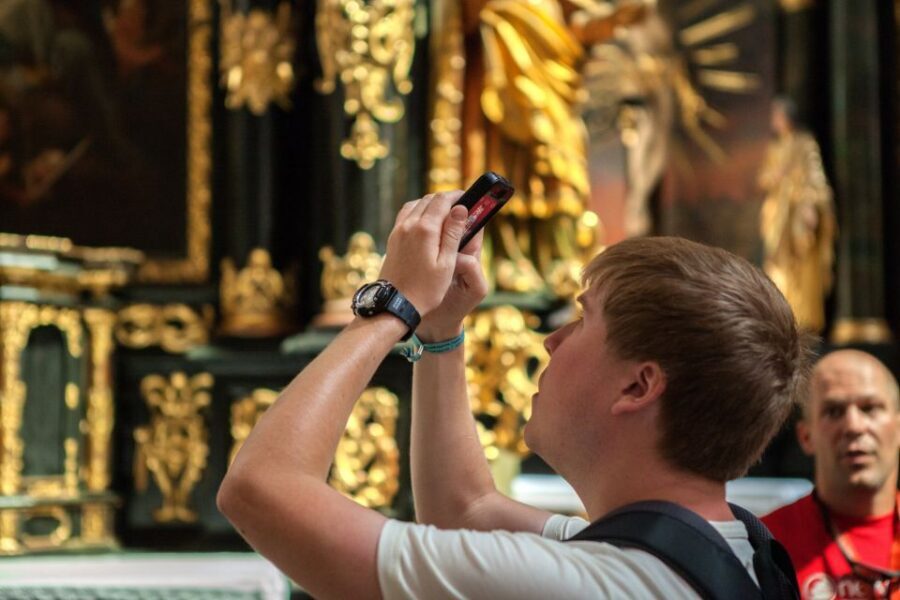
- No photos inside the Bone Church. This is a strict rule. If you want pictures, take them outside or in permitted areas only.
- Go slow once you’re inside. The place hits differently when you give it a moment instead of treating it like a quick photo stop.
One small scheduling idea for you: if you have a strong reaction (some people do), plan to stand back and breathe first. You’ll still see everything, and you’ll enjoy it more than if you rush to “get it over with.”
St. Barbara’s Church: Gothic Splendor With a Silver-Mining Backstory
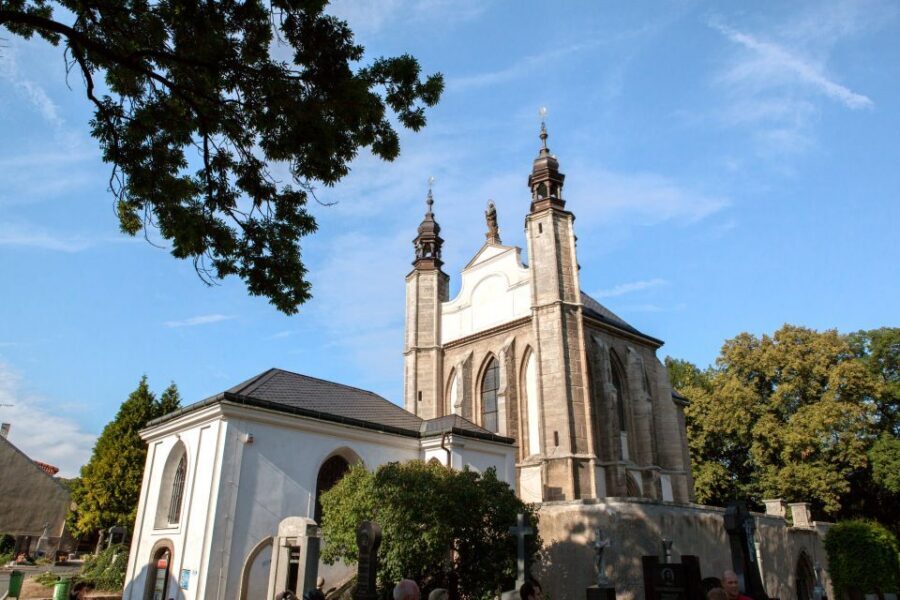
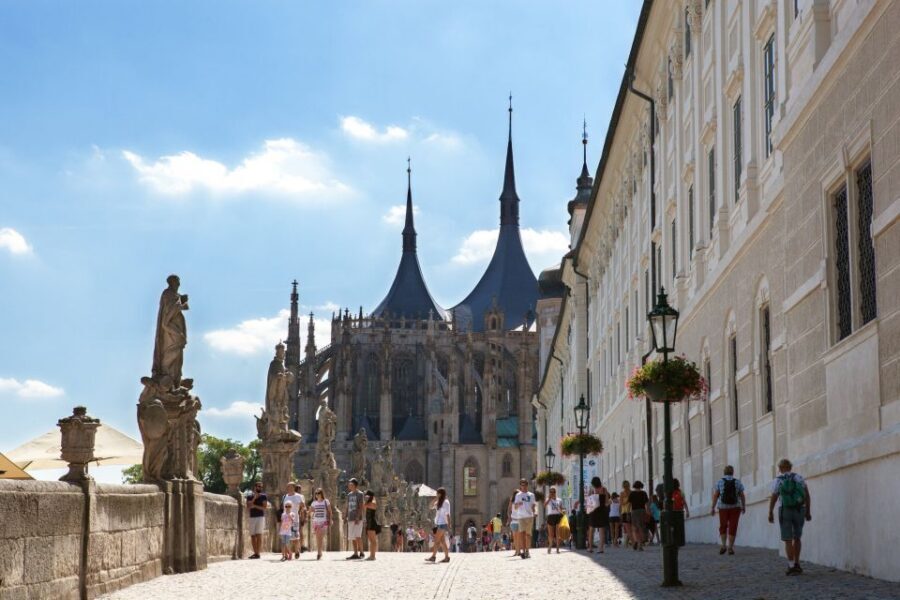
St. Barbara’s Church isn’t just another church stop. It’s tied to the reason Kutná Hora became powerful in the first place: silver. The tour includes admission, so you don’t waste time buying tickets mid-walk.
What you’ll likely notice is scale and detail—this is a Gothic landmark built to impress. Some participants highlight things like stained glass, and the church’s interior often feels like a mini “cathedral moment” even if you’ve seen a lot of churches around Prague.
Here’s the value of having a guide: they’ll help you connect the building to mining wealth and the social ambition of the town. Without that link, it’s easy to admire the architecture and move on. With it, you understand why this church exists with that level of confidence.
Italian Court, Sankturin House, and the Power Base Behind the Hussite Wars
Kutná Hora’s big story in the 1400s isn’t only religious—it’s political and economic. This tour helps you connect the landmarks to the Hussite Wars era and to the way Kutná Hora competed with Prague.
A highlight on the route is the Italian Court, a standout historic building that signals how important the town had become. You’ll also visit Sankturin House, identified on this tour as Bohemia’s oldest Cistercian monastery. Even if you aren’t a monastery person, it’s a useful contrast: you see how sacred life, learning, and local wealth all fit together.
Why these stops matter for your day:
- They show Kutná Hora wasn’t only “the bone chapel town.”
- They give you a political timeline you can carry into your other Prague-and-Bohemia sightseeing later.
Town-Walk Stops: Ruthardka Street, Stone House, and Plague Column
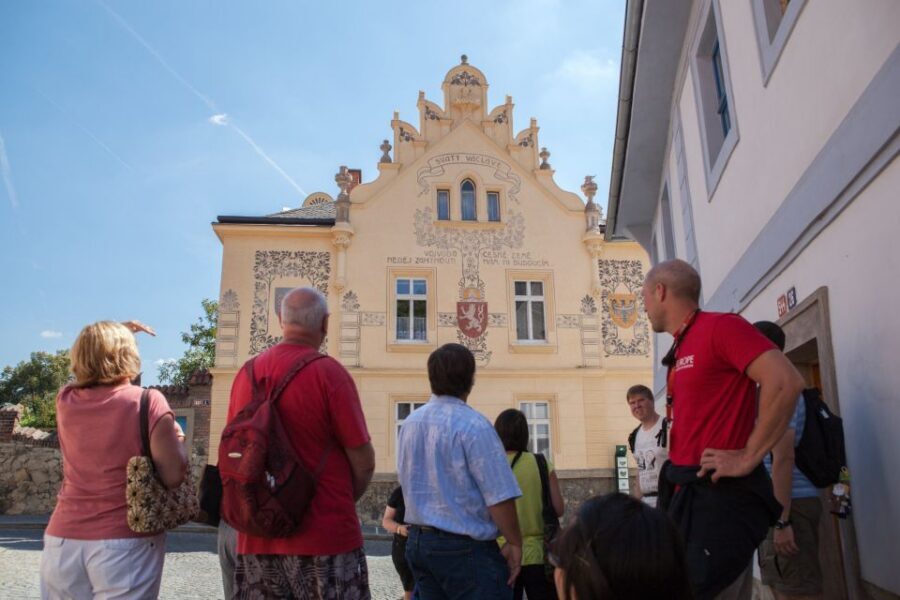
After the major monuments, the tour shifts to the kind of streets and façades you’d enjoy more if someone pointed out what you’re looking at.
On the walk you’ll see:
- Ruthardka Street, a medieval-feeling street stretch that helps the town come alive as a lived-in place, not only a museum circuit.
- Stone House, another architectural stop that reinforces the theme of wealth and craftsmanship.
- Plague Column, a reminder of how illness and tragedy shaped Central European towns.
This part is where your eyes adjust. The tour doesn’t just drop you at two “wow” sites. It threads the day through smaller, supportive details, so Kutná Hora starts to feel coherent.
How the 6 Hours Actually Feel in Motion
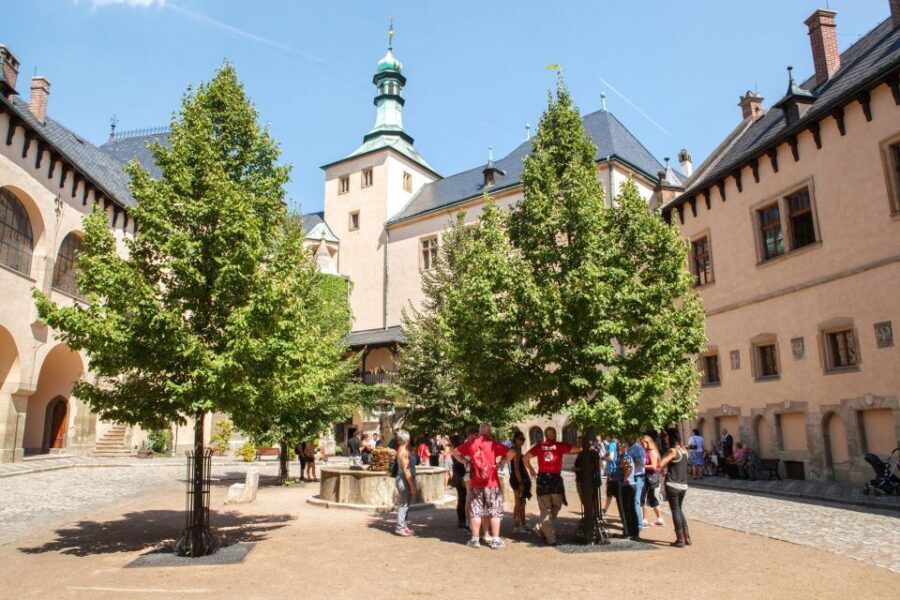
A 6-hour day trip sounds tidy on paper. In reality, it’s a mix of train time, site entries, and walking between points. The upside: you get a full set of major highlights without needing an overnight.
The tradeoff: it’s a packed day, and you won’t have infinite time at each stop. If Sedlec Ossuary is your number-one priority, treat it as your “slow moment” and let the other stops be more observational than lingering.
One thing I found reassuring from the way guides are described: timing is often handled well, even when weather complicates things. One traveler noted the tour stayed organized through train works and significant snow, which tells you the logistics matter here.
Guides Matter: Brandon, Karel, Pavel, Oliver, Jan, and Gaby
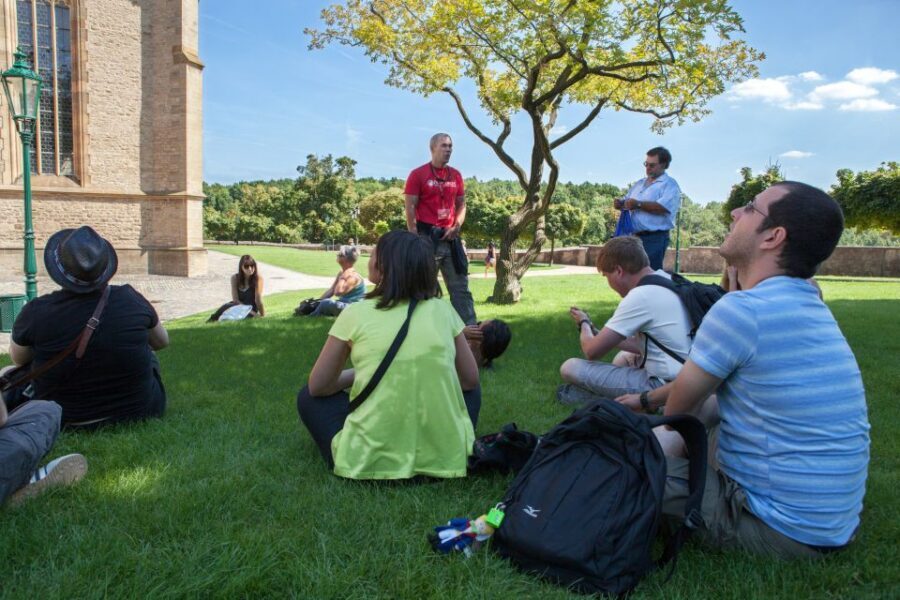
The experience improves when your guide can connect the buildings to stories you can actually remember. That’s the pattern in the guide praise: people mention clear, fluent English, great humor, and strong organization.
Named examples include:
- Brandon, praised for being entertaining and knowledgeable about the sites
- Karel, noted for solid history and a pleasant, energetic delivery
- Pavel, highlighted for excellent English and smooth transport decisions using buses instead of extra walking
- Oliver, called out for being well organized and for detailed commentary
- Jan, praised for managing the day without anyone getting left behind
- Gaby, mentioned for high energy and lots of information
What I’d take from this if you’re choosing between tours: look for the ones where the guide runs the “how do we get there and what should I notice” part. When that’s done well, you spend your energy on the sights, not on confusion.
Price and Value: What You’re Paying For at $81
At $81 per person for a 6-hour guided tour, the price makes sense when you break down what’s included. You get:
- a live English guide
- entrance ticket to St. Barbara’s Church
- entrance ticket to Sedlec Ossuary
- train tickets
Food and drinks are not included, so you’ll budget extra for lunch. Still, the biggest value is time and navigation. Doing Sedlec Ossuary plus St. Barbara’s Church plus the Kutná Hora town circuit under your own steam would mean multiple ticket purchases and a more stressful transport plan.
Also, because the tour uses public transport with a guide coordinating connections, you’re not paying for luxury. You’re paying for a day that runs like it has a plan.
Lunch Options: Helpful Guidance, Still Your Call
Food isn’t included, so lunch is on you. The useful part is that guides often recommend a traditional restaurant in Kutná Hora, and some groups get guidance that makes lunch convenient right after sightseeing.
A couple practical cautions for you:
- In winter and off-peak seasons, some restaurants may be closed, so your lunch choices can be limited.
- If your priority is a slow sit-down meal, remember the day is designed to cover several stops, so you may feel time pressure.
One traveler even mentioned that the guide arranged lunch so it was ready when the group arrived. If you want that kind of convenience, ask what’s possible with lunch options when you’re on the tour.
Who Should Book This Tour (and Who Might Prefer Something Else)
This is a strong match if you:
- want a guided day beyond Prague without spending hours planning
- like major monuments and the “why these places matter” context
- are curious about the Hussite Wars and the silver-mining boom that powered the town
It’s less ideal if you:
- have mobility impairments, since the tour is not suitable for people with mobility impairments
- hate walking or tight scheduling, since it’s a packed, moving day
Also, if you’re someone who loves photography, remember the key rule: photos are forbidden inside the Bone Chapel.
Should You Book It?
I’d book this tour if you want the best chance of seeing the core sights of Kutná Hora—Sedlec Ossuary, St. Barbara’s Church, and the key town landmarks—in one smooth day with a guide running logistics. The price is reasonable for what’s included, and the guide quality tends to be high based on how often specific names are praised.
I wouldn’t book it if you need lots of free time to wander without structure, or if you rely on mobility-friendly routes. And if you’re photo-obsessed, accept the Bone Chapel’s no-photo rule up front.
If you’re doing Prague and want one unforgettable day trip that feels like it belongs in Central Europe’s big historical story, this one is a solid choice.
FAQ
How long is the Kutná Hora day trip from Prague?
The tour duration is 6 hours.
How much does the tour cost per person?
The price listed is $81 per person.
What’s included in the ticket price?
You get a live English guide, entrance tickets to St. Barbara’s Church and the Sedlec Ossuary (Bone Chapel), plus train tickets.
Are food and drinks included?
No. Food and drinks are not included.
Where do I meet the guide in Prague?
The tour meets at the Czech Railway Main Ticket Office (České dráhy) at the Prague train station, on the minus 3 floor.
What language is the tour guide?
The tour has a live guide in English.
Can I cancel for a full refund?
Yes. You can cancel up to 24 hours in advance for a full refund.
Is pay later available?
Yes. You can reserve now and pay later.
Is photography allowed inside the Bone Church in Sedlec?
No. It is forbidden to take photos inside the Bone Church in Kutná Hora (Sedlec).
Is the tour suitable for people with mobility impairments?
No. The tour is not suitable for people with mobility impairments.
How do I know the departure times?
Departure times depend on availability, and you should check available starting times for the day you want to go.