REVIEW · PRAGUE
Kutna Hora and Bone Chapel Private Day Trip from Prague
Book on Viator →Operated by Eva Prague Tours · Bookable on Viator
Kutná Hora feels like a time machine with a side of macabre. You’ll leave Prague for UNESCO silver-mining landmarks and end up in the Sedlec Bone Ossuary, where bones are arranged into chandeliers and coats of arms. It’s a full day that mixes big Gothic architecture with a story you can’t un-know.
I love that this is a true private format, so the pace matches your group and you’re not stuck in a cattle-line schedule. I also like how the guide ties details together—mining wealth, water systems, and even money-making—so the places make sense instead of feeling like a checklist.
One consideration: a lot of the “must-see” interiors cost extra on the day. Expect cathedral + ossuary + St. Barbara’s fees, plus lunch, on top of the tour price, so budget for it.
In This Review
- Key Highlights That Matter
- Kutná Hora in One Day: UNESCO Silver City Meets the Bone Chapel
- Price and What You Really Get for $355.27
- Getting From Prague: Hotel-to-Hotel Comfort and a Calm Start
- St. Barbara’s Cathedral: The Symbol of Kutná Hora’s Mining Power
- Rejsek Square’s Gothic Stone Fountain: Water Solved by Engineering
- Church of Saint James: A Gothic Tower Shaped by Unstable Ground
- Jesuit College and the Fake-Bridge Idea: Prague’s Charles Bridge, But in Kutná Hora
- St. John of Nepomuk (Baroque in a Gothic Town): When Kutná Hora Switches Styles
- Italian Court: Where Wenceslas II Centralized Silver Money
- Gothic Stone House (Kamenny dum): Gothic Living, Not Just Gothic Looking
- Sedlec Cathedral: UNESCO Gothic to Baroque Gothic, Plus a Modern Twist
- Cemetery Church of All Saints and the Ossuary: The Setup for the Bone Chapel
- Sedlec Bone Ossuary: How 40,000 Bones Became a Symbol
- Lunch in Kutná Hora: Plan for Your Own Meal and Follow the Guide’s Lead
- The Real Value: Private Transport and a Guide Who Keeps the Story Straight
- Who This Day Trip Is Best For
- Should You Book This Kutná Hora and Bone Chapel Private Day Trip?
- FAQ
- How long is the Kutná Hora and Bone Chapel day trip from Prague?
- What’s included in the tour price?
- What admission fees should I expect to pay separately?
- Is the tour in English, and do I get a ticket on my phone?
- Where does the pickup happen?
- Can I get a full refund if my plans change?
Key Highlights That Matter
- Private hotel pickup: You start and end where you’re staying, not at a random meeting point.
- UNESCO Kutná Hora stops: Gothic churches and town landmarks in one efficient loop.
- Silver-money context: The Italian Court helps you understand why Kutná Hora mattered.
- Sedlec Ossuary’s 1870 bone-arrangement story: Art made from the aftermath of plague and wars.
- Air-conditioned transport: Less stress, more time for walking and photos.
- Eva-style guiding: In the best cases, the guide is praised for being prompt, clear, and chatty at lunch.
Kutná Hora in One Day: UNESCO Silver City Meets the Bone Chapel
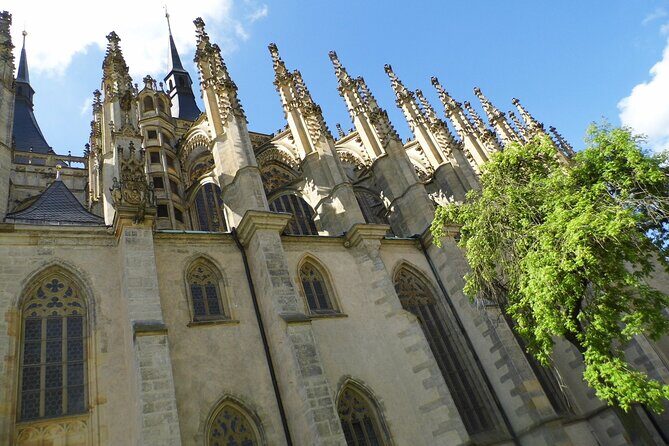
Kutná Hora is where medieval wealth shows up in stone. This town grew rich from silver mining, and that money funded churches, courtyards, and the kind of architecture that still makes you stop mid-sentence.
The day trip works because it doesn’t treat Sedlec Ossuary as the only attraction. You’ll first get the “why” behind the region—silver, mining patronage, and the money reforms that made Kutná Hora a financial hub. Then Sedlec hits you with the “how” behind the bone decorations: a later 18th-century arrangement that turns tragedy into symbolism.
If you like seeing big sights without sprinting, this route fits your brain. There’s a lot to look at, but the transport and private format keep it from feeling chaotic.
You can also read our reviews of more private tours in Prague


Price and What You Really Get for $355.27
At $355.27 per person for a private full-day tour, you’re paying for three things that matter on a day like this: time, coordination, and a guided flow.
Here’s what you get included:
- Hotel pickup and drop-off
- Air-conditioned vehicle
- Professional guide
- Bottled water
Admissions are not included. Based on the listed fees, you should plan for:
- Sedlec Cathedral (Our Lady and St. John the Baptist): €9
- Sedlec Ossuary: €9
- St. Barbara’s Cathedral: €10
- St. James Church: €4
That’s €32 in major interior fees (plus lunch). If you compare that to doing this on your own, the private guide is the “value multiplier.” With a guide, you don’t just visit buildings—you learn why the details exist (roof design, water supply solutions, mining-driven instability, and the later religious/political shocks).
Also, this is priced per person, but the booking has a minimum of 2 people per booking. If you’re traveling as a duo, the private value is strong. If you’re solo, check whether you’ll end up partnering with another traveler or paying to meet the minimum.
Getting From Prague: Hotel-to-Hotel Comfort and a Calm Start
This tour starts at the Prague Marriott Hotel (V Celnici 8), with pickup available from your own hotel or airbnb. That detail matters. In a one-day trip, time spent figuring out transport is time you lose to churches.
You travel in a private air-conditioned vehicle, and you’ll have bottled water. The tour is designed for a moderate fitness level. Expect walking in historic areas, plus stairs and standing for views—nothing extreme, but it’s not a sit-and-watch day either.
The route is offered in English, and you’ll receive a mobile ticket, which helps on days when you don’t want extra admin.
St. Barbara’s Cathedral: The Symbol of Kutná Hora’s Mining Power
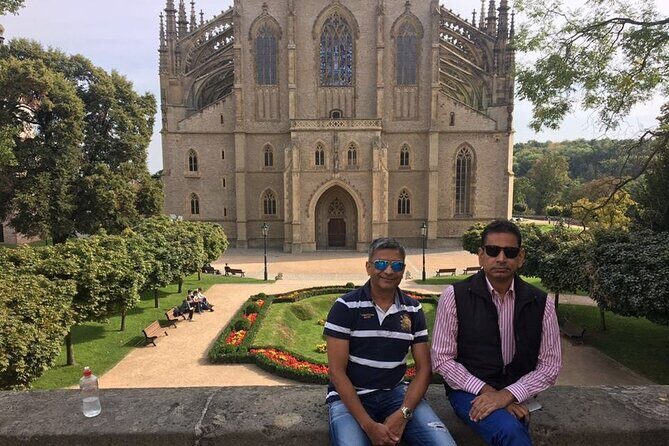
St. Barbara’s Cathedral is the kind of landmark you remember after you’ve left the city. It’s dedicated to St. Barbara, the patron saint of miners, and that connection isn’t trivia—it’s the emotional engine of the town.
You’ll see a late Gothic building with:
- A striking three-tent roof
- Intricate flying buttresses
- The kind of scale that signals wealth
This is where you start to understand how silver shaped daily life. Mining wasn’t just an industry—it funded monuments meant to outlast hard times. The cathedral’s interior requires an admission fee (€10), so plan to budget for that right away.
If you’re the sort of traveler who likes church architecture but hates vague commentary, you’re in the right place. St. Barbara’s gives the guide plenty of concrete details to explain, from structure to symbolism.
Rejsek Square’s Gothic Stone Fountain: Water Solved by Engineering
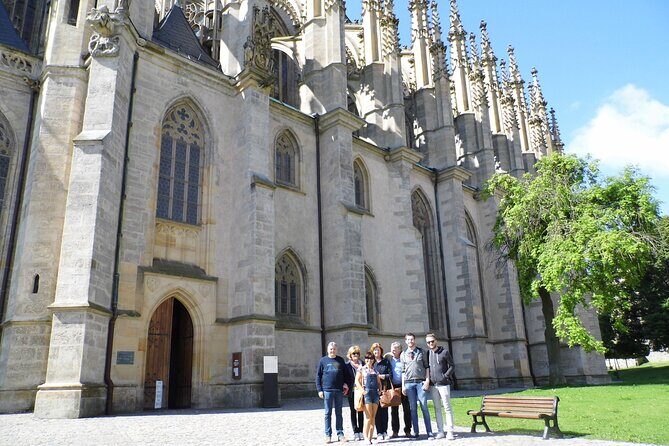
Next comes a less obvious but fascinating stop: the Gothic stone fountain on Rejsek Square. It was built in 1493 by Matěj Rejsek—the same architect linked to other important works in the region.
This fountain isn’t just decorative. It was part of the town’s survival infrastructure. When local water supply got cut off because mining disrupted systems, water had to be brought in from a well 4 kilometers away through wooden pipes.
It’s the kind of story that makes a stop feel alive. At daytime, it reads as a landmark. At night, it’s described as beautifully lit—so if timing lines up, you’ll want photos.
Entry is free here, which is a nice break from paid interiors. The stop is also short, so it doesn’t eat your day.
A few more Prague tours and experiences worth a look

Church of Saint James: A Gothic Tower Shaped by Unstable Ground
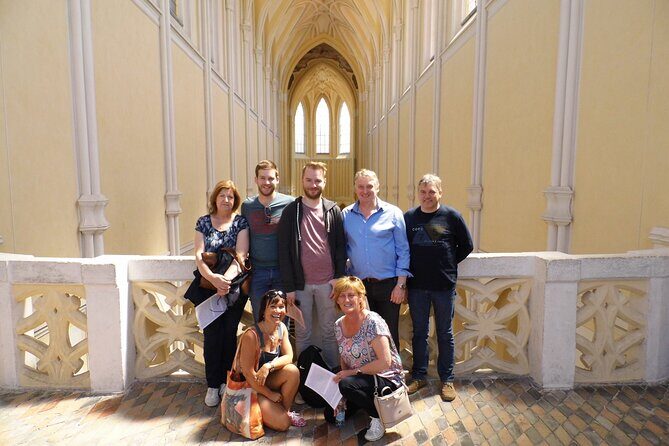
The Gothic Church of Saint James is visually simple but historically rich. It has a slender 86 m tower, and it’s one of the defining lines on Kutná Hora’s skyline.
Construction started in 1330 and finished in 1420. Originally, the church was projected with two towers, but the ground beneath couldn’t support both. You can actually see the unfinished portion of the second tower on the exterior.
That’s the mining legacy showing up again—this time not in money, but in physics. It’s a reminder that wealth doesn’t magically solve engineering challenges.
The Church of Saint James is free in the viewing route, but the tour lists a €4 admission fee. So treat it as a paid stop unless your guide confirms otherwise on the day.
Jesuit College and the Fake-Bridge Idea: Prague’s Charles Bridge, But in Kutná Hora
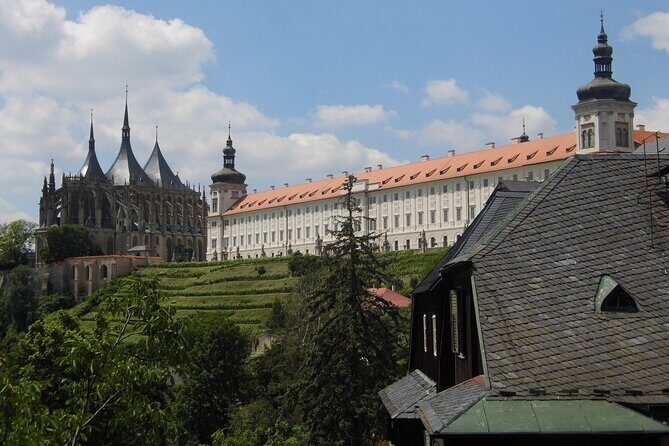
The Jesuits arrived in 1626 with a clear mission: convert the town to Catholicism. They built a college next to St. Barbara’s Cathedral and connected the two with a covered bridge—an architectural statement as much as a practical one.
You’ll see the Jesuit College building dating from 1667 to the mid-18th century. It originally had three towers, but the middle tower was removed in the mid-19th century for stability reasons. In front, a terrace was created and enclosed by a low wall. Statues were placed along it, creating a pseudo-bridge effect that was meant to resemble Prague’s Charles Bridge and the Royal Route.
Now, that could sound gimmicky. But it works because it’s historically grounded. You’re seeing how different cities borrow prestige from each other—how power and style travel.
This stop is free to visit (as listed), and it’s a good “breather” between cathedral interiors.
St. John of Nepomuk (Baroque in a Gothic Town): When Kutná Hora Switches Styles
Kutná Hora is mostly Gothic in feel, so a Baroque church can look like it landed by accident. Kostel sv. Jana Nepomuckého is that change of tempo.
This mid-18th-century church is noted as the only Baroque church in Kutná Hora. It was built in part by Kilián Ignác Dientzenhofer, a major architect of the era. The church is used for concerts and exhibitions too, so it’s not just museum-still life.
Time here is short, but it’s worth it because it gives you contrast. If all you did were Gothic churches, you’d miss the full story of how the region kept evolving.
Italian Court: Where Wenceslas II Centralized Silver Money
The Italian Court is one of the stops that makes your day feel intellectually satisfying. It’s where silver coins were produced during Kutná Hora’s peak wealth.
It’s named after Florentine bankers summoned by King Wenceslas II for a monetary reform in 1300. The plan: close scattered mints across the kingdom and create a central mint in Kutná Hora. As part of that shift, silver Prague groschen replaced earlier, inferior thin silver coins. The result was stronger currency for the region.
This is a great “aha” stop. You start the day with churches built on wealth, and then you realize the money itself was engineered here. It’s like seeing both the savings account and the palace it funded.
The Italian Court is listed as a paid admission stop (not included), so expect an entry fee here as well.
Gothic Stone House (Kamenny dum): Gothic Living, Not Just Gothic Looking
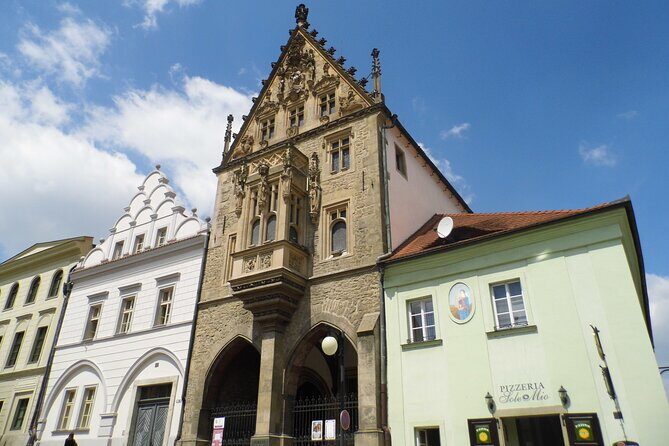
The Gothic Stone House, or Kamenny dum, is a different kind of monument. Instead of being famous mainly for its exterior spectacle, it’s valued for what it reveals about daily life.
It’s described as one of the most important Gothic monuments in Bohemia and it plays a major role in Czech architectural history. The point of stopping is that the building carries signs of the lifestyle of the period, so you get more than postcard architecture.
This one is free to enter as listed, and it’s short. Think of it as a palate cleanser before Sedlec.
Sedlec Cathedral: UNESCO Gothic to Baroque Gothic, Plus a Modern Twist
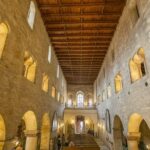
Now you get the UNESCO centerpiece in Sedlec: the Cathedral of Assumption of Our Lady and St. John the Baptist. It sits within the former Cistercian monastery, established in the early 1300s when Kutná Hora was flush from silver mining.
The cathedral started in High Gothic style, and it was described as the most magnificent church in the Kingdom of Bohemia. Then came major damage. The monastery and church were burned down by the Hussites in 1421 and weren’t renovated until the early 18th century.
That’s where the building becomes special in a very specific way. The Czech Baroque architect Jan Blažej Santini rebuilt it at the turn of the 17th and 18th century in a unique Baroque Gothic style. The fusion of Gothic and Baroque is the star feature.
After that, life changed again. The monastery closed down in 1783 during Emperor Joseph II’s religious reforms. A tobacco factory moved in by 1812, and it’s still run today by Philip Morris.
This stop is not only beautiful. It shows how places survive by changing roles. Your admission is listed as €9.
If you like architecture that carries political and economic scars, you’ll enjoy it. If you prefer a quick photo stop, your guide can keep things moving without rushing.
Cemetery Church of All Saints and the Ossuary: The Setup for the Bone Chapel
The Cemetery Church of All Saints is located in the middle of a cemetery and dates from the end of the 13th century. In 1698, it was rebuilt in the Baroque style.
Even before you reach the ossuary, the setting frames what’s coming. This isn’t a normal church visit. It’s a guided entry into a place where memory has been physically arranged.
This stop is listed as not included for admission, and it’s short. You’ll move on quickly, which is good. The ossuary needs full attention.
Sedlec Bone Ossuary: How 40,000 Bones Became a Symbol
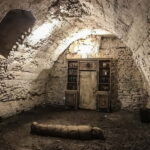
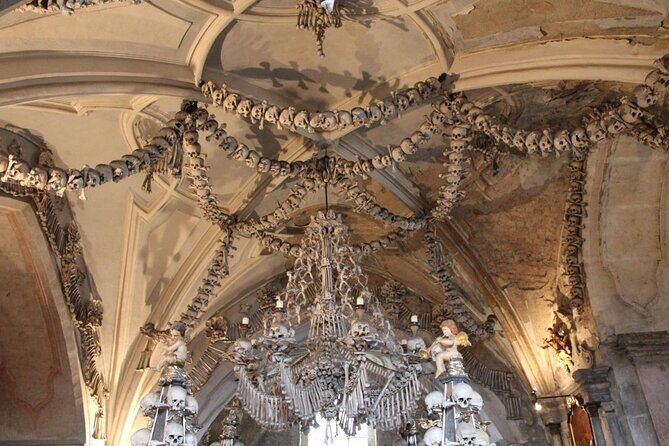
Then comes the part that makes people do a double-take: the Sedlec Bone Ossuary. The bones are arranged in an underground chapel under the Church of All Saints, and the scale is hard to ignore.
The ossuary contains the remains of about 40,000 people who died during the 1318 plague and during the 15th-century Hussite wars. They were originally buried in the church cemetery. When the cemetery closed at the end of the 15th century, the bones were exhumed and transferred to the chapel.
In 1870, František Rint arranged the bones and skulls into decorations. The design includes bells, the Schwarzenberg coat-of-arms, and a chandelier.
Yes, it’s macabre. But it’s also a sober kind of art—more about meaning than shock. The best experience comes when your guide explains what you’re looking at and why it was done. That’s what turns a disturbing hallway into a story you can hold in your mind.
Admission for the ossuary is listed as €9.
Lunch in Kutná Hora: Plan for Your Own Meal and Follow the Guide’s Lead
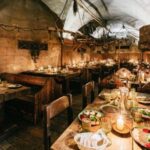
Lunch is on your own expense. That might sound like a gap, but it can be a good one—lunch in a small town is often better than grabbing something touristy on the roadside.
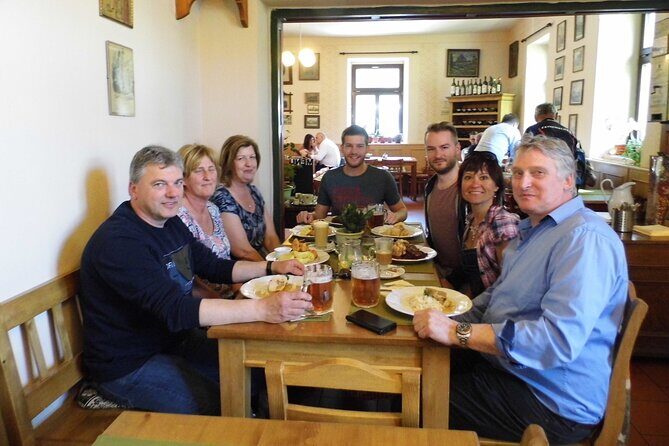
The tour typically includes a recommended lunch spot in the center of Kutná Hora, and the best feedback centers on the restaurant choice. Expect Czech food, served in a real town setting.
My practical tip: eat close to the scheduled time. If you drift, you’ll put pressure on your ossuary entry. In a day with multiple paid interiors, losing time has a domino effect.
The Real Value: Private Transport and a Guide Who Keeps the Story Straight
What makes this trip feel worth it is how the stops connect. It’s not just church-to-church photos. It’s silver mining to water systems to coin-making to architectural survival to a bone-art tradition created centuries later.
In the strongest versions of this tour, the guide keeps it lively and personal. That matters at Sedlec, because the ossuary is emotionally loaded. If the guide’s explanations stay clear and human, the experience lands.
There’s also a logistics rhythm built in: shorter viewing stops for some exterior landmarks, then deeper attention at the paid interiors. That helps you avoid the common frustration of feeling like you paid for a tour but spent half the day stuck in transit.
Who This Day Trip Is Best For
This fits best if you:
- Want a break from Prague without giving up a full guided day
- Like Gothic architecture and want it explained in plain, practical terms
- Are curious about how history turns into symbolism (especially in the ossuary)
- Prefer a private format for comfort and pacing
It’s less ideal if you:
- Hate paying multiple museum/church fees in one day
- Want a long, slow, unstructured wander (this is efficient, not leisurely)
Should You Book This Kutná Hora and Bone Chapel Private Day Trip?
I’d book it if you want maximum meaning per hour. The combination of UNESCO sites plus Sedlec Ossuary is rare to get smoothly from Prague, and the private pickup/droppoff saves real time.
Do it with eyes open on cost: the tour price covers the guide and transport, but major interiors add up (especially St. Barbara’s and the ossuary). If your group is okay budgeting for admissions and lunch, you’ll likely feel the day was well spent.
If you’re choosing between a self-guided option and this private format, this is the better move when you value context. Kutná Hora’s details are easier to appreciate with someone connecting the dots—roof design, water supply solutions, unstable foundations, coin reforms, and the later bone-art arrangement.
FAQ
How long is the Kutná Hora and Bone Chapel day trip from Prague?
It runs about 7 hours, approximately.
What’s included in the tour price?
Hotel pickup and drop-off, air-conditioned vehicle, a professional guide, and bottled water are included.
What admission fees should I expect to pay separately?
You’ll need to pay on-site fees for St. Barbara’s Cathedral (€10), St. James Church (€4), the Sedlec Cathedral (€9), and the Sedlec Ossuary (€9). Lunch is also an own-expense meal.
Is the tour in English, and do I get a ticket on my phone?
Yes. It’s offered in English, and you’ll have a mobile ticket.
Where does the pickup happen?
Pickup is available from your hotel or airbnb. The meeting point is the Prague Marriott Hotel (V Celnici 8, Nové Město).
Can I get a full refund if my plans change?
Yes, free cancellation is available. You can cancel up to 24 hours in advance for a full refund.