REVIEW · PRAGUE
Prague: Historical Walking Tour with Focus on World War 2
Book on GetYourGuide →Operated by Spectrum Tours · Bookable on GetYourGuide
Prague’s WW2 story hits harder on foot. I love that this tour begins with Czech-focused WWII context and then sends you straight to the real streets and buildings where events unfolded, not just museum talk. You’ll also get a strong visual aid approach, with the guide using lots of photos to make names, dates, and places connect.
One thing to consider: it can feel lecture-heavy, especially when you reach major landmarks, so if you prefer lots of free time to roam and interpret on your own, plan for a tighter schedule.
In This Review
- Key highlights you’ll care about
- Entering WWII Prague: Context Before the Streets
- Meeting at Skautský Institut and How the Tour Runs
- The Former Gestapo Headquarters and the Minute of Silence
- Nazi-Linked Buildings: Seeing How Power Worked in Real Life
- Old Town Square and Wenceslas Square: Prague Uprising at Human Speed
- Czech Radio Headquarters: A Key War-Era Location
- Reinhard Heydrich: From High-Ranking Nazi to the Spark of Resistance
- The Crypt Beneath a Church: Last Stand and Final Resistance
- Photos and Professional Comments: How the Tour Makes History Stick
- Price and Value: Is $58 Worth It?
- Languages and Pacing: German, Czech, or English
- Who Should Book This WWII Prague Walking Tour
- Should You Book Spectrum Tours’ Historical WWII Walk?
- FAQ
- What is the duration of the Prague WWII historical walking tour?
- How much does it cost per person?
- Where do I meet the guide in Prague?
- What languages are the tours offered in?
- Is the tour wheelchair accessible?
- Is the tour suitable for children?
- Where does the tour finish?
Key highlights you’ll care about
- Czech history first: the WWII story is explained with local context, not only German milestones
- Gestapo headquarters memorial moment: a guided minute of silence at the former Gestapo HQ site
- Prague Uprising hotspots: Old Town Square, Wenceslas Square, and Czech Radio Headquarters are part of the fight story
- Reinhard Heydrich, clearly explained: you connect his role to what came next and why it mattered
- A last stand underground: you visit the crypt beneath a church tied to the final resistance and deaths connected to the assassination
Entering WWII Prague: Context Before the Streets
This is the kind of walk that helps you understand why Prague looks the way it does today. If you’ve ever stared at a famous square and wondered what happened there during the war years, this tour gives you a way to read the city instead of just sightseeing it.
The guide’s approach starts with a theoretical introduction to the WWII problemacy—that is, the complicated web of political control, occupation, and how Czechs were caught in the middle. You’ll hear details tied to Czech history, so the story doesn’t feel like it’s imported from somewhere else. That context matters, because so many wartime decisions in Prague were local, and the consequences landed locally too.
The rest of the walk builds on that foundation. Instead of rushing landmark to landmark, you’re walking with a narrative—why a place was used, what role it played, and what people tried to do about it.
You can also read our reviews of more walking tours in Prague

Meeting at Skautský Institut and How the Tour Runs
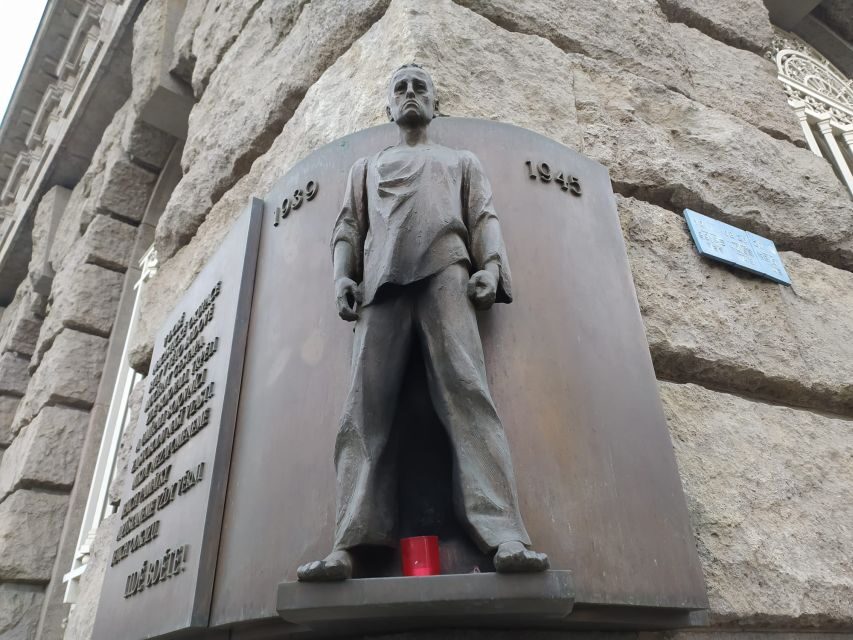
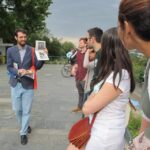
Your start is simple and easy to spot: meet outside the entrance door to Skautský Institut in an archway. The guide holds a paper that says Spectrum Tours.
You’re getting a 3-hour guided experience, which is long enough for real storytelling and short enough to keep your legs and attention from burning out. Since you’ll be moving on foot through central Prague, comfortable shoes are non-negotiable.
One practical note: the tour is designed for adults and older kids. It is not suitable for children under 10, so expect a more focused, historical tone rather than a kid-friendly pace.
The Former Gestapo Headquarters and the Minute of Silence
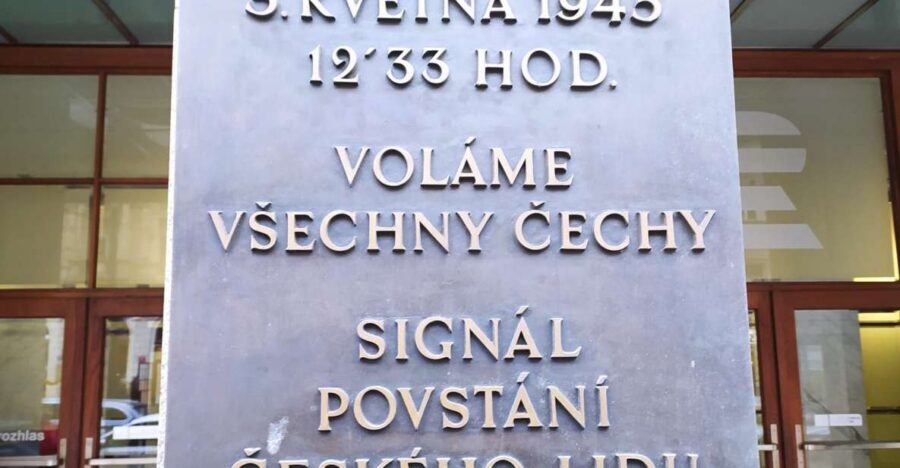
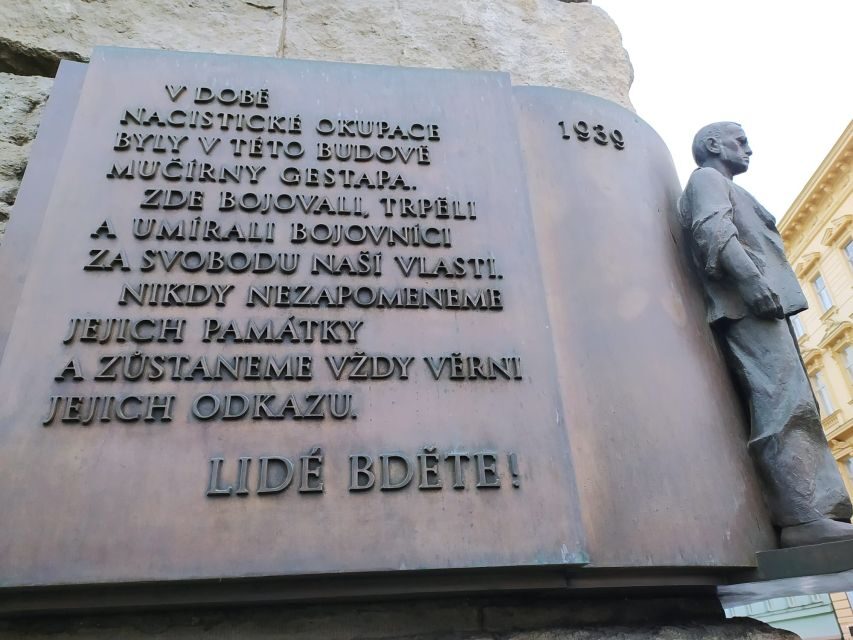
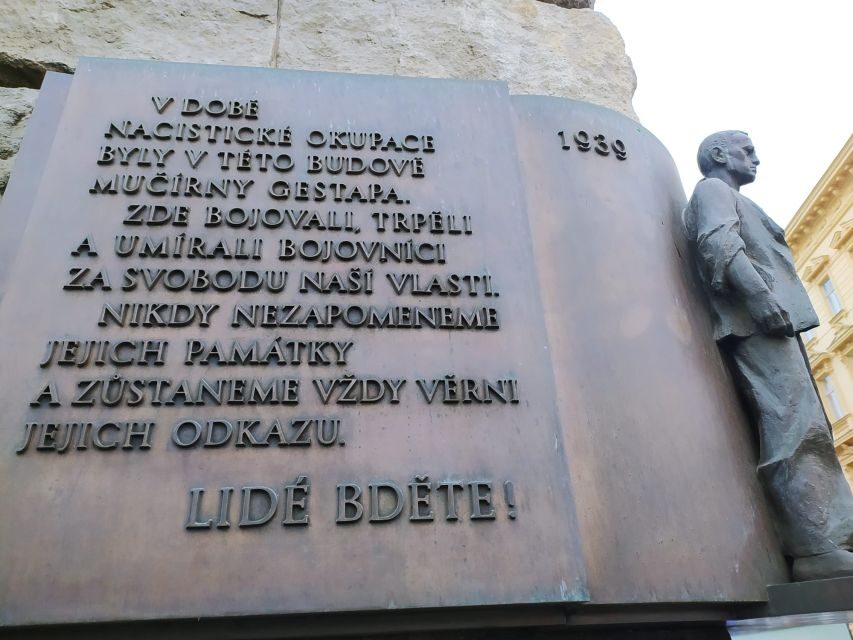
One of the most memorable parts is also the most solemn. You’ll visit the former GeStaPo headquarters, and the guide leads you in a minute of silence at the memorial there for victims of Nazism.
That moment does something important for the rest of the tour. It reframes everything you’re hearing after that—from buildings and “events” into consequences and human lives. It also makes the guide’s tone more grounded, not theatrical.
This is not a casual photo stop. You’ll want to be ready for respectful attention rather than sightseeing energy. If you’re the kind of traveler who appreciates history with emotional weight, this part will land.
Nazi-Linked Buildings: Seeing How Power Worked in Real Life
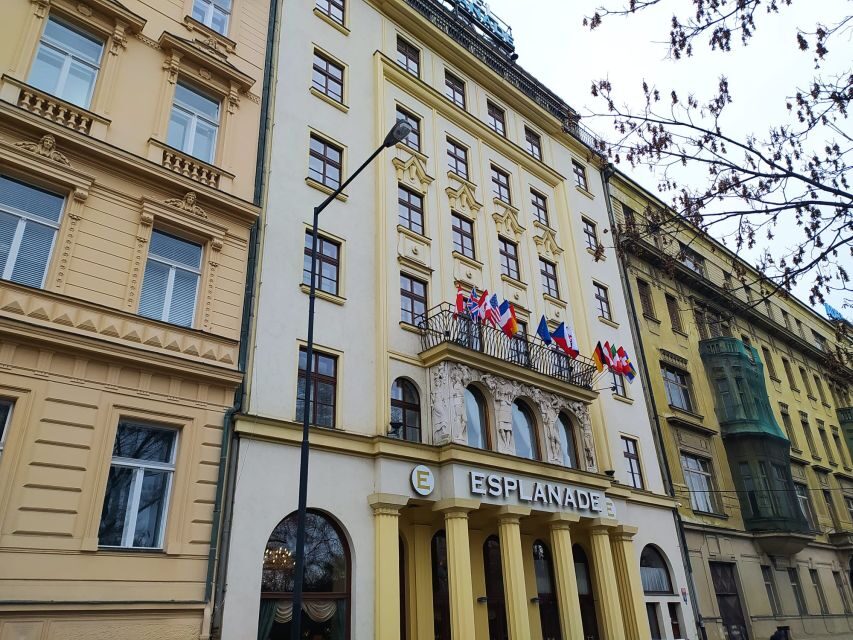
Between the lecture and the memorial stop, the tour also takes you to a former hotel that was very popular among Nazi officials. Even without a big explanation, the idea is clear: important people lived close to the centers of control, and their presence shaped how Prague functioned under occupation.
What I like about this kind of stop is that it connects architecture to politics. You don’t need the building to look dramatic to understand its function. A “normal” building can still be part of a coercive system, and that’s the point you’ll come away with.
The guide’s job here is to make sure you’re not just staring at a façade. You’ll get professional comments and visual context through photographs, which helps you imagine the place in wartime terms.
Old Town Square and Wenceslas Square: Prague Uprising at Human Speed
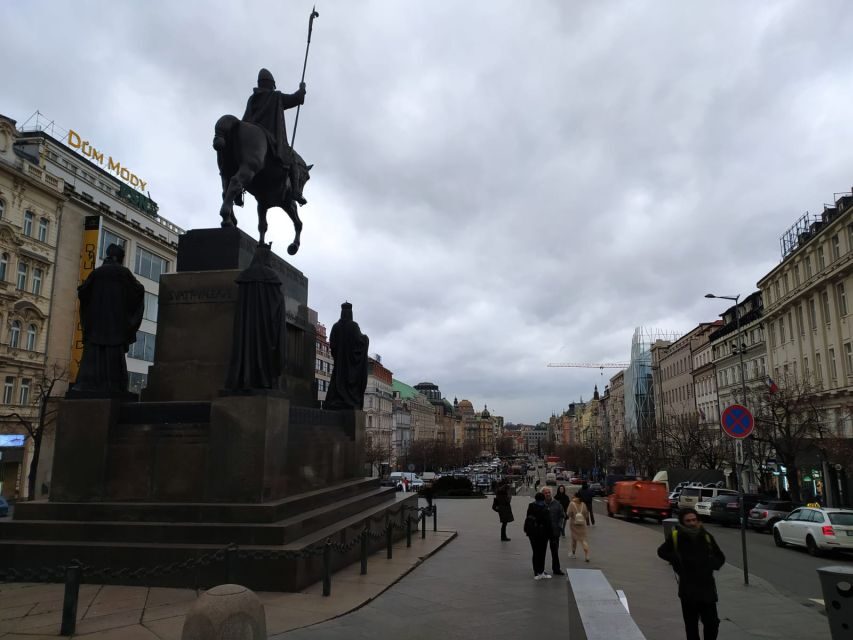
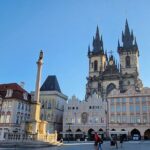
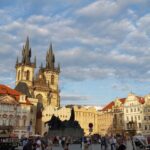
The tour then moves into the heart of the Prague Uprising in May 1945, focusing on where the heaviest fighting happened. Two of the most recognizable names in the story are Old Town Square and Wenceslas Square.
These squares can easily become background scenery if you’re traveling casually. Here, they become “decision zones.” You’ll hear what made them strategically and emotionally loaded during the uprising, and you’ll see how the fighting reshaped movement through the city.
Why this works for you: these are places you’ll walk through anyway on your own. The tour turns them into a map with meaning. Once you understand what was at stake, you’ll notice details you would’ve ignored before—street angles, proximity, how you’d move in a crisis.
The possible drawback is pacing. Since you’re also listening to broader context, there may be times where you want more granular explanation at the most famous spots. If you’re the kind of person who needs lots of stop-by-stop “why here, specifically,” keep that preference in mind.
You can also read our reviews of more historical tours in Prague

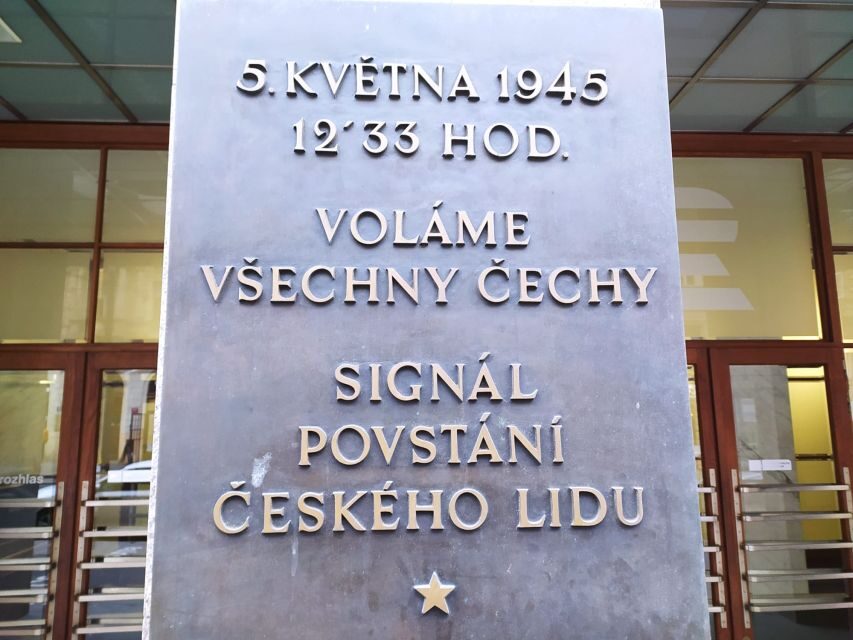
Czech Radio Headquarters: A Key War-Era Location
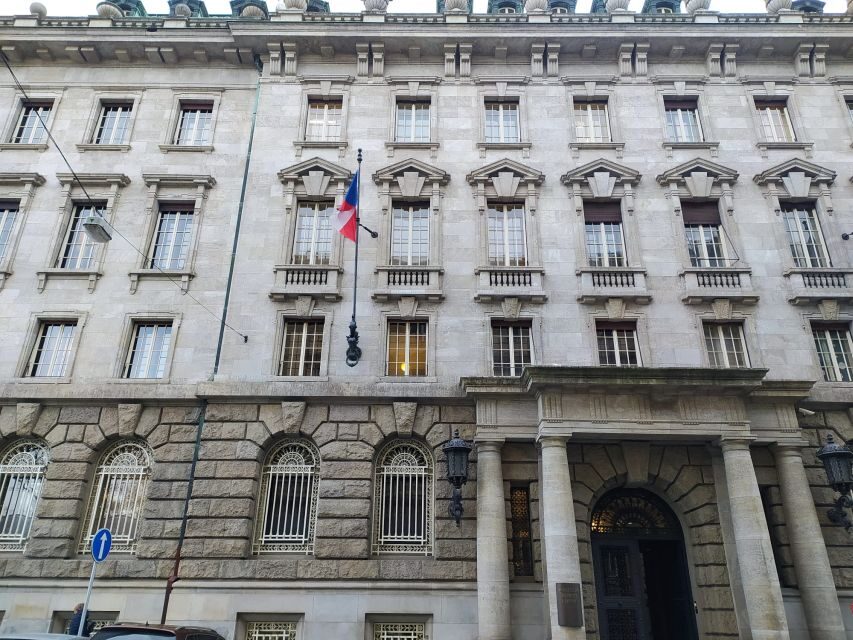
Another major stop in the uprising story is the Czech Radio Headquarters. Even if you know the building exists, you’ll leave with a sharper sense of why it mattered during the fight.
Radio was more than entertainment in wartime—it was communication, morale, and messaging. When the guide connects that idea to Prague’s uprising, the stop stops feeling like a generic landmark and starts feeling like a piece of how resistance tried to function under pressure.
If you like war history that includes information systems (not just battles), this is a good point in the route to pay extra attention.
Reinhard Heydrich: From High-Ranking Nazi to the Spark of Resistance
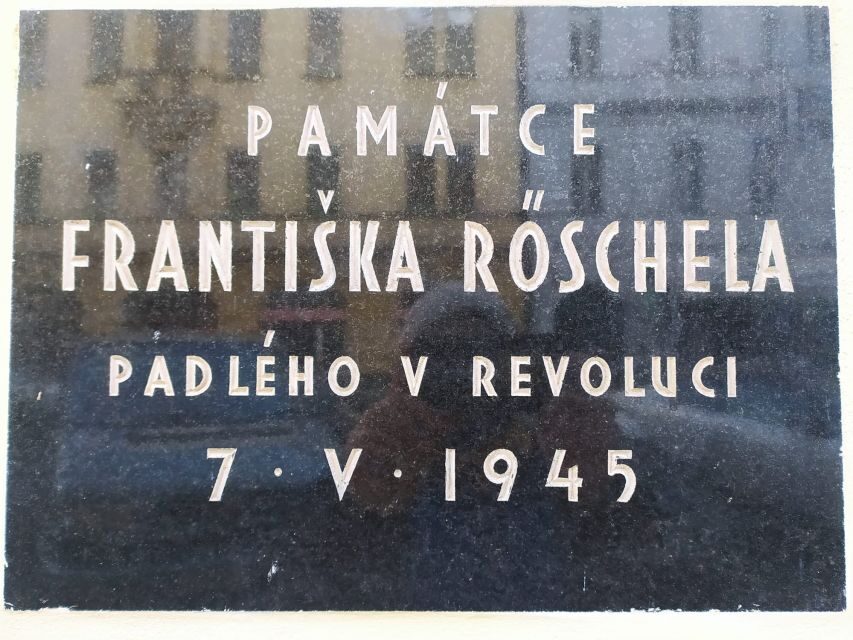
The tour spends dedicated time on the assassination of Reinhard Heydrich and what that act meant in the larger wartime picture up to 1942 and beyond. You’ll learn the context around Heydrich as one of the highest-ranked Nazi figures at the time, and how his position connects to the environment in occupied Prague.
This part is valuable because it’s easy to know the name and still miss the why. The guide’s explanation helps you see the assassination as a turning point tied to fear, retaliation, underground resistance choices, and the brutal logic of occupation.
You’ll likely notice that the tour keeps returning to one theme: violence wasn’t random. Places and people were targeted for reasons, and resistance actions forced consequences that were severe.
The Crypt Beneath a Church: Last Stand and Final Resistance
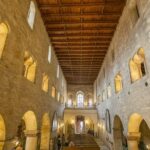
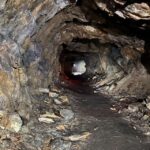
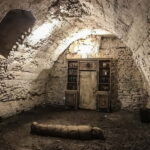
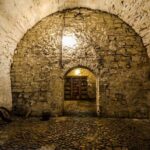
After Heydrich’s story comes one of the most powerful visits on the route: the place associated with the last resistance and death of the resistance members involved in the assassination. This is described as a crypt beneath a church, and it’s called incredibly impressive.
What makes this stop hit harder is the physical contrast. You’re in a sacred, enclosed underground space connected to wartime violence and the final outcome for the people who tried to act. You don’t need extra theatrics for it to feel intense.
This is also one of the most meaningful “learning by place” moments in the tour. You’ll understand how resistance history often lives in specific locations, not just in documents. Standing there, you’ll get a clearer sense of why the guide’s story sticks with you after you leave.
Photos and Professional Comments: How the Tour Makes History Stick
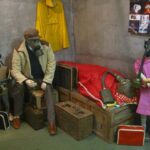
A big part of the tour experience is visual. You’ll see lots of photos shown to you by the guide, along with professional comments and explanations that connect those images to the places you’re walking toward.
This matters because WWII in Prague can feel abstract if you only hear names and dates. Photos help you picture uniforms, street life, and wartime scenes. Professional commentary helps you avoid the common mistake of treating history as a sequence of unrelated facts.
If you’re the type of traveler who wants more than a narration, this photo-assisted style is a real benefit. It also helps if you’re visiting Prague with limited background knowledge. The guide’s job is to build comprehension step by step, and the images make that easier.
Price and Value: Is $58 Worth It?
At $58 per person for about 3 hours, this tour sits in a mid-range bracket for guided history walks. What makes it feel worth the cost is what’s included beyond just walking: you get a licensed, professional local guide; you get strong context about Czech history; and you get an emotional stop at a memorial site with a guided minute of silence.
You also get a route that ties together multiple WWII threads in Prague: occupation and Nazi influence (including a former hotel tied to Nazi officials), Gestapo presence, the Prague Uprising fight story across major squares and Czech Radio, and the Heydrich assassination narrative culminating in the crypt stop.
If your main goal is getting a “connections” story—how the different parts of the occupation and resistance fit together—this pricing makes sense. If your goal is only to see a few famous landmarks with minimal listening, you might feel the time is more structured than you expected.
Languages and Pacing: German, Czech, or English
The guide works in German, Czech, and English, so you can pick what best matches your comfort level. That choice affects how easy it is to catch nuance, especially in a tour that spends time on political context and named individuals.
The pacing is intentionally focused: lecture, then place, then a visual aid reset with photos and commentary. You’ll want to be ready to listen and walk without long breaks, since the emphasis is on continuity.
Who Should Book This WWII Prague Walking Tour
You’ll probably love this tour if:
- You want Czech-focused WWII context alongside the bigger European story
- You care about resistance history, not just the occupation timeline
- You enjoy walking tours that treat places as evidence, not scenery
- You’re comfortable handling a solemn memorial moment respectfully
You might consider another option if:
- You prefer very light narration and lots of independent time
- You expect equal detail for every famous landmark, rather than a broader narrative that includes major stops
Should You Book Spectrum Tours’ Historical WWII Walk?
If you want a guided walk that gives meaning to Prague’s war-era sites, I’d say it’s a strong choice. The tour’s combination of Czech context, the memorial at the former Gestapo headquarters, the Prague Uprising fight locations (Old Town Square, Wenceslas Square, and Czech Radio), and the Heydrich assassination story culminating in the crypt stop gives you a coherent picture that’s hard to assemble on your own in a single afternoon.
My advice: bring your questions before you start. Even one curiosity—why these places, why this resistance action, what happened next—will help you follow the story as the route unfolds.
FAQ
What is the duration of the Prague WWII historical walking tour?
The tour lasts about 3 hours.
How much does it cost per person?
It costs $58 per person.
Where do I meet the guide in Prague?
Meet outside the entrance door to Skautský Institut in an archway. The guide will be holding a paper that says Spectrum Tours.
What languages are the tours offered in?
The guide offers live tours in German, Czech, and English.
Is the tour wheelchair accessible?
Yes, it is wheelchair accessible.
Is the tour suitable for children?
No. It is not suitable for children under 10.
Where does the tour finish?
It finishes at Resslova 9a, 120 00 Praha 2-Nové Město, Czechia.
If you tell me your dates and what language you want, I can also help you plan what to do before and after this 3-hour walk so you don’t feel rushed.