REVIEW · PRAGUE
Private Former Concentration Camp Terezin Tour from Prague
Book on Viator →Operated by Eva Prague Tours · Bookable on Viator
Terezín is quiet, but never calm. This private day trip out of Prague pairs skip-the-line entrance with a private guide, so you can move at the right emotional speed through the Small Fortress, the Ghetto Museum, and the Jewish Cemetery without losing the story to a noisy crowd. The catch: it’s about six hours of heavy subject matter, plus enough walking that you’ll want comfortable shoes and a steady head.
I like that the day is built for ease: round-trip transportation, hotel/Airbnb pickup in Prague, and mobile tickets. You’ll still be faced with hard history, but you can focus on the meaning instead of the logistics, and your guide can answer the questions that pop up while you’re standing in the rooms and passageways.
In This Review
- Key things to know before you go
- Price and logistics: what $356.42 buys you
- Mala Pevnost: the Small Fortress and how the place got repurposed
- National Cemetery: why exhumations after liberation matter
- Ghetto Museum: the former school where the story becomes personal
- The small Jewish prayer hall: when secrecy survives in plain sight
- Magdeburg Barracks: ghetto headquarters and the culture side you won’t expect
- Jewish Cemetery and crematorium: what you’ll learn and how to handle it
- Getting the most from a 6-hour private day
- Should you book this private Terezin tour from Prague?
- FAQ
- What sites are included on this private Terezín tour from Prague?
- Is this tour private and is it offered in English?
- How long is the tour?
- Does the tour include entrance tickets?
- Where does the tour start, and do you pick up from hotels or Airbnb locations?
- What is the cancellation window?
Key things to know before you go
- Private guide, private pacing: you control the rhythm of the day, instead of being marched through.
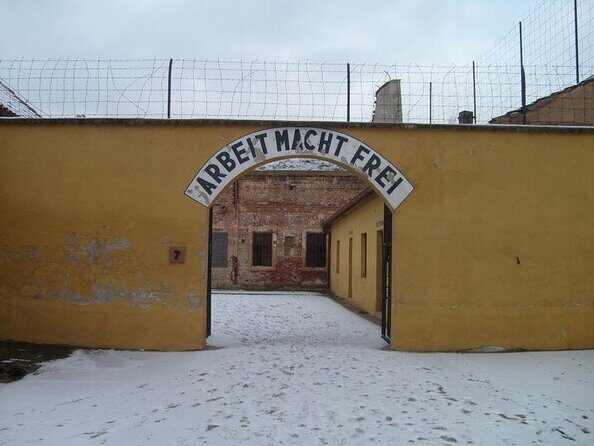
- Mala Pevnost has layers, not just one story: it went from fortress concept to jail, then Gestapo prison, then a Jewish ghetto system.
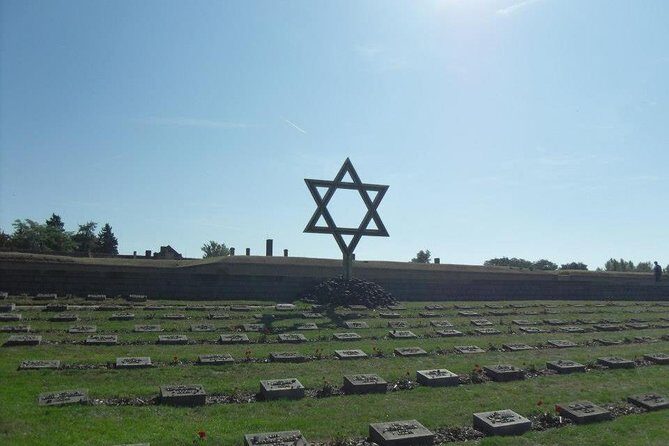
- The National Cemetery explains aftermath: it was created after liberation using remains exhumed from six mass graves.
- Ghetto Museum centers children and documentation: you’ll see memorial spaces and drawings made by kids from the ghetto.
- Magdeburg Barracks looks at culture under control: music, art, literature, and theatre show up as evidence of human stubbornness.
- Jewish Cemetery gets very specific: you’ll learn how the crematorium worked, including four oil-powered incinerators and camp oversight.
Price and logistics: what $356.42 buys you
At $356.42 per person for about six hours, this is not the budget way to get to Terezín. But you are buying three things that matter here.
First, you’re buying time and focus. With a private setup, your guide can slow down where you need clarity and speed up where you’re already following. That matters in a place where the details can feel overwhelming if you’re trying to keep up with a group.
Second, you’re buying ease. The tour includes round-trip transportation and pickup from your Prague hotel or Airbnb (you just provide the exact address). It’s also set up around a simple start at the Prague Marriott Hotel in the city center, with the tour ending back there.
Third, you’re buying entry and reduced friction. Entrance tickets are included, and you get mobile tickets. Translation: less time standing around at checkpoints and ticket lines, more time at the sites where you actually need to process.
One practical note: this day is built for a lot of stops with short time windows per site. You’ll want to bring patience for transitions. Smart casual dress is suggested, which is a polite way of saying: wear what lets you stand and walk comfortably.
You can also read our reviews of more private tours in Prague


Mala Pevnost: the Small Fortress and how the place got repurposed
Mala Pevnost, the Small Fortress, is the first major stop for a reason. This isn’t just a museum building; it’s a structure that was designed to impress and defend, then turned into a machine for imprisonment.
What’s striking is the flip from intent to reality. The fortress was built at the end of the 18th century, with a first cornerstone laid by Emperor Joseph II and the city linked to Empress Maria Theresa. It was created as a proud, impregnable fortress with walls and flood trenches meant to protect it. Yet it never ended up protecting anyone. Terezín’s identity shifted from fort to prison, first in the mid-19th century, and later into something far worse.
Your guide typically helps connect the dots: one of the fortress’s most famous prisoners was Gavrilo Princip, held here in 1914 before his actions in Sarajevo helped ignite the First World War. Then, in 1940, the Small Fortress became a prison of the Prague Gestapo, especially for political prisoners. Only a year later, the whole town was reshaped into a collective and pass-through camp for Jews.
Why this stop works in a private format: the story here is layered, and it’s easy to miss the “how did we get here?” questions if you’re rushing. With a private guide, you can ask for the thread that ties architecture, politics, and deportation together. You’ll likely feel the same mood shift that many people report: the place starts as stones and walls, then becomes something unbearable.
A drawback to plan for: you may find this stop emotionally demanding quickly. If you tend to get overwhelmed at history sites, consider doing a slow reset during transitions rather than trying to power through.
National Cemetery: why exhumations after liberation matter
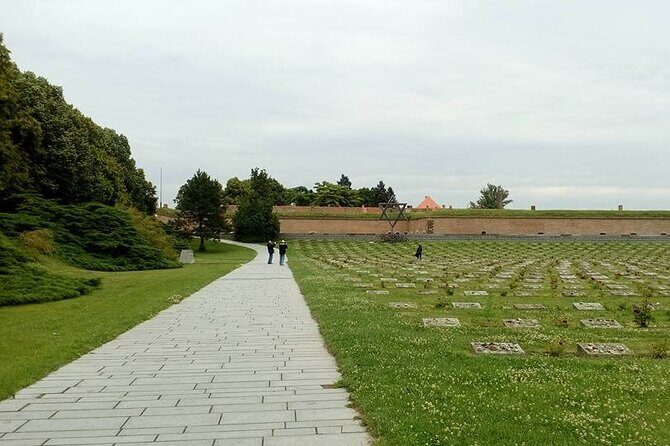
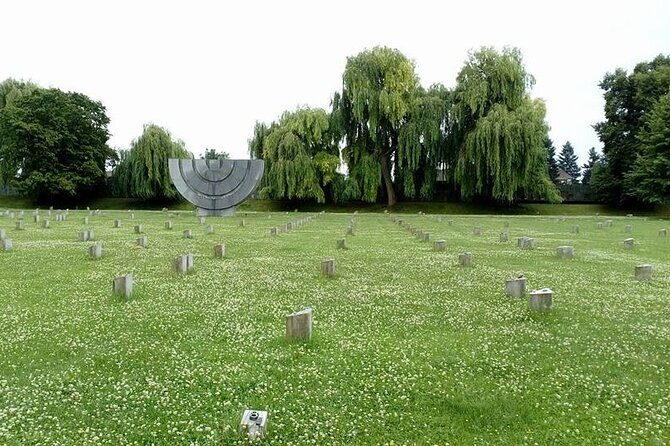
After the Small Fortress, you move to the Terezín Memorial National Cemetery. This cemetery is described as being created artificially after liberation in 1945, and that detail is important.
The cemetery’s purpose came from former prisoners and heirs of those who died. At their request, physical remains were exhumed from six mass graves located in the ramparts of the Small Fortress. Some of the remains were from the death march prisoners who arrived at the Small Fortress in May 1945.
In other words, this stop is about more than remembering names. It’s about the work of gathering, identifying where possible, and giving burial a shape that history had shattered. A private guide helps here because the “why” is as important as the “what.” If you only see the cemetery as a quiet place, you might miss that it’s also an act of repair, carried out by survivors and families.
Time on this stop is shorter than the museums (about 15 minutes). That can feel fast, but if you’re prepared, it becomes a clean moment of focus after the fortress.
Ghetto Museum: the former school where the story becomes personal
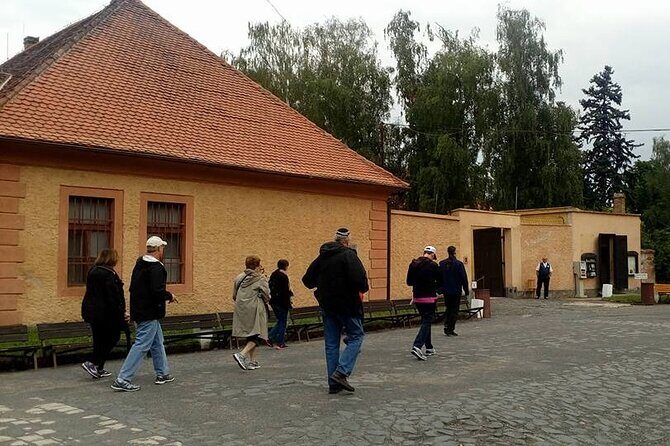
Next up is the Ghetto Museum in the Terezín Memorial complex. This museum matters because it’s not only about the machinery of oppression; it’s about daily life, documentation, and the way people tried to remain human.
The museum opened in 1991 in the former municipal school. That choice is almost symbolic: a place meant for education becomes a place for testimony. The permanent exhibition theme is Terezín in the Final Solution of the Jewish Question 1941–1945, and the museum was inaugurated in 2001 for a newly conceived permanent exhibition.
You’ll also see a Memorial Hall dedicated to the children of the ghetto, plus a selection of drawings made by children from inside the ghetto. There’s also a scale model of the ghetto with an electronic orientation system to help you understand the layout and thematic units. If you’re the type who needs structure, this model and orientation tool can do a lot of emotional work by helping the geography click into place.
Two other features that can help a visit feel less like a blur: there’s a local reading room and a cinema where documentary films are screened. Even with a limited time window, this gives you more than one way to absorb what happened.
A private guide helps most when you’re trying to understand what you’re looking at. Museum displays can feel like fragments until somebody connects them into a timeline. In this kind of setting, that connection reduces confusion and increases clarity.
The small Jewish prayer hall: when secrecy survives in plain sight
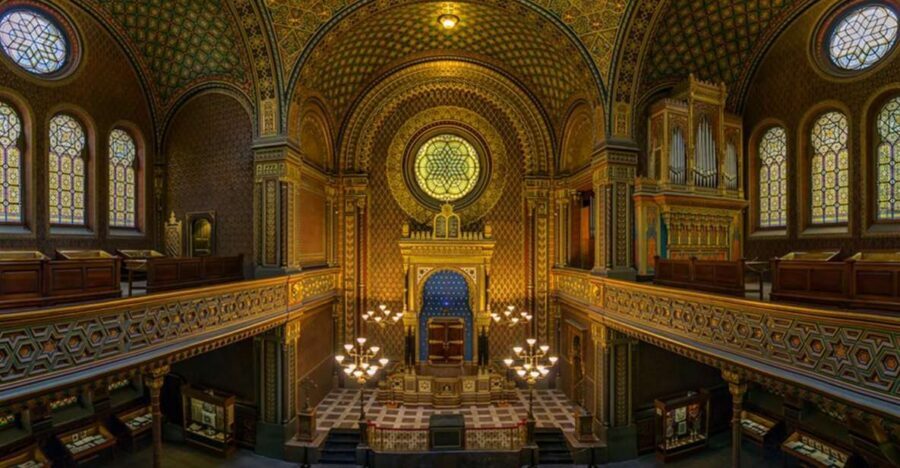
One of the most haunting stops on this itinerary is often the prayer hall. It was founded during the ghetto period and served spiritual needs for prisoners who lived in nearby houses.
What makes this stop stand out is the story around ownership and secrecy. The room was owned by František Bubák, and it served as part of a funeral parlor before World War II. During 1942, Bubák’s family was forced to leave Terezín. After the war, he reclaimed the property, but his family kept the prayer room existence secret because they feared repercussions from the Communist regime. His descendants didn’t notify the authorities until after the 1989 Velvet Revolution brought democracy to Czechoslovakia. Visitors have been allowed to see the room since the late 1990s.
Why this matters in a guided format: it changes your focus. You’re not only looking at a site from the Nazis; you’re seeing how memory can be hidden, preserved, and only later revealed. That gives the day a second layer of meaning: the fight to hold on to identity didn’t end with liberation.
Time here is around 30 minutes. That’s usually enough to absorb the story and sit with the quiet, especially since the prayer hall is a smaller space than the museums.




Magdeburg Barracks: ghetto headquarters and the culture side you won’t expect
Magdeburg Barracks, sometimes described as the ghetto’s local government headquarters, is where the day adds an unexpected angle: how people created culture under coercion.
The headquarters was housed in the former Magdeburg Barracks building. Officially, it cared for internal affairs of the ghetto, but important matters were controlled by the SS camp command. The building reopened after renovations in 1997 and today functions as an exhibition venue and an educational Meeting Centre.
One section features a replica of prison barracks from the ghetto period. The exhibition focuses on the ghetto’s artistic and cultural life, including artifacts related to music, visual arts, literature, and theatre. The point isn’t to make you feel comforted. It’s to show you the desire for a little humanity and hope that people tried to protect even inside concentration camp conditions.
This is also a strong stop for a private group because you can let the contrast land. You’ve just been through fortress, cemetery, and memorial museum spaces. Then you’re asked to look at what people made while being watched. That shift can be confusing if you rush. With a guide, you can understand why the museum is arranged this way and what it’s trying to prove.
The visit is about 30 minutes. If you like art and theatre even slightly, this is a stop worth paying attention to rather than letting it turn into one more checklist location.
Jewish Cemetery and crematorium: what you’ll learn and how to handle it
The last major stop is the Jewish Cemetery. It’s here that the day turns into the most technically detailed, difficult territory.
The crematorium was built by ghetto prisoners by order of the SS commanders, and operation started at the beginning of October 1942. The central part of the facility had four oil-powered incinerators supplied by Ignis Hüttenbau from Teplice-Šanov. The front section served to unload corpses from coffins. The layout also included an autopsy room and an annex where guards were housed, made up of Czech police officers and prisoners who worked at the crematorium.
At peak mortality, there could be up to eighteen prisoner workers rotating in permanent shifts. When mortality rates dropped, the number decreased to four. This crematorium was supervised by SS-Scharführer Heindl, one of the camp’s feared top officers, with routine checks also carried out by the camp commanders.
This level of specificity is heavy, but it’s also useful. If you’ve ever felt you only know the general story but not the mechanisms, this stop can help you connect the historical narrative to the physical reality of what the system did.
A practical way to prepare: go slowly and let the numbers settle. Don’t try to intellectualize your way out of it. A private guide can help you pace your questions without you feeling like you’re holding up the group. If you want to ask about names, dates, or how the crematorium fit into camp operations, this is the place to do it.
Time here is about 30 minutes. If you’re expecting a long reflection period, you might not get it at the cemetery itself, so use your pauses between stops.
Getting the most from a 6-hour private day
This is a structured route, but the private setup changes how it feels. The core value is that you’re not just moving from site to site; you’re building understanding step by step.
Here are the ways to make the day work for you:
- Wear comfortable shoes. Even if each stop is timed, the grounds add up. You’ll be on your feet more than you’d expect.
- Ask one question early. By the time you reach the cemetery and crematorium details, you’ll have a better mental map and less emotional whiplash.
- If you need extra grounding, use transitions. The best moments aren’t always inside buildings. They’re often when you step out and let your brain catch up.
- Keep your expectations realistic. This is intense, and you won’t absorb everything. What you will absorb is the shape of the story: fortress to prison, ghetto life to memorial record, then the cemetery as the final hard stop.
As for guides: Eva Prague Tours is the provider name, and past guests have specifically praised guides such as Eva, plus mention of Simona as a guide and Jindra as a driver in their experience. In a private tour, the guide quality is part of the value, and these names are a good sign that the people leading the day take the subject seriously.
Should you book this private Terezin tour from Prague?
Book this tour if you want context, not just photos. If you prefer a quiet pace, direct answers, and a guide who can connect the fortress, the ghetto institutions, the memorial work, and the crematorium into a coherent story, the private format makes a real difference.
Skip it (or consider a different approach) if you’re sensitive to graphic details or you know you’ll struggle with sustained emotional strain. Also, if you’re hoping for hours of free wandering at each site, the schedule won’t match that. This is guided, efficient, and designed to cover the main memorial elements in one day.
My practical take: at this price, you’re paying for time with an expert and smoother logistics. For many people, that’s exactly what you want at a place like Terezín—so you can focus on remembering, understanding, and being present.
FAQ
What sites are included on this private Terezín tour from Prague?
The tour includes Mala Pevnost (Small Fortress), the Terezín Memorial National Cemetery, the Ghetto Museum, the small Jewish prayer hall, Magdeburg Barracks, and the Jewish Cemetery.
Is this tour private and is it offered in English?
Yes. It’s a private tour/activity, and it is offered in English.
How long is the tour?
The duration is approximately 6 hours.
Does the tour include entrance tickets?
Yes. Admission tickets are included for the stops listed in the schedule, and there is also at least one stop noted as free admission.
Where does the tour start, and do you pick up from hotels or Airbnb locations?
The start point is the Prague Marriott Hotel at V Celnici 8, Nové Město. Pickup is available from the hotel or an Airbnb accommodation if you share the exact name and address. The tour ends back at the meeting point.
What is the cancellation window?
You can cancel up to 24 hours in advance for a full refund, based on the experience’s local time. If you cancel less than 24 hours before the start time, the amount paid is not refunded.