REVIEW · PRAGUE
Private Prague Renaissance & Baroque Gardens Walking Tour
Book on Viator →Operated by Insight Cities · Bookable on Viator
Prague turns leafy and regal. This private 3-hour garden tour gives you a story-driven route through Renaissance and Baroque grounds, where you’ll learn why Ferdinand I’s gifts, tulip diplomacy, and palace horticulture shaped the city. I love how the walk is guided by a scholar guide, so the details feel meaningful instead of just pretty. I also love the built-in payoff: you get serious vantage points over Prague Castle and the city skyline. A key consideration: Vrtba Garden has steep stairs, so it may not fit if climbing is a problem.
You start in Malá Strana at Bagel Lounge MalostranskáLetenská, then hop a tram together to the castle garden area. You’ll see famous set pieces like the Vrtba Garden, plus the kind of in-between spots most casual routes skip—orangery, terraces, courtyards, and garden sculptures tied to myth and power. The experience ends back at the same meeting point, close to classic Lesser Town sights.
If you want the fastest route, go self-guided. If you want the why-behind-it route—history mixed with garden design—this private format makes a lot of sense.
In This Review
- Key things I’d circle on your booking page
- Why Prague’s garden tour feels different from the usual castle slog
- Meeting point in Malá Strana and the tram ride to the gardens
- Vrtba Garden: Baroque walls, sculptures, and Prague Castle views
- Wallenstein/Waldstein Garden: Italian style details and myth made in stone
- The Royal Garden: Renaissance planting and exotic plants with a purpose
- Queen Anna’s Summer Palace: pure Renaissance architecture in garden form
- Fig House, Orangery, and the tulip story that starts with gifts
- The bronze-cast singing fountain and courtly power in metal
- Courtyards, terraced gardens, and the Garden of Paradise
- Wallenstein’s grand garden elements: grottoes, fountains, and mannerist statuary
- The Ball Game Hall in the Royal Garden: leisure architecture on display
- Finishing near Lesser Town: back where Prague feels walkable
- Price and value: is $397.36 per group worth it?
- Who this tour suits best (and who should think twice)
- Quick practical tips before you go
- Should you book this Prague gardens private tour?
- FAQ
- How long is the private Prague Renaissance & Baroque Gardens Walking Tour?
- How many people can be in the private group?
- Is the tour offered in English?
- Where do we meet the guide?
- Is pickup from a hotel or flat available?
- Will we need to buy tickets for the gardens?
- How do we get to the castle garden area?
- Is the tour physically demanding?
- Are the gardens open year-round?
- What if I need to cancel?
Key things I’d circle on your booking page
- Private, up to 10 people: you stay together for a more personal pace than larger group tours
- Scholar-led storytelling: each garden connects to a person, a political moment, or a design shift
- Vrtba Garden views with a climb: great payoff from the upper terrace, but plan for stairs
- Renaissance to Baroque transitions: you’ll watch styles and symbols change in front of you
- Garden design as early science: exotic plant cultivation and horticultural experiments get real context
- Admission fees aren’t included: you’ll likely need tickets for Prague Castle gardens and Vrtba
Why Prague’s garden tour feels different from the usual castle slog
Most people do Prague Castle like a checklist: walls, viewpoints, then out. This tour slows that down and flips the focus to the spaces between the buildings—where power shows up as careful layout, statues, fountains, and even imported plants.
I like that the guide doesn’t treat the gardens like wallpaper. You’ll learn how rulers used gardens to impress, how gardeners experimented with species, and how design language shifted from Renaissance order to Baroque drama. It’s the kind of context that makes you look twice at a fountain or a sculpted figure instead of just snapping a photo.
Also, the tour is private. That matters in gardens. It’s not just about fewer people—it’s about being able to ask questions when something catches your eye (and you will).
You can also read our reviews of more walking tours in Prague



Meeting point in Malá Strana and the tram ride to the gardens
The tour starts at Bagel Lounge Malostranska, Letenská 118/1, in Malá Strana. If you’re not using pickup, the meeting is right in front of the café, and it’s near public transport.
After you meet your guide, your group takes the same tram (together) to get to the castle gardens area. That’s a practical win: you’re not spending time figuring out which route helps, and it keeps the start smooth even if you’re coming from elsewhere in town.
The experience runs about 3 hours, with morning or afternoon departures available. It’s also in English, and it uses a mobile ticket.
Vrtba Garden: Baroque walls, sculptures, and Prague Castle views
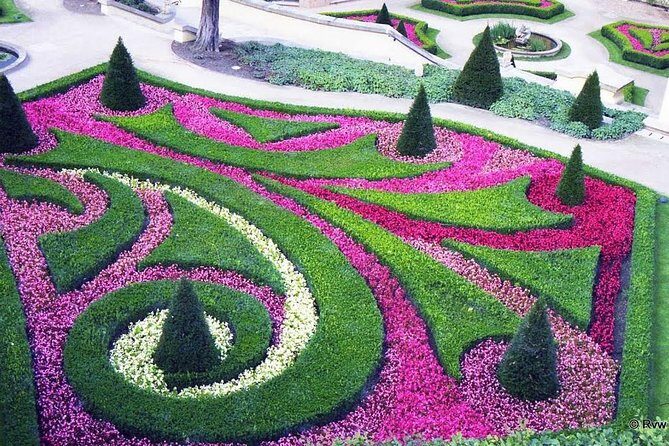
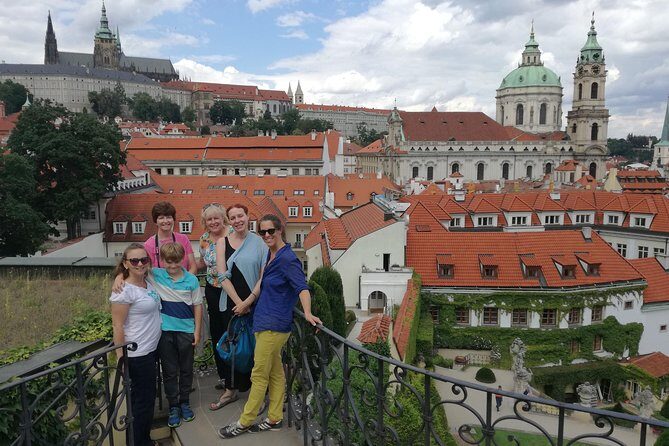
Vrtba Garden is where the tour turns visual and theatrical. This is a Baroque walled garden from 1720, and it’s known for symbolism and original sculptural decoration from the early 1700s. You’ll also get a connection to its cultural value through UNESCO, which helps you understand why the design matters, not just how it looks.
Your time here is about 25 minutes, and you’ll get the big payoff: views of Prague and Prague Castle. The upper terrace is the moment most people wait for, but here’s the trade-off—you climb some steep stairs to reach it. If you have issues with climbing, the tour notes you can wait below, and there’s also the option of a tailored private approach if you need it.
If you like gardens that feel like a designed story—rooms made of walls, viewpoints framed on purpose—Vrtba is the kind of stop that makes the rest of the walk click.
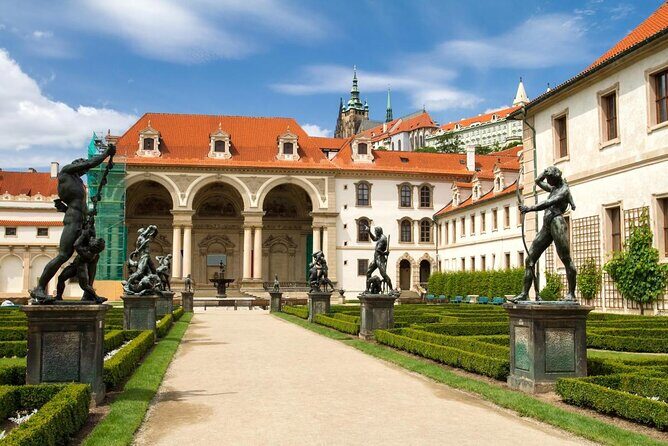
Wallenstein/Waldstein Garden: Italian style details and myth made in stone
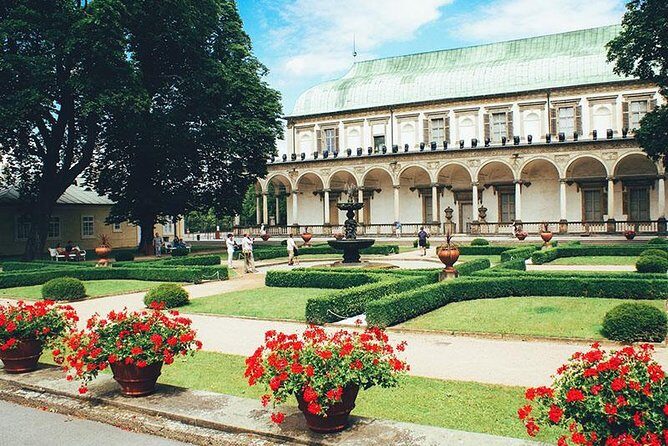
Next comes the Wallenstein Palace gardens area (listed as Waldstein Garden). This part leans into the Italian style and the kind of garden engineering that looks effortless until you understand the choices behind it.
You’ll see features like:
- an aviary
- an artificial grotto
- a sculptural gallery of mythological heroes
- a fountain connected to Adrian de Vries
Time here is about 25 minutes, and there’s an extra layer for design nerds: this is a place where you can feel how Prague’s garden identity evolves. The tour specifically points out the transformation from Renaissance to Baroque styles as you move through the complex. When you’re in the right spot, statues and fountains don’t just decorate—they signal shifting tastes and power.
If you’re the type who likes gardens with structure—symmetry, planned sightlines, and sculptural narratives—this section is a real hit.
The Royal Garden: Renaissance planting and exotic plants with a purpose
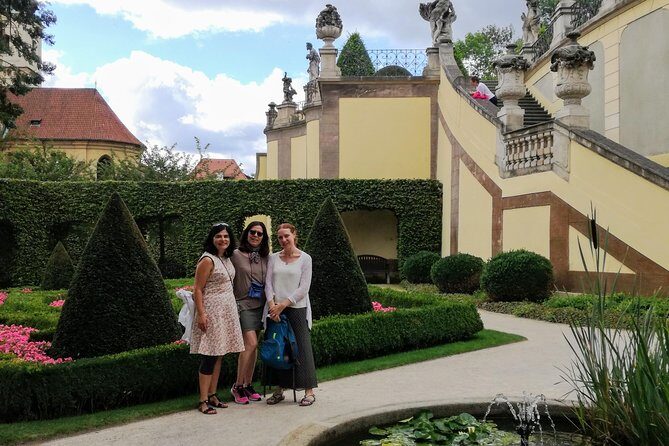
After Vrtba and Waldstein, you move into the Royal Garden of Prague Castle. This starts on land that was once medieval vineyards, then became a Renaissance garden in the 1500s. What you’ll notice is that this garden is not just ornamental. It’s described as famous for rare botanical specimens and exotic plants from distant countries.
Time is about 15 minutes. That’s short, but it’s enough to understand the theme: rulers and gardeners weren’t only showing off. They were experimenting with what would grow, what would bloom, and what kind of botanical prestige they could import.
For you, that means the garden becomes a living “how did they do that?” question rather than a static scene.
You can also read our reviews of more private tours in Prague






Queen Anna’s Summer Palace: pure Renaissance architecture in garden form
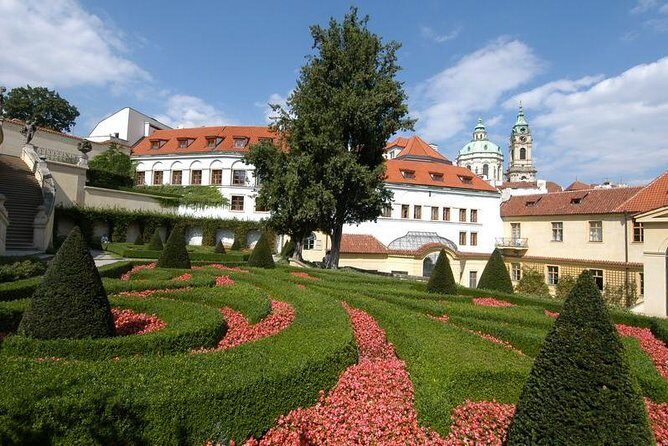
One of the best parts of the tour is how often the guide ties architecture into the garden story. Queen Anna’s Summer Palace is a great example.
This building is described as the purest Renaissance architecture outside Italian territory, completed in the mid-1500s. You’ll also see ornamentation that isn’t random:
- an ornamental figurative frieze
- pillars with Tuscan heads
- wall reliefs showing mythology, hunting, and wars
And the garden-politics link is very direct. Among the reliefs is Ferdinand I presenting Queen Anna with a fig tree blossom, and Ferdinand’s figure appears with the Order of the Golden Fleece.
Time here is brief (about 5 minutes), but it’s a big visual education: the message is that this Renaissance garden world wanted to communicate status through art and symbol, not just plants.
Fig House, Orangery, and the tulip story that starts with gifts
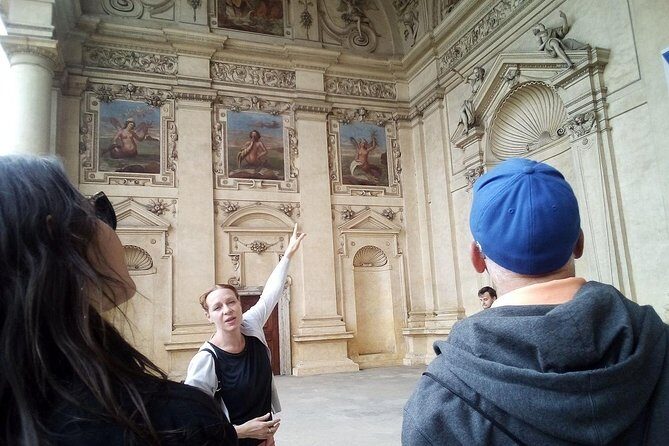
As you continue through the castle gardens network, you’ll hear about the Belvedere summer palace and surrounding castle gardens, and how horticulture became a political signal.
Two specific stops in this narrative are the Fig House and Orangery. The tour’s angle here is practical and fascinating: these were places where gardeners coaxed exotic fruit trees to bloom for the first time in Central Europe. You’re not just looking at a garden structure—you’re learning why that structure mattered.
Then comes a story with legs: the tour explains that a Turkish Sultan sent a royal gift of tulips to the gardeners, helping spark the start of a tulip craze. Even if you’ve seen tulips your whole life, it’s fun to hear how a fashion wave can begin with diplomacy and a carefully managed planting effort.
If you like when gardens connect to trade, politics, and cultural exchange, this section will feel like the tour’s core engine.
The bronze-cast singing fountain and courtly power in metal
Some gardens have fountains. This tour highlights a very particular one: a bronze-cast singing fountain.
The point isn’t only the sound (though that’s part of the appeal). The guide uses it to show the courtly mindset behind garden design—how engineering, luxury, and spectacle were used to make power audible and visible. In a place like Prague Castle gardens, that matters. You get the sense of a court making the landscape behave like theater.
Courtyards, terraced gardens, and the Garden of Paradise
As you move through the castle courtyards, the walk shifts from stand-alone sights to the overall choreography of the grounds.
You’ll pass areas described as the South Gardens and the Garden of Paradise, then move through a series of terraced gardens on a slope below the castle. Terraces are more than pretty steps. They control views, channel movement, and create a rhythm that helps the gardens feel bigger than they are.
For you, this is where the tour becomes more than a checklist. You start understanding how you’re being guided—literally—through layers of design.
Wallenstein’s grand garden elements: grottoes, fountains, and mannerist statuary
As the walk continues through the large garden complex, the tour points out the kinds of details that make this area special: mannerist statuary, grottoes, and fountains.
This is the part that helps you understand the style shift the guide mentions. Renaissance often feels controlled and measured. Baroque leans into movement, drama, and emotional effect. When you can see those shifts in sculpture and garden structure, you stop thinking of gardens as background and start seeing them as art systems.
The Ball Game Hall in the Royal Garden: leisure architecture on display
One stop that adds variety is the Ball Game Hall in the Royal Garden. It’s a Renaissance building on the south side of the Royal Gardens, placed directly above the Stag Moat. It was originally built in the mid-1500s for ball games, then later used as a riding school and stables.
Time is about 5 minutes, but it’s a clever reminder: gardens in palace settings weren’t only for strolling and ceremony. People lived there, played there, trained there. The building’s reuse story makes the whole garden complex feel more human.
Finishing near Lesser Town: back where Prague feels walkable
At the end, you return to the meeting point in Malá Strana. That’s a practical finish because it’s close to many of the classic Prague attractions people pair with castle visits.
You’ll still want a plan for what comes next—because once your brain is in garden mode, you’ll start noticing courtyards, statues, and staircases everywhere you walk.
Price and value: is $397.36 per group worth it?
This is priced at $397.36 per group (up to 10 people) for about 3 hours. On paper, that can look like a lot—until you compare what you’re buying.
You’re not paying for a seat in a large group. You’re paying for:
- a private experience
- a guide described as a scholar guide
- pickup from your central hotel or flat (when arranged)
- the tram transfer after meeting
- a route built around specific gardens with design and historical context
Also, you’ll notice an important fine-print factor: garden admissions for gardens under Prague Castle and Vrtba Garden are not included. That means your total cost depends on tickets you need to buy onsite. If you already plan to pay admissions anyway, this tour becomes easier to justify.
Bottom line: this price is best if you value context and pacing, or if you’re traveling as a small group and want a guide to handle the connections.
Who this tour suits best (and who should think twice)
This private Prague Renaissance & Baroque Gardens Walking Tour is a strong fit if you:
- want a scholar-led guide to connect garden art with names, symbols, and design changes
- like gardens as stories, not just sights
- care about getting into standout viewpoints like Vrtba’s upper terrace
It’s worth thinking twice if:
- climbing steep stairs is a problem for you (Vrtba Garden includes steep stairs)
- you’re visiting in winter months (gardens are closed from November until March)
If you fall in the “stairs are fine, but we get tired fast” category, the tour’s 3-hour length and moderate physical fitness requirement are still reasonable—just be ready for the Vrtba climb to be the main physical moment.
Quick practical tips before you go
A few things matter most based on the tour details:
- Plan for Vrtba Garden stair climbing and be ready to adjust your approach if needed.
- Budget for admission fees for the Prague Castle gardens area and Vrtba Garden (not included).
- Dress for a garden walk with moderate fitness expectations.
- If you book for late fall through winter, know the gardens are closed from November to March.
Also, since the tour uses a mobile ticket, have your phone ready.
Should you book this Prague gardens private tour?
I’d book it if you want Prague Castle without the crowds-eat-your-brain feeling. This tour gives you the garden side of the story—how rulers used plant cultivation, architecture, sculptures, and water features to project status and creativity. The private setup helps a lot, especially when the guide is willing to slow down and explain what you’re looking at.
I’d skip or modify it if stairs at Vrtba would be a deal-breaker for you, since that upper terrace is a big part of why people come here. And I’d also make sure you’re ready for garden admissions on top of the tour price.
If you’re choosing just one garden-focused experience in Prague, this is a solid pick for anyone who likes Renaissance and Baroque details with real-world context—especially the tulip gift story, the exotic plant cultivation in the orangery setting, and the view payoff at Vrtba.
FAQ
How long is the private Prague Renaissance & Baroque Gardens Walking Tour?
It lasts about 3 hours.
How many people can be in the private group?
It’s a private tour for up to 10 people.
Is the tour offered in English?
Yes, it is offered in English.
Where do we meet the guide?
You meet at Bagel Lounge Malostranská Letenská, Letenská 118/1, 118 00 Praha 1-Malá Strana.
Is pickup from a hotel or flat available?
Yes. Pickup is offered from your central hotel or flat (unless you provide no pickup address and you meet at the listed meeting point).
Will we need to buy tickets for the gardens?
Yes. Gardens under Prague Castle and Vrtba Garden admission fees are not included.
How do we get to the castle garden area?
After meeting, the group takes the tram together to reach the Castle Gardens.
Is the tour physically demanding?
It’s listed for moderate physical fitness. In Vrtba Garden, you climb some steep stairs to reach the upper terrace, and you may wait below if climbing is an issue.
Are the gardens open year-round?
No. Gardens are closed during winter season from November until March.
What if I need to cancel?
You can cancel for free up to 24 hours in advance for a full refund.