REVIEW · PRAGUE
Wars and Totality History tour in Prague
Book on Viator →Operated by Spectrum Tours · Bookable on Viator
A few streets in Prague do a lot of talking. This 3-hour walking tour strings together key spots tied to the 20th century, so you don’t just see monuments—you understand what they meant. I especially like how it keeps the focus tight (World Wars and the communist era from 1948–89) and how the group stays small, capped at 15 people, so questions don’t get swallowed.
One thing to consider: like any guided walk, the vibe can swing depending on the guide’s energy and pacing. One past group reported real issues, like arriving late and walking ahead, which is the kind of thing you’ll want to avoid if you’re hoping for a calm, patient tour.
In This Review
- Key Things I’d Mark on Your Map
- Wars and Totality History Tour in Prague: What This Walk Really Gives You
- Start at Na Příkopě and Municipal House: Independence Meets Modern Prague
- New Town (Nove Mesto) for Two Hours: Where the City Becomes a Classroom
- Wenceslas Monument and Wenceslas Square: The Center of Czech History
- Narodni Trida and the “Hands” Wall: The Velvet Revolution’s Memory Spot
- Price and Value: Why This Costs About $34.39 and What You’re Paying For
- What the Group Size and Timing Mean for You
- Getting the Most Out of the Guide: A Quick “How to Listen” Plan
- Who Should Book This Tour (and Who Might Skip It)
- Should You Book Wars and Totality History in Prague?
- FAQ
- How long is the Wars and Totality History tour?
- How much does the tour cost?
- How many people are in the group?
- Where does the tour start and end?
- What stops are included?
- Are entrance tickets included?
- Do I need a printed ticket?
- Is the tour family-friendly?
- Can I cancel if my plans change?
Key Things I’d Mark on Your Map
- Small-group size (up to 15) for easier Q&A and better attention.
- A clear 20th-century storyline: World War I, World War II, and communist rule (1948–89).
- Wenceslas Square stop at the Wenceslas Monument, tied to major national moments.
- Narodni Trida memorial stop connected to the Velvet Revolution ending the communist era.
- No-cost “admission ticket free” stops at the listed viewpoints, so you’re paying mainly for interpretation.
Wars and Totality History Tour in Prague: What This Walk Really Gives You
Prague can feel like a postcard all on its own. But if you only look at the pretty façades, you miss what happened when power, fear, and hope moved through the streets. This tour is built to prevent that. It’s a guided walk that treats the city like a timeline you can follow, from the World Wars to the communist era, and then right up to the moment the system broke.
You also get a practical advantage: the tour runs about 3 hours, so it’s long enough to make sense of themes, but short enough that you won’t end up wandering in a daze. Plus, it’s designed for flexibility, with choice of time slots, which matters in Prague when you’re trying to coordinate museums, meals, and transit.
I’d sum up the value like this: you’re paying for a guide who turns stone and street corners into meaning. That’s often where group tours earn their keep. If you’re someone who likes context, you’ll leave with a map in your head, not just a camera roll.
You can also read our reviews of more historical tours in Prague
Start at Na Příkopě and Municipal House: Independence Meets Modern Prague
The tour begins at Na Příkopě 864/28 in Prague 1 (Nové Město). From there, you make your first stop at the Modernista Art Shop at the Municipal House area, tied to the declaration of independence.
Even if you don’t know the names and dates yet, this kind of start helps your brain “set the channel.” Municipal House is the sort of place that looks like it was built to impress. The tour uses that visual impact to anchor an idea: big political moments don’t happen in a vacuum. They happen in rooms, on stages, around institutions—and yes, in architecture that’s meant to signal authority.
What I like here: the stop is short (about 10 minutes) and entry is listed as free, so it doesn’t turn into a museum sprint. You get oriented, you get the theme, and you don’t burn time paying to access something that you’ll mostly be hearing about anyway.
What to watch: if you’re the type who needs a slow warm-up, this is a fast start. You’ll be moving soon after, so make sure you’re ready to walk comfortably.
New Town (Nove Mesto) for Two Hours: Where the City Becomes a Classroom
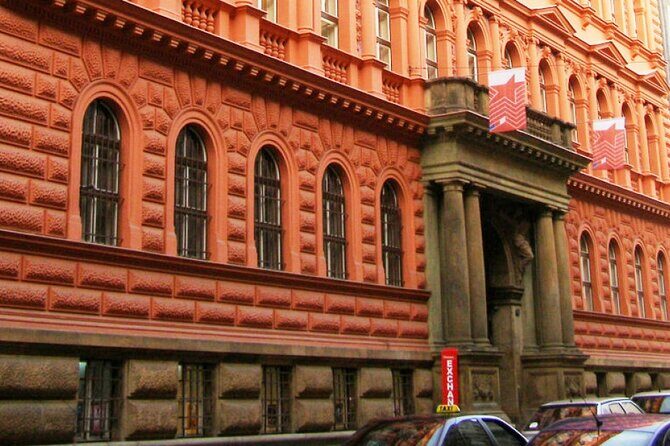
Next comes Nove Mesto (New Town), where the tour spends about 2 hours. This is the bulk of the walking, and it’s where the history thread becomes more than just a couple of isolated stops.
New Town in Prague is the kind of district where you can feel layers—different eras placed side by side. On a normal day, you might treat it as “the place with shops and squares.” On this tour, you’re encouraged to read it like a record of how Prague’s politics and daily life shifted through the 20th century.
This is where you’ll get explanations about how major events weren’t just happening “far away.” They were shaping what people saw, where people gathered, and which buildings mattered. The tour’s promise isn’t abstract. It’s the practical version of history: how a government change changes the street-level experience.
Why this matters for you: if you’ve ever wondered how Prague went from one political system to another, the answer usually lives in the way the city was organized—who had access to power, where crowds formed, and what public spaces were used for persuasion or control. A guided walk is one of the easiest ways to understand that without studying for months.
A possible drawback: this section is the longest, so if you don’t enjoy walking with a group, your enjoyment may depend on pacing. In general, shorter stops feel easier to control than a two-hour stretch, so wear comfortable shoes and keep water in mind.
Wenceslas Monument and Wenceslas Square: The Center of Czech History
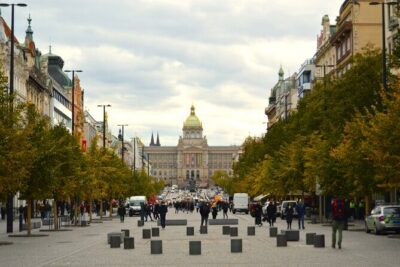
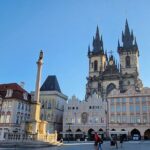
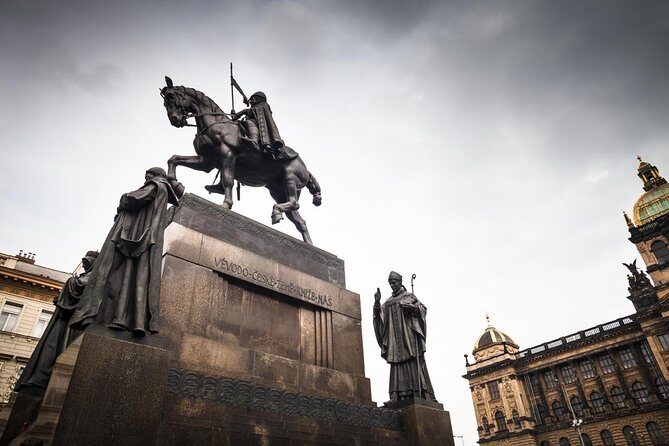
Then you head to the Wenceslas Monument near Wenceslas Square, described as a neuralgical point of Czech history where significant events took place. This stop lasts about 20 minutes, again with admission listed as free.
Wenceslas Square is one of those places that feels bigger than its surroundings. Even if you’ve seen photos, there’s a difference between looking at the square and hearing how people used it during turning points of the 20th century. The tour frames it as a hub—places where history didn’t just happen, but happened out in the open.
You’ll likely walk away with a better sense of why people cared so much about public space. When your society is under pressure, public gathering areas become more than scenery. They’re where messages are delivered, and where opposing messages clash.
What you’ll appreciate if you like context: the Wenceslas stop helps stitch together the “War and totality” theme. World War I, World War II, and communist rule all leave fingerprints, but Wenceslas Square is the kind of place where those fingerprints show up as events and collective movements rather than just buildings.
What to consider: a square is exposed. If the weather is rough, plan for it—bring a layer, and don’t assume you’ll have much shade.
Narodni Trida and the “Hands” Wall: The Velvet Revolution’s Memory Spot
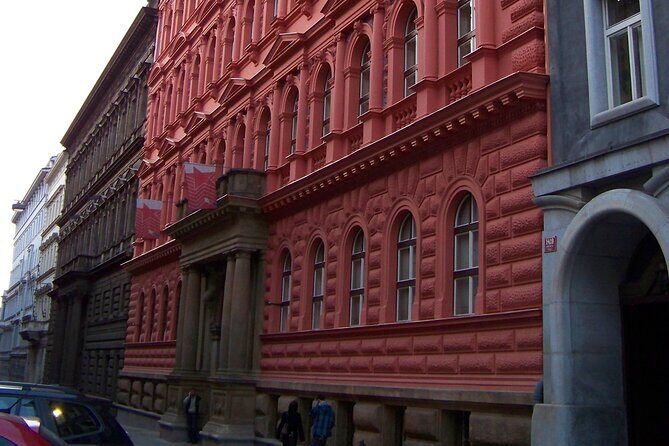
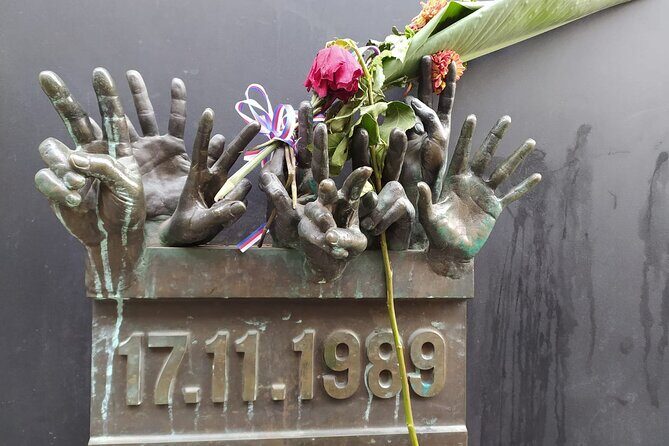
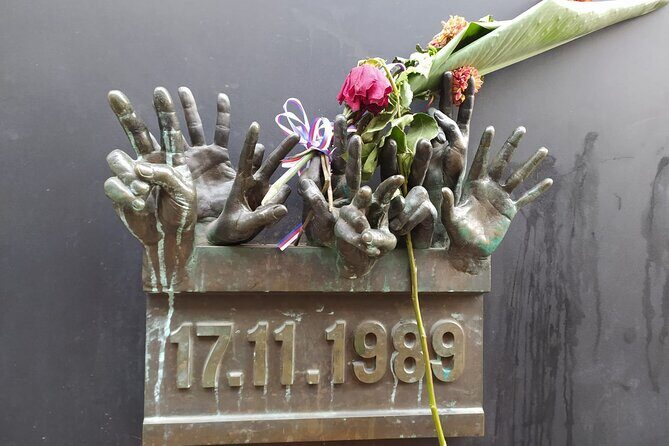
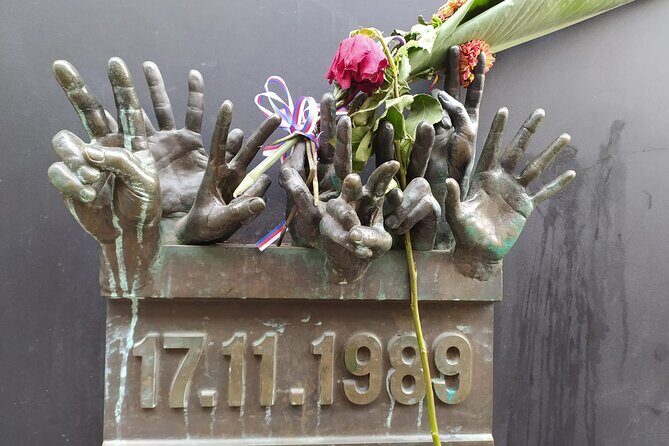
The final main stop is at Narodni Trida, specifically a memorial area described as hands reaching out of the wall. There’s also a memorial desk connected to the Velvet Revolution, which the tour links to the end of the communist era.
This part lasts about 10 minutes, and it’s listed as free to access. Short stop, big emotional weight is often the pattern with memorial locations like this. The point isn’t to spend hours reading. It’s to stand in the right place long enough to absorb why it matters.
This is also where the tour can become personal, even if your personal connection is just empathy. One piece of feedback tied to the experience was the way a guide shared family-related context and made the sites feel real—especially the Nazi and communist-era locations. That emotional framing is exactly what works well in a memorial stop: it turns the “what” into a “who.”
Why it’s a strong finish: you leave with the arc completed. You’ve moved from big political eras to a turning point linked to the Velvet Revolution. Whether you already know Czech modern history or you’re starting from scratch, ending here gives you closure that just wandering won’t provide.
The only caution: memorial stops can be reflective and quiet. If you’re in a rush, keep your expectations realistic. You’re not trying to “score the photo and move on.” Give yourself a moment.


Price and Value: Why This Costs About $34.39 and What You’re Paying For
At $34.39 per person for roughly 3 hours, the price can look modest for a guided program. The main reason: you’re not paying for expensive museum admissions at each stop—entry at the listed stops is shown as free. So your money mostly goes to interpretation, pacing, and the guide’s ability to connect events across decades.
Also, there’s a practical angle: a small group (max 15) makes a big difference at this price point. Larger groups can mean you only catch fragments of what the guide is saying. Here, the design makes it more likely you can ask follow-up questions and still keep moving.
You’ll also use a mobile ticket, which is convenient in Prague because you’ll likely be juggling transit cards, restaurant reservations, and museum times. Less paperwork, fewer printed forms.
Where value could vary: if your guide is disorganized or unwelcoming, you’ll feel it more on a history tour. That’s not about the subject—it’s about communication style. Based on feedback tied to this experience, guide quality can range, so choose your departure time thoughtfully and plan to stay flexible.
What the Group Size and Timing Mean for You
A walking tour with up to 15 travelers can hit a sweet spot: small enough for interaction, big enough to keep things moving. In a theme like 20th-century Prague, that matters. When someone asks a question about how people lived during particular periods, you don’t want to lose the thread while the group gets reorganized.
Timing-wise, choice of departures is a real benefit. Prague’s streets can be busy, and your day may include other things like viewpoints, tram hopping, or museum visits. If you can pick a time slot that matches your energy, you’re more likely to enjoy the material instead of rushing through it.
The tour ends in the Národní area, with the end point tied to tram and subway station Narodni Trida. That’s useful because you can switch to transit immediately after the walk, rather than getting stuck planning your next move while you’re tired.
Getting the Most Out of the Guide: A Quick “How to Listen” Plan
This type of tour works best when you lean into it. You don’t need to memorize dates. You just need to pay attention to the connection points.
Here’s how I’d make it pay off:
- Start with one question in your head: How did people’s daily life change when regimes changed?
- Watch for the “why” behind each location, not only the “what happened.”
- If something feels confusing, ask. Small groups help here.
I’ll also say this plainly: guide attitude matters. One past run had complaints about a guide who seemed unhappy, was late, and moved ahead instead of keeping the group together. On a history walk, that kind of pacing problem can make you feel like you’re following a person instead of learning from them. I can’t control who you get, but you can control your readiness—arrive early, keep your expectations respectful but grounded, and don’t hesitate to ask for clarity if the tour starts moving too fast.
Who Should Book This Tour (and Who Might Skip It)
You should book this if you:
- Like the story behind the streets and want World War I, World War II, and communist rule (1948–89) tied to real locations
- Prefer guided context over self-guided wandering
- Want a medium-length walk that fits into a typical Prague itinerary
You might skip it if:
- You don’t enjoy walking for long stretches, since the biggest chunk is about two hours in Nove Mesto
- You need a very structured, perfectly paced museum-style experience. This is more about the street-level narrative than ticketed indoor stops.
Should You Book Wars and Totality History in Prague?
I think this is a good choice if you want Prague history that you can feel in place—especially if you’re interested in the 20th century and how public spaces carried political meaning. The price is reasonable because the stops are free to access, and the small group size makes the guide’s explanations more useful.
Just go in smart: wear good shoes, bring a layer for open squares, and arrive a bit early so you’re not stressed before the first stop. And if you know you’re sensitive to guide pacing, consider choosing a departure time when you can stay patient and present. If the guide is on point, this walk can turn “famous Prague” into a timeline you’ll remember.
FAQ
How long is the Wars and Totality History tour?
It lasts about 3 hours.
How much does the tour cost?
The price is $34.39 per person.
How many people are in the group?
The tour has a maximum of 15 travelers.
Where does the tour start and end?
It starts at Na Příkopě 864/28 in Nové Město and ends at the Národní area near the tram and subway station Narodni Trida.
What stops are included?
Key stops include the Municipal House area (Modernista Art Shop), New Town (Nove Mesto), Wenceslas Monument on Wenceslas Square, and the Narodni Trida memorial area connected to the Velvet Revolution.
Are entrance tickets included?
The listed stops show admission ticket free.
Do I need a printed ticket?
No. The tour uses a mobile ticket.
Is the tour family-friendly?
Children must be accompanied by an adult.
Can I cancel if my plans change?
Free cancellation is available up to 24 hours in advance for a full refund.