REVIEW · PRAGUE
WWII and Communism History in Prague’s Old Town Private Tour
Book on GetYourGuide →Operated by Rosotravel - Czech · Bookable on GetYourGuide
Old Town Prague has two dictatorships on its streets. This private tour strings together Josefov, WWII sites, and the Communist era with a History Expert Guide who brings names, dates, and cause-and-effect into plain language. I love how the route starts where people still feel the weight of deportations, and I love the focus on turning big headlines into real places you can stand in.
The one thing to watch: the Museum of Communism is only included in the 4-hour option. If you’re choosing the shorter 2-hour walk, you’ll still cover the key Old Town stops, but you won’t have the chance to see the museum’s Cold War-to-Velvet-Revolution timeline.
In This Review
- Key Things I’d Prioritize on This Tour
- Why This Prague WWII-and-Communism Story Starts in Josefov
- Maisel and Spanish Synagogues: More Than Architectural Stops
- Old Town Square and the Astronomical Clock Around the 1945 Uprising
- Petschek Palace: Gestapo Power and the Resistance Memorial Plaque
- Wenceslas Square: Where Nazis Performed Power and 1989 Answered Back
- The 4-Hour Add-On: Museum of Communism and the Timeline That Explains the Seams
- Operation Anthropoid and Salinization: Why the Tour Includes the In-Between Years
- Price and What You’re Really Buying at $104
- Who This Tour Fits Best (and Who Might Want Something Else)
- Book It or Skip It: My Decision Guide
- FAQ
- FAQ
- How long is the WWII and Communism Old Town Private Tour?
- What’s the main difference between the 2-hour and 4-hour options?
- Is the Museum of Communism included?
- Where does the tour start?
- Which languages are available for the guide?
- Is this a private tour?
- What stops are included around the Old Town sites?
- Can I cancel for free?
- Is there a reserve-and-pay-later option?
Key Things I’d Prioritize on This Tour
- Josefov first: you start in the Jewish Quarter and connect synagogues to the reality of transport to Theresienstadt.
- Old Town Square, not just photos: the Astronomical Clock area is framed around the 1945 Prague Uprising and battles around May 5–9.
- Gestapo history at Petschek Palace: you see the former Gestapo HQ and a resistance memorial plaque tied to interrogations and torture.
- Wenceslas Square in two eras: Nazi-era mass demonstrations and the 1989 Velvet Revolution on the same broad stage.
- 4-hour option meaningfully adds context: the Museum of Communism covers the Cold War, Prague Spring, Soviet invasion in 1968, Jan Palach, and the Velvet Revolution.
Why This Prague WWII-and-Communism Story Starts in Josefov
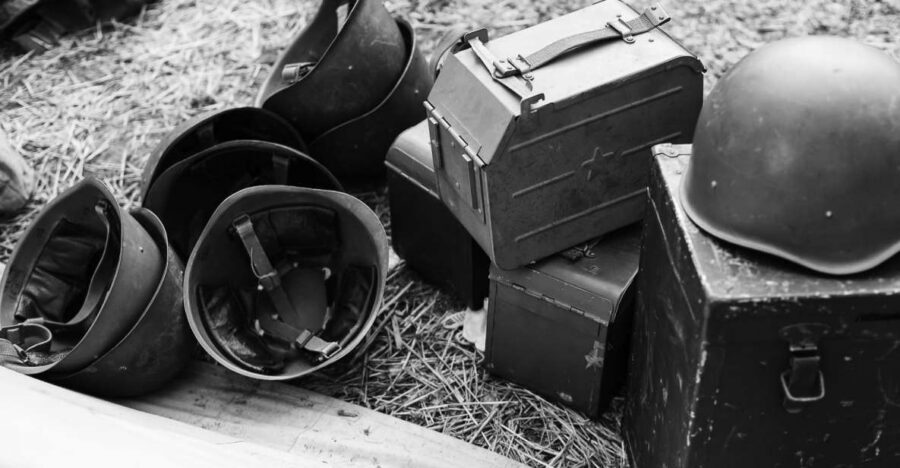
If you only visit Prague for clocks, bridges, and beer halls, WWII and Communist rule can feel like an abstract timeline. This tour does the opposite. It starts in Josefov, the Jewish Quarter, where the city’s history isn’t tucked behind a museum wall.
Josefov is one of the best-preserved Jewish Ghettos in Europe, and the difference is how the street scale hits you. You’re walking at human pace, looking at buildings you can picture in use, and then the guide connects those spaces to the German occupation period. That matters because you stop treating history like a worksheet and start treating it like a place where ordinary lives were changed fast.
You’ll also get the names and story lines that help the whole narrative make sense later. The tour isn’t just about suffering in general terms. You hear about specific operations and turning points too, including Operation Anthropoid, the 1945 Uprising, and the later period referred to as Salinization—the push toward Soviet-style control that shaped Communist rule.
Practical note: this walk is described as 2 hours (for the shorter option). Expect steady walking and a pace shaped by history stops, not by sightseeing photo breaks.
You can also read our reviews of more private tours in Prague


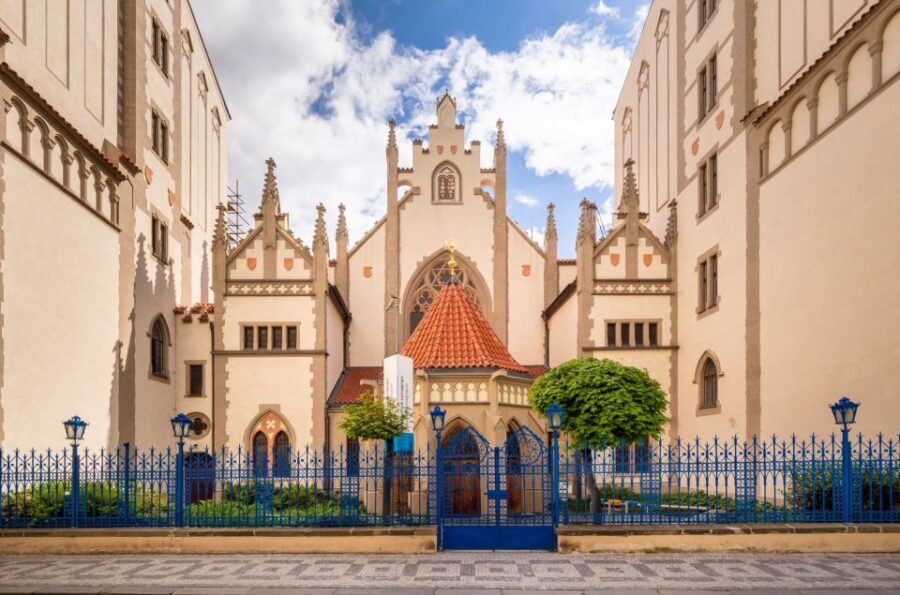
Maisel and Spanish Synagogues: More Than Architectural Stops

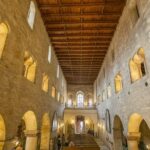
You’ll visit the Maisel Synagogue and the Spanish Synagogue. On a standard sightseeing day, synagogues can feel like they’re there to admire and move on. Here, they’re used as anchors. Your guide explains what you’re seeing, then ties it to what happened when the Nazis tightened control.
The emotional punch comes when the tour shifts from buildings to deportations. You’ll hear about the horrors of the transportation of Czech Jews to the Theresienstadt concentration camp. That part is heavy, and the guide’s job is to keep it factual and understandable, not sensational.
There’s also a grim detail that helps explain Nazi thinking: Hitler’s plan for a museum of the extinct race. The tour uses this idea to show how propaganda tried to rewrite reality—even while people were being persecuted. It’s one of those moments where you realize how carefully history was managed, not just how violently it was carried out.
I especially like that you’re not left with guilt or confusion. You’re guided through a clear chain: occupation pressure → deportation system → Nazi narrative tricks. When you later stand in squares used for mass political display, you’ll understand how those techniques evolved.
Old Town Square and the Astronomical Clock Around the 1945 Uprising
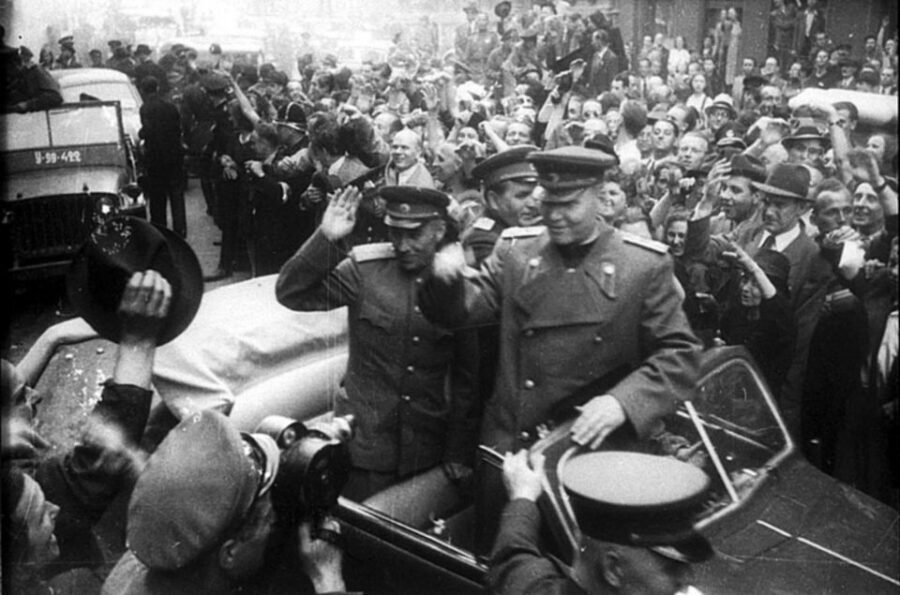
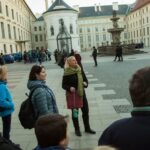
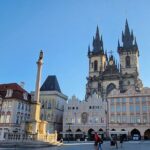
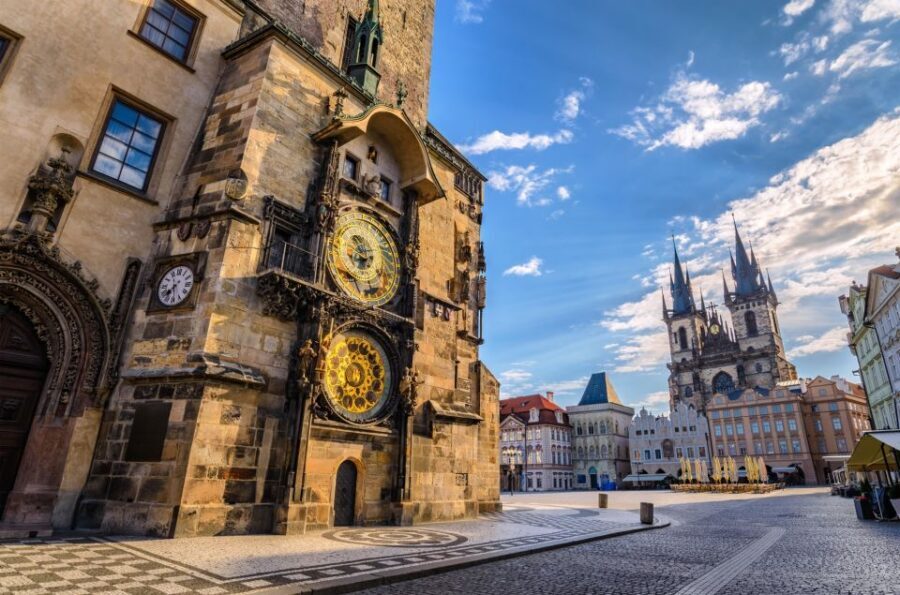
Next comes the part of Prague that many people already know: Old Town Square, with the Astronomical Clock on the facade of the Old Town Hall. The difference is the lens. Instead of treating it as a postcard landmark, the tour frames it in the chaos of May 5–9, 1945—when the battles around the city caused heavy damage.
Your guide explains the Prague Uprising in this area, connecting the fight for liberation to the buildings and street lines you’re looking at. This is where the history stops being “then and there” and becomes “right here, on these streets.”
You’ll also hear about how the Red Army’s involvement in liberating the city was later used by the Czechoslovak Communist Party to increase support for communism. That’s a key theme on this tour: events don’t just happen; they get explained afterward, and those explanations can be political tools.
If you’re the type who likes cause-and-effect, this is one of the most useful stops. You see the square, then you learn how power later shaped the story people told about that liberation.
Petschek Palace: Gestapo Power and the Resistance Memorial Plaque
After Old Town, you walk to Petschek Palace, the former seat of the Gestapo headquarters. This is a big mental shift. One moment you’re at a famous public landmark; the next you’re at the kind of building where fear and interrogation would have been routine.
On the corner of the building, you’ll find a memorial plaque dedicated to the Czech resistance. Your guide connects it to the resistance’s efforts—especially interrogations and torture. The point isn’t to list brutality. It’s to show what resistance looked like under extreme pressure and what it cost.
I like that this stop helps correct a common misconception: that resistance is only heroic and dramatic, like a film scene. Your guide brings in the reality—how resistance can also mean surviving pressure, keeping information moving, and facing consequences when people get caught.
This section also ties neatly into what you’ve already learned in Josefov. You see occupation mechanisms operating across different layers of society—control, transport, intimidation, and propaganda.
Wenceslas Square: Where Nazis Performed Power and 1989 Answered Back
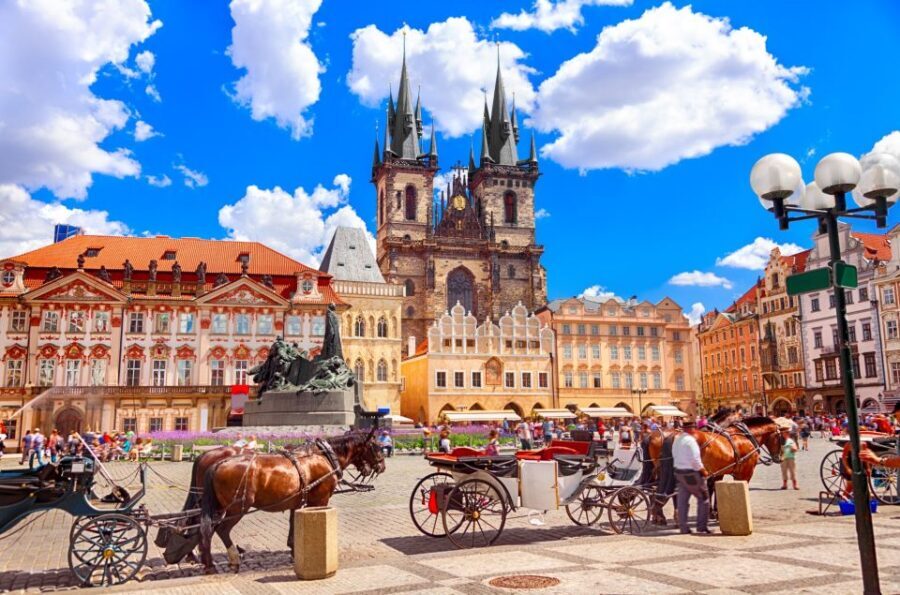
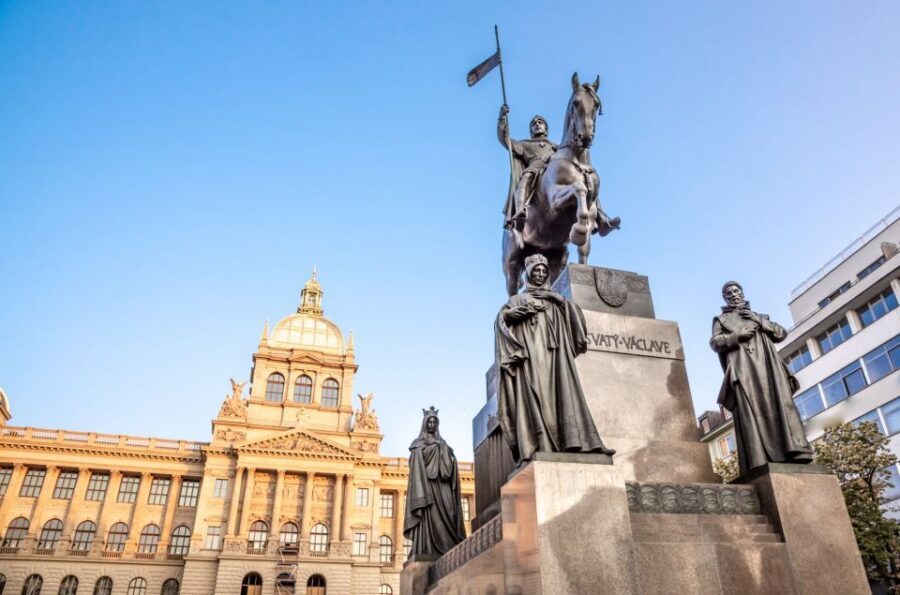
The tour ends at Wenceslas Square, and it’s a great choice because the square is a stage for politics. Your guide explains how the Nazis used it for mass demonstrations.
Then the narrative flips to 1989 and the Velvet Revolution. The same space that supported authoritarian spectacle later became part of a public push for independence and democracy. That contrast is the whole point of bringing you here at the end: you feel the change in direction.
Wenceslas Square can be crowded and loud in everyday life, but on this tour it becomes a reading experience. You’re not just walking past statues. You’re learning how public space can be used to pressure people—and how people can reclaim public space.
And yes, you’ll likely look at the square differently afterward. It’s hard not to. Once you know what happened there, it’s difficult to treat it as just a meeting point.
You can also read our reviews of more historical tours in Prague

The 4-Hour Add-On: Museum of Communism and the Timeline That Explains the Seams
If you choose the extended 4-hour option, you add the Museum of Communism. In practical terms, it turns the Old Town walk into something more complete: a structured, indoor timeline that connects the WWII ending, the Communist takeover, and the decades that followed.
The museum covers four decades of communist rule in Czechoslovakia, including the Cold War, Prague Spring, the Soviet Invasion of 1968, the suicide of student Jan Palach, and the Velvet Revolution. It also focuses on the tools of control: propaganda, censorship, political trials, and executions.
This is the part that helps you avoid the common trap of thinking history is a straight line. On the street, you get scenes. In the museum, you get the connective tissue. You see how repression, public messaging, and political fear worked together—and why hope often rose in specific moments, like during Prague Spring, only to be crushed when Soviet control returned with force.
Jan Palach’s story is included as part of the museum’s coverage, and that can hit hard. If you’re choosing the 4-hour option, go in ready for emotion as well as facts.
Value check: the 4-hour option includes regular tickets to the Museum of Communism. That matters because otherwise the museum can turn into an add-on you have to plan separately.
Operation Anthropoid and Salinization: Why the Tour Includes the In-Between Years

One reason I find this tour more satisfying than a simple “WWII + communism highlights” combo is the inclusion of key transition periods you can miss on a quick visit. The tour mentions Operation Anthropoid, the 1945 Uprising, and Salinization.
Even without getting lost in every political term, those names do something important: they show that Prague’s story didn’t switch from Nazi occupation to freedom overnight. There were phases. There were power grabs. There were new systems installed after the old ones fell.
If you like learning how regimes justify themselves, this is where you’ll feel it. The Nazi occupation wasn’t only violence; it was also messaging and manipulation. Later Communist rule relied on propaganda and censorship too. The tour helps you see that continuity without pretending the eras are identical.
Price and What You’re Really Buying at $104
At $104 per person, the big question is whether this feels like a “fair deal” or an expensive history cram. For a private tour, it’s closer to the fair side—mainly because you’re paying for an expert guide’s interpretation, not just access to monuments.
Here’s what you’re getting value for:
- A private group format that supports a history-heavy route without people getting lost or left behind.
- A History Expert Guide fluent in multiple languages, which can make a difference when you’re dealing with emotionally charged topics and specific names.
- Multiple major sites in a short window, including Josefov synagogues, Old Town Square, Petschek Palace, and Wenceslas Square.
- In the 4-hour option, access to the Museum of Communism with tickets included.
The trade-off: you can’t stretch the route. This is a walking, interpretation-focused tour. If you want long café breaks and optional detours, this isn’t the best fit.
If you’re on a budget, compare your own priorities. If museum context will matter to you, the 4-hour choice can be the better value because it bundles the museum into the experience rather than making you plan it later.
Who This Tour Fits Best (and Who Might Want Something Else)
This is a strong pick if you:
- want WWII and Communist history tied directly to Prague street-level places
- appreciate guided context that links events and politics
- plan to visit or already care about the Jewish Quarter, WWII liberation stories, and the Velvet Revolution
It’s also a good match for families who have older kids (teen to adult), as long as everyone can handle serious topics like deportations and political repression.
It might not be your best choice if you:
- prefer a lighter, mostly cultural itinerary
- hate learning that’s emotionally intense
- want a lot of free time for independent wandering during the tour
Book It or Skip It: My Decision Guide
I’d book this tour if you want Prague’s WWII and Communist chapters explained in a way that sticks. The route is built for understanding: Josefov for deportation context, Old Town Square for the 1945 battles, Petschek Palace for Gestapo power and resistance, and Wenceslas Square for the Velvet Revolution pivot. Add the Museum of Communism if you want the timeline that connects the dots.
If you’re short on time, the 2-hour option still covers major outdoor stops with strong historical grounding. But if you truly want the “why did things happen and how did control work day to day” answer, the 4-hour option is the one that delivers that fuller picture.
FAQ
FAQ
How long is the WWII and Communism Old Town Private Tour?
The tour is offered in a 2-hour option or an extended 4-hour option.
What’s the main difference between the 2-hour and 4-hour options?
The 2-hour option focuses on the Old Town walking portion. The 4-hour option adds a visit to the Museum of Communism with museum tickets included.
Is the Museum of Communism included?
Yes, it is included with regular museum tickets in the 4-hour option. Tickets are not included in the 2-hour option.
Where does the tour start?
Meet your guide in front of the World of Franz Kafka at Nám. Franze Kafky 16/1, 110 00 Staré Město, Czechia.
Which languages are available for the guide?
The tour is available in English, French, German, Italian, Polish, Russian, Spanish, and Czech.
Is this a private tour?
Yes, it’s a private group.
What stops are included around the Old Town sites?
You’ll cover Josefov (including the Maisel Synagogue and the Spanish Synagogue), Old Town Square (with the Astronomical Clock area), Petschek Palace, and end at Wenceslas Square.
Can I cancel for free?
Free cancellation is available up to 24 hours in advance for a full refund.
Is there a reserve-and-pay-later option?
Yes. You can reserve now and pay later.